While the SFO departure offers iconic Bay Area scenery, the Melbourne landing provides more varied and recognizable urban-geographic features (bay, city skyline, mountain range, airport infrastructure). The right side benefits from a more dramatic approach sequence with multiple distinct landmarks, whereas the left side is dominated by open ocean for most of the 14+ hour flight. Right side scores higher due to landing quality and mid-flight Tasman Sea monotony on the left.
Flown SFO to MBW? Did we get it right?
Flight Path
San Francisco to Melbourne is 7,861 miles (12,651 km), a flight of about 14 hours 20 minutes.
The flight crosses the entire Pacific Ocean with minimal visible landmarks. Approximately 6-8 hours into the flight, the aircraft passes south of Hawaii (not visible on typical routing), then continues over open water. Around 10-12 hours, the aircraft approaches the Australian continent, with the Great Dividing Range becoming visible on the eastern Australian coast before descent into Melbourne. The Tasman Sea dominates the entire cruise phase with no islands or terrain features visible from standard flight altitudes.
Great circle distance and headings ›Phase by phase
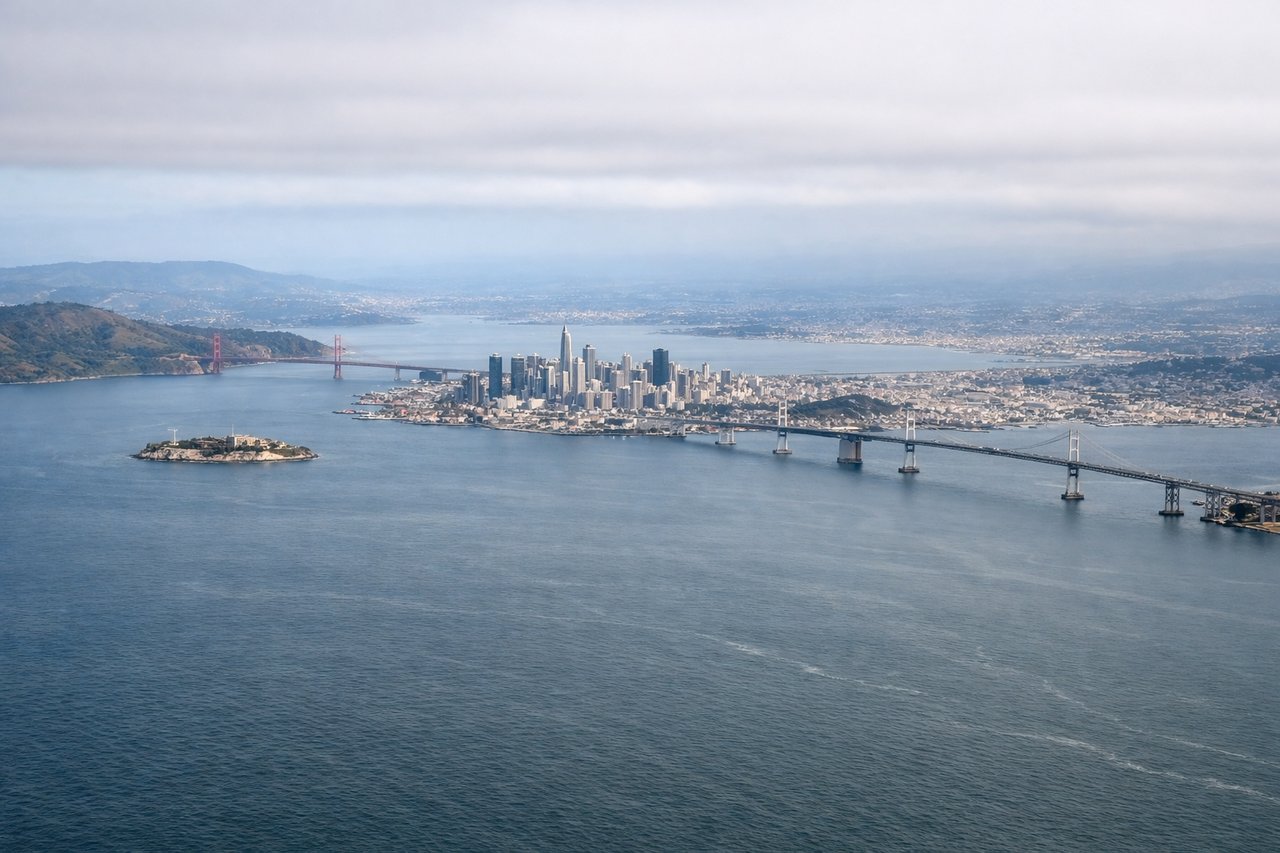
Takeoff from SFO
LEFTLeft side captures San Francisco Bay, the Golden Gate Bridge area, and the Marin Headlands during departure. Right side faces inland toward the Central Valley with minimal terrain drama.
Landing at MBW
RIGHTRight side (approaching from the east) offers views of Melbourne's urban sprawl, Port Phillip Bay, and the Dandenong Ranges. Left side faces the open Tasman Sea with minimal landmarks during the long approach.
Will your flight be in sunlight?
Pick a date and time in the Sun Map to watch the sun move across your whole flight.
About This Route
Which side of the plane should I sit on flying from San Francisco International (SFO) to Melbourne Moorabbin (MBW)?
Sit on the Right side of the plane for the best views on flights from San Francisco to Melbourne. While the SFO departure offers iconic Bay Area scenery, the Melbourne landing provides more varied and recognizable urban-geographic features (bay, city skyline, mountain range, airport infrastructure). The right side benefits from a more dramatic approach sequence with multiple distinct landmarks, whereas the left side is dominated by open ocean for most of the 14+ hour flight. Right side scores higher due to landing quality and mid-flight Tasman Sea monotony on the left.
What can I see during takeoff from San Francisco International in San Francisco?
During takeoff from San Francisco International (SFO), sit on the Left side for the best views. Left side captures San Francisco Bay, the Golden Gate Bridge area, and the Marin Headlands during departure. Right side faces inland toward the Central Valley with minimal terrain drama. Notable sights include: San Francisco Bay, Golden Gate Bridge, Marin Headlands, Pacific coastline.
What can I see when landing at Melbourne Moorabbin in Melbourne?
When landing at Melbourne Moorabbin (MBW), sit on the Right side for the best views. Right side (approaching from the east) offers views of Melbourne's urban sprawl, Port Phillip Bay, and the Dandenong Ranges. Left side faces the open Tasman Sea with minimal landmarks during the long approach. Notable sights include: Port Phillip Bay, Melbourne CBD skyline, Dandenong Ranges, Moorabbin Airport area.
How long is the flight from San Francisco to Melbourne?
The flight from San Francisco International (SFO) to Melbourne Moorabbin (MBW) takes about 14 hours 20 minutes. The shortest flight path between them is 7,861 miles (12,651 km); winds and air traffic control usually add a few percent.
What does the San Francisco to Melbourne flight path pass over?
The flight crosses the entire Pacific Ocean with minimal visible landmarks. Approximately 6-8 hours into the flight, the aircraft passes south of Hawaii (not visible on typical routing), then continues over open water. Around 10-12 hours, the aircraft approaches the Australian continent, with the Great Dividing Range becoming visible on the eastern Australian coast before descent into Melbourne. The Tasman Sea dominates the entire cruise phase with no islands or terrain features visible from standard flight altitudes.