While takeoff offers excellent bay views on the left, the landing approach on the right provides more sustained and dramatic scenery—the Pacific coastline, river estuary, and coastal geography are visually distinctive and occupy most of the descent. Right seats capture the more memorable portion of this route.
Flown SFO to OTH? Did we get it right?
Flight Path
San Francisco to North Bend is 412 miles (664 km), a flight of about 1 hour 15 minutes.
The flight path travels north-northwest along or near the California coast, passing over the Humboldt Bay area and the coastal ranges of northern California. The Cascade Range and Klamath Mountains remain inland to the east throughout the flight. The coastline transitions from the San Francisco Bay Area's developed shores to increasingly rugged, forested terrain with fewer settlements. The Umpqua National Forest and surrounding wilderness areas dominate the landscape as you approach southern Oregon.
Great circle distance and headings ›Phase by phase
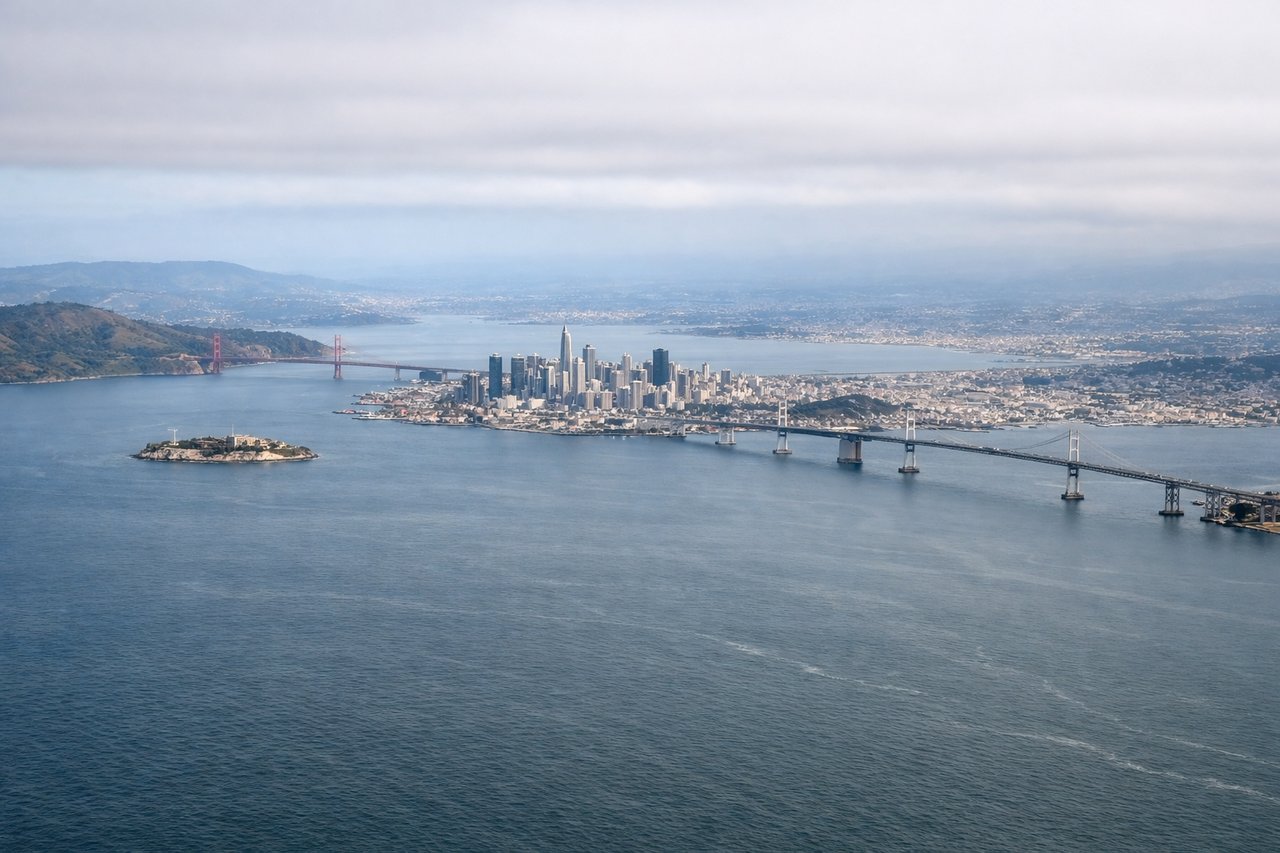
Takeoff from SFO
LEFTLeft seats offer immediate views of the San Francisco Bay, the Golden Gate Bridge area, and the Marin Headlands as you climb northwestward out of SFO. The typical departure routing takes aircraft northwest over the bay before turning north toward Oregon.
Landing at OTH
RIGHTRight seats provide views of the Oregon coastline, the Coquille River estuary, and the approach into North Bend. The descent path brings aircraft over the Pacific and inland toward the airport, making right-side seats ideal for coastal and river scenery.
Will your flight be in sunlight?
Pick a date and time in the Sun Map to watch the sun move across your whole flight.
About This Route
Which side of the plane should I sit on flying from San Francisco International (SFO) to Southwest Oregon Regional Airport (OTH)?
Sit on the Right side of the plane for the best views on flights from San Francisco to North Bend. While takeoff offers excellent bay views on the left, the landing approach on the right provides more sustained and dramatic scenery—the Pacific coastline, river estuary, and coastal geography are visually distinctive and occupy most of the descent. Right seats capture the more memorable portion of this route.
What can I see during takeoff from San Francisco International in San Francisco?
During takeoff from San Francisco International (SFO), sit on the Left side for the best views. Left seats offer immediate views of the San Francisco Bay, the Golden Gate Bridge area, and the Marin Headlands as you climb northwestward out of SFO. The typical departure routing takes aircraft northwest over the bay before turning north toward Oregon. Notable sights include: San Francisco Bay, Golden Gate Bridge, Marin Headlands, Mount Tamalpais.
What can I see when landing at Southwest Oregon Regional Airport in North Bend?
When landing at Southwest Oregon Regional Airport (OTH), sit on the Right side for the best views. Right seats provide views of the Oregon coastline, the Coquille River estuary, and the approach into North Bend. The descent path brings aircraft over the Pacific and inland toward the airport, making right-side seats ideal for coastal and river scenery. Notable sights include: Pacific Ocean, Coquille River estuary, Coos Bay, Oregon coastal dunes.
How long is the flight from San Francisco to North Bend?
The flight from San Francisco International (SFO) to Southwest Oregon Regional Airport (OTH) takes about 1 hour 15 minutes. The shortest flight path between them is 412 miles (664 km); winds and air traffic control usually add a few percent.
What does the San Francisco to North Bend flight path pass over?
The flight path travels north-northwest along or near the California coast, passing over the Humboldt Bay area and the coastal ranges of northern California. The Cascade Range and Klamath Mountains remain inland to the east throughout the flight. The coastline transitions from the San Francisco Bay Area's developed shores to increasingly rugged, forested terrain with fewer settlements. The Umpqua National Forest and surrounding wilderness areas dominate the landscape as you approach southern Oregon.