Although the SFO departure favors the right side, the left side's dramatic, close-up view of Sydney Harbour, the Opera House, and the Harbour Bridge during the final descent is the single most memorable moment of this long transpacific flight, outweighing the brief advantage at takeoff.
Flight Path
The route crosses thousands of miles of open Pacific Ocean with no landmasses in view, passing near the equator and international date line roughly between Hawaii and Fiji before angling southwest toward the Australian coast.
Great circle distance and headings ›
.jpg?width=600)
Phase by phase

Takeoff from SFO
RIGHTSFO departures bound for the southwest Pacific climb out over the Bay and then bank south along the Peninsula, putting San Francisco's skyline, the Bay Bridge, and the coastline on the right side of the cabin before the plane pushes out over open water near Santa Cruz. The left side mostly shows the East Bay hills and inland terrain, which is far less distinctive.
Landing at SYD
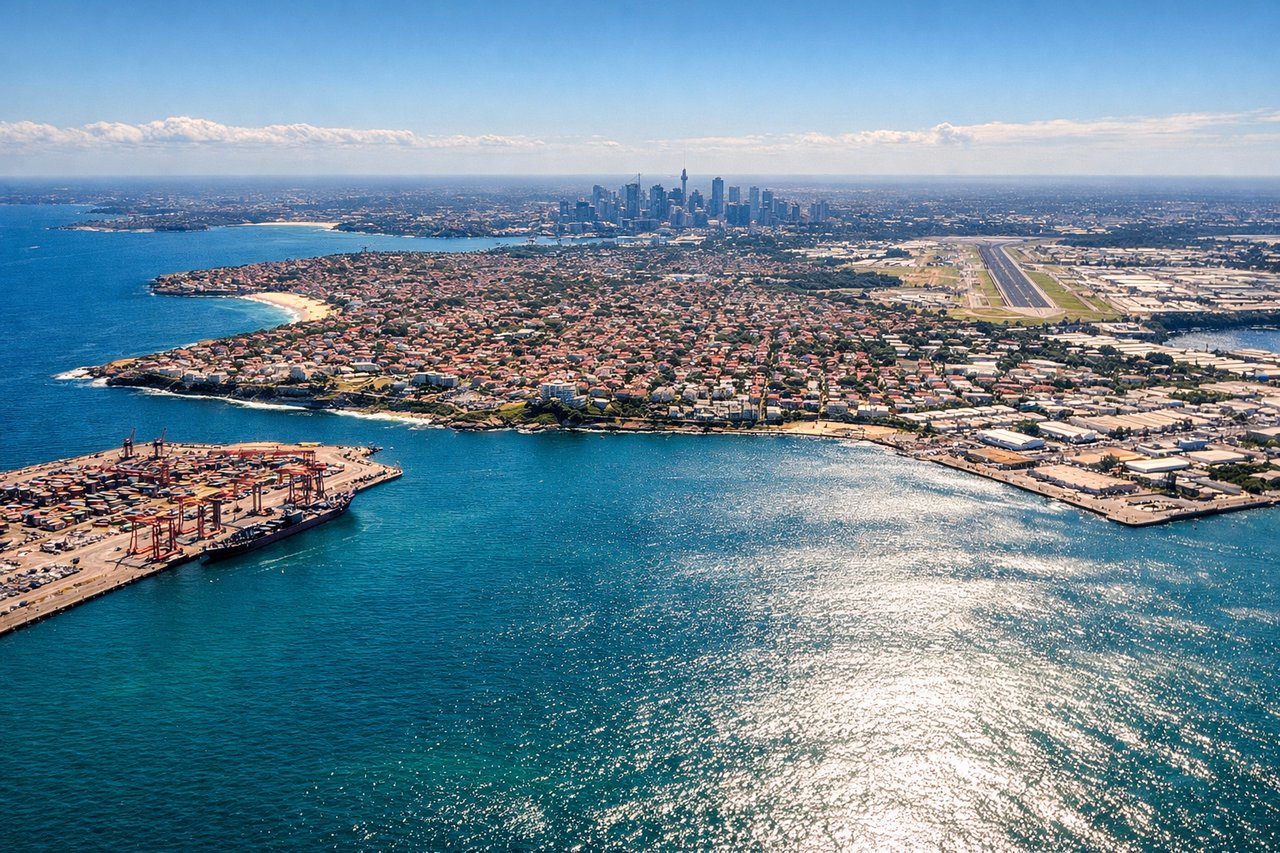
LEFTOn North Plan arrivals into Sydney (runway 34L), aircraft track up from the south over Botany Bay before turning onto final, putting the harbour and city skyline on the left side of the cabin. Passengers get a close view of the Harbour Bridge, Opera House, and the CBD skyline just before touchdown, a view the right side largely misses.
Landmarks on this routeAll landmarks →
Will your flight be in sunlight?
See exactly which side of the plane gets sun and shade at your departure time.
About This Route
Which side of the plane should I sit on flying from San Francisco International (SFO) to Kingsford Smith International Airport (SYD)?
Sit on the Left side of the plane for the best views on flights from San Francisco to Sydney. Although the SFO departure favors the right side, the left side's dramatic, close-up view of Sydney Harbour, the Opera House, and the Harbour Bridge during the final descent is the single most memorable moment of this long transpacific flight, outweighing the brief advantage at takeoff.
What can I see during takeoff from San Francisco International in San Francisco?
During takeoff from San Francisco International (SFO), sit on the Right side for the best views. SFO departures bound for the southwest Pacific climb out over the Bay and then bank south along the Peninsula, putting San Francisco's skyline, the Bay Bridge, and the coastline on the right side of the cabin before the plane pushes out over open water near Santa Cruz. The left side mostly shows the East Bay hills and inland terrain, which is far less distinctive. Notable sights include: San Francisco skyline and Bay Bridge, Golden Gate Bridge in the distance, San Francisco Peninsula coastline, Santa Cruz Mountains.
What can I see when landing at Kingsford Smith International Airport in Sydney?
When landing at Kingsford Smith International Airport (SYD), sit on the Left side for the best views. On North Plan arrivals into Sydney (runway 34L), aircraft track up from the south over Botany Bay before turning onto final, putting the harbour and city skyline on the left side of the cabin. Passengers get a close view of the Harbour Bridge, Opera House, and the CBD skyline just before touchdown, a view the right side largely misses. Notable sights include: Sydney Harbour and Harbour Bridge, Sydney Opera House, Sydney CBD skyline, Botany Bay coastline.
How long is the flight from San Francisco to Sydney?
The flight from San Francisco International (SFO) to Kingsford Smith International Airport (SYD) takes 15h 20m.
What does the San Francisco to Sydney flight path pass over?
The route crosses thousands of miles of open Pacific Ocean with no landmasses in view, passing near the equator and international date line roughly between Hawaii and Fiji before angling southwest toward the Australian coast.