While landing views are strong, the takeoff from SFO offers more dramatic and iconic scenery (Golden Gate Bridge, Bay views, Marin Headlands) that most passengers prioritize. The westbound departure also means left seats face the most visually interesting terrain immediately after takeoff.
Flown SFO to YTZ? Did we get it right?
Flight Path
San Francisco to Toronto is 2,266 miles (3,647 km), a flight of about 5 hours 15 minutes.
The flight path crosses the Sierra Nevada mountains (visible as a distant ridge roughly 2 hours into flight), then continues over the Great Basin and Rocky Mountains. The Great Lakes become visible in the final 90 minutes, with Lake Michigan and Lake Huron passing to the south before arrival at Toronto. The Appalachian Mountains appear as low ridges in the eastern approach.
Great circle distance and headings ›


Phase by phase
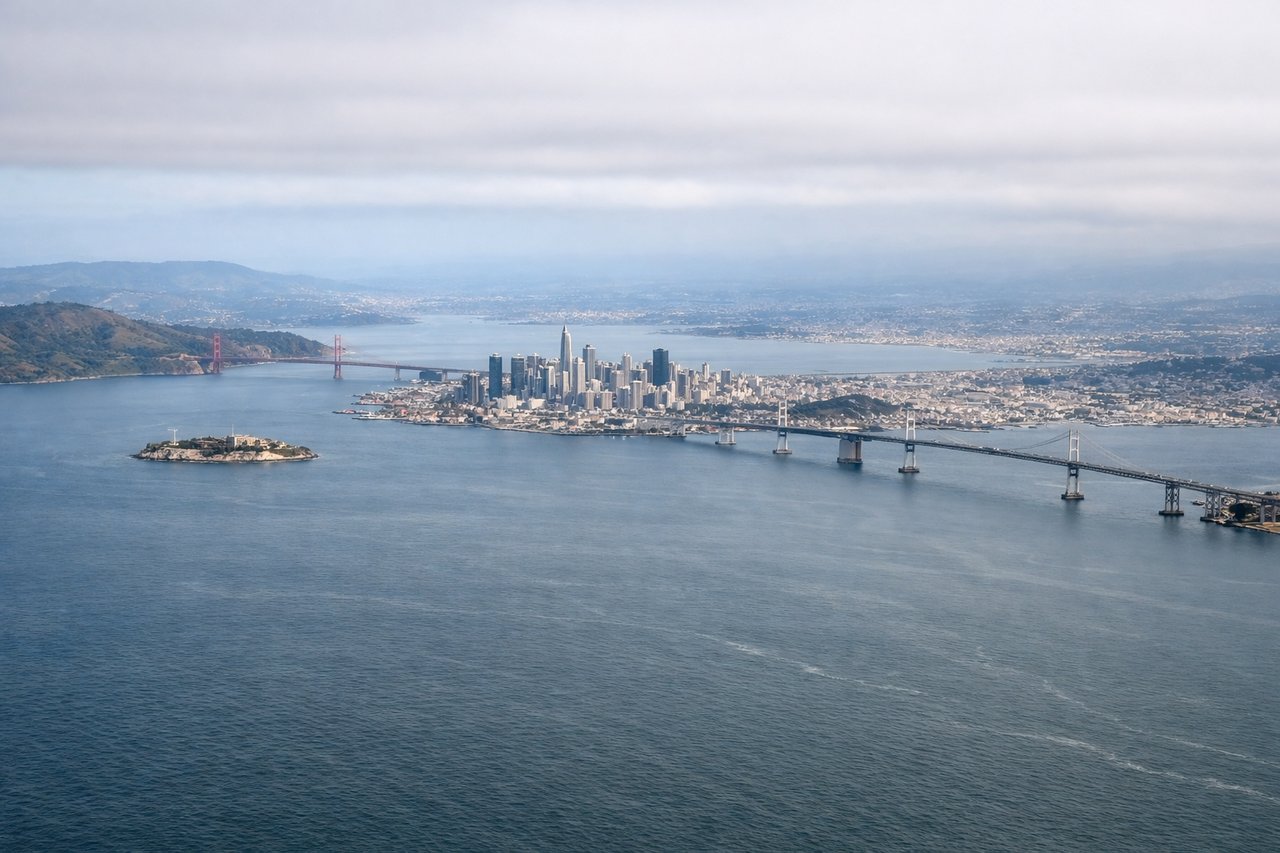
Takeoff from SFO
LEFTLeft seats offer immediate views of the San Francisco Bay, the Golden Gate Bridge, and the Marin Headlands as you climb out westbound over water before turning east across the continent.
Landing at YTZ
RIGHTRight seats provide views of Lake Ontario, the Toronto Islands, and downtown Toronto's skyline as you descend into City Centre Airport from the west over the lake.
Will your flight be in sunlight?
Pick a date and time in the Sun Map to watch the sun move across your whole flight.
About This Route
Which side of the plane should I sit on flying from San Francisco International (SFO) to City Centre (YTZ)?
Sit on the Left side of the plane for the best views on flights from San Francisco to Toronto. While landing views are strong, the takeoff from SFO offers more dramatic and iconic scenery (Golden Gate Bridge, Bay views, Marin Headlands) that most passengers prioritize. The westbound departure also means left seats face the most visually interesting terrain immediately after takeoff.
What can I see during takeoff from San Francisco International in San Francisco?
During takeoff from San Francisco International (SFO), sit on the Left side for the best views. Left seats offer immediate views of the San Francisco Bay, the Golden Gate Bridge, and the Marin Headlands as you climb out westbound over water before turning east across the continent. Notable sights include: San Francisco Bay, Golden Gate Bridge, Marin Headlands, San Francisco city grid.
What can I see when landing at City Centre in Toronto?
When landing at City Centre (YTZ), sit on the Right side for the best views. Right seats provide views of Lake Ontario, the Toronto Islands, and downtown Toronto's skyline as you descend into City Centre Airport from the west over the lake. Notable sights include: Lake Ontario, Toronto Islands, downtown Toronto skyline, Scarborough Bluffs.
How long is the flight from San Francisco to Toronto?
The flight from San Francisco International (SFO) to City Centre (YTZ) takes about 5 hours 15 minutes. The shortest flight path between them is 2,266 miles (3,647 km); winds and air traffic control usually add a few percent.
What does the San Francisco to Toronto flight path pass over?
The flight path crosses the Sierra Nevada mountains (visible as a distant ridge roughly 2 hours into flight), then continues over the Great Basin and Rocky Mountains. The Great Lakes become visible in the final 90 minutes, with Lake Michigan and Lake Huron passing to the south before arrival at Toronto. The Appalachian Mountains appear as low ridges in the eastern approach.