While the takeoff offers excellent Bay Area views from the left, the landing approach provides more sustained and dramatic scenery. The Southern Alps and Lake Wakatipu present some of the world's most visually striking geography, and right-side seats capture this for the entire descent into Queenstown.
Flight Path
The flight path crosses the Pacific Ocean for roughly 8-10 hours with minimal visible landmarks. Passengers may glimpse the Hawaiian Islands (Big Island, Maui) if routing through Honolulu, though these are typically passed at night or during darkness. The approach to New Zealand brings views of the North Island's volcanic plateau and central mountain ranges before turning south toward Queenstown. The Cook Strait separating North and South Islands may be visible depending on exact routing. The South Island's West Coast features the Southern Alps running the full length of the island's spine—these mountains become increasingly prominent during the final 2-3 hours of descent.
Great circle distance and headings ›


.JPG?width=600)
Phase by phase
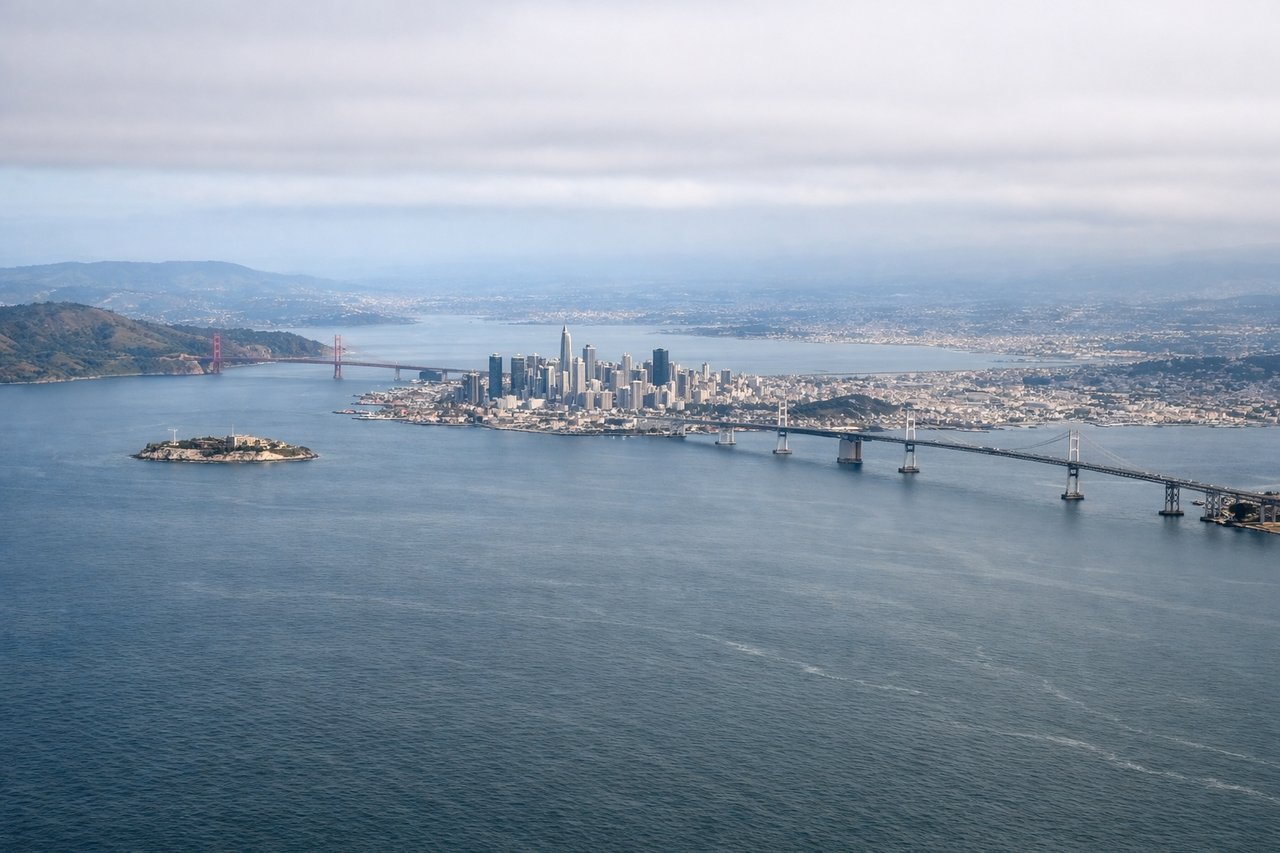
Takeoff from SFO
LEFTLeft seats offer views of the San Francisco Bay, Golden Gate Bridge, and the Marin Headlands during the initial climb-out. The standard departure route heads northwest over water, giving left-side passengers the best vantage of the bay's geography.
Landing at ZQN
RIGHTRight seats provide views of the Southern Alps and Lake Wakatipu during descent into Queenstown. The standard approach from the north brings aircraft over the lake and surrounding mountain terrain, with right-side passengers seeing the dramatic peaks and the lake's distinctive long, narrow shape.
Landmarks on this routeAll landmarks →
Will your flight be in sunlight?
See exactly which side of the plane gets sun and shade at your departure time.
About This Route
Which side of the plane should I sit on flying from San Francisco International (SFO) to Queenstown (ZQN)?
Sit on the Right side of the plane for the best views on flights from San Francisco to Queenstown International. While the takeoff offers excellent Bay Area views from the left, the landing approach provides more sustained and dramatic scenery. The Southern Alps and Lake Wakatipu present some of the world's most visually striking geography, and right-side seats capture this for the entire descent into Queenstown.
What can I see during takeoff from San Francisco International in San Francisco?
During takeoff from San Francisco International (SFO), sit on the Left side for the best views. Left seats offer views of the San Francisco Bay, Golden Gate Bridge, and the Marin Headlands during the initial climb-out. The standard departure route heads northwest over water, giving left-side passengers the best vantage of the bay's geography. Notable sights include: San Francisco Bay, Golden Gate Bridge, Marin Headlands, Mount Tamalpais.
What can I see when landing at Queenstown in Queenstown International?
When landing at Queenstown (ZQN), sit on the Right side for the best views. Right seats provide views of the Southern Alps and Lake Wakatipu during descent into Queenstown. The standard approach from the north brings aircraft over the lake and surrounding mountain terrain, with right-side passengers seeing the dramatic peaks and the lake's distinctive long, narrow shape. Notable sights include: Lake Wakatipu, The Remarkables mountain range, Cecil Peak, Ben Lomond.
How long is the flight from San Francisco to Queenstown International?
The flight from San Francisco International (SFO) to Queenstown (ZQN) takes Approximately 16-17 hours (including one fuel stop, typically in Honolulu or similar Pacific hub).
What does the San Francisco to Queenstown International flight path pass over?
The flight path crosses the Pacific Ocean for roughly 8-10 hours with minimal visible landmarks. Passengers may glimpse the Hawaiian Islands (Big Island, Maui) if routing through Honolulu, though these are typically passed at night or during darkness. The approach to New Zealand brings views of the North Island's volcanic plateau and central mountain ranges before turning south toward Queenstown. The Cook Strait separating North and South Islands may be visible depending on exact routing. The South Island's West Coast features the Southern Alps running the full length of the island's spine—these mountains become increasingly prominent during the final 2-3 hours of descent.