While left wins on takeoff, the landing view from the right is more dramatic and iconic—Lake Michigan and the Chicago skyline are far more visually distinctive than the approach corridor from the west. Right seats also capture the flight's geographic narrative better overall.
Flown SLC to MDW? Did we get it right?
Flight Path
Salt Lake City to Chicago is 1,256 miles (2,021 km), a flight of about 3 hours 5 minutes.
The flight path crosses the Wasatch Range, then traverses the high desert of Utah and Wyoming (Great Basin and Green River Basin visible as arid, sparsely populated terrain), passes over the Rocky Mountains in western Colorado and Wyoming (the Uinta Range and Medicine Bow Range are notable), then descends across the Great Plains of Nebraska and Iowa. The North Platte River and its tributaries are occasionally visible as thin green corridors through the plains. The transition from mountains to plains is gradual but marked around the Nebraska-Colorado border. No major bodies of water are crossed until approaching Lake Michigan near Chicago.
Great circle distance and headings ›


Phase by phase
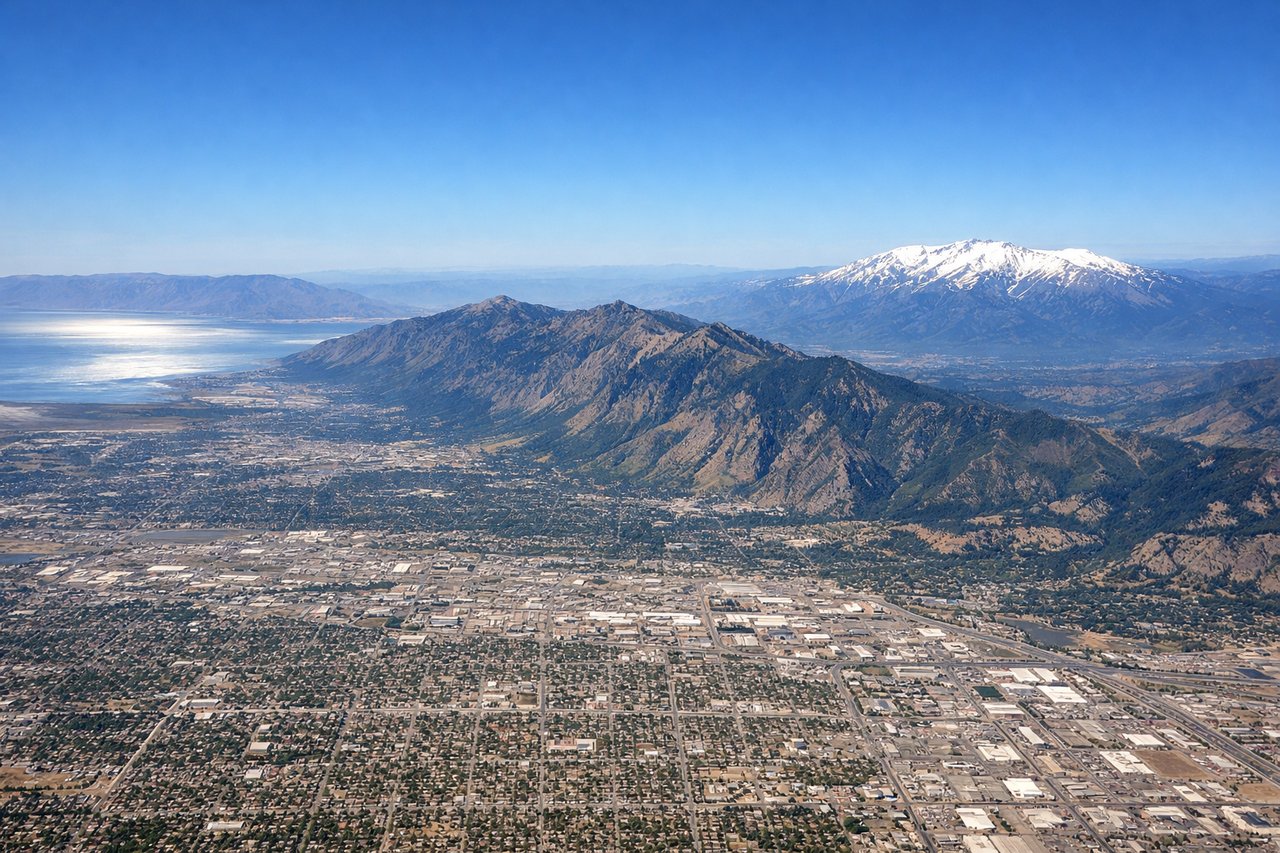
Takeoff from SLC
LEFTSLC typically departs westbound (Runways 16L/R or 34L/R depending on wind). Left seats face north initially, giving direct views of the Wasatch Range's dramatic peaks and the Great Salt Lake's eastern shoreline as you climb out.
Landing at MDW
RIGHTMDW approaches from the east (typically Runways 31L/R). Right seats face south during descent, offering views of Lake Michigan's shoreline, downtown Chicago's skyline, and the distinctive grid of the South Side neighborhoods as you descend into the approach corridor.
Will your flight be in sunlight?
Pick a date and time in the Sun Map to watch the sun move across your whole flight.
About This Route
Which side of the plane should I sit on flying from Salt Lake City International (SLC) to Chicago Midway International (MDW)?
Sit on the Right side of the plane for the best views on flights from Salt Lake City to Chicago. While left wins on takeoff, the landing view from the right is more dramatic and iconic—Lake Michigan and the Chicago skyline are far more visually distinctive than the approach corridor from the west. Right seats also capture the flight's geographic narrative better overall.
What can I see during takeoff from Salt Lake City International in Salt Lake City?
During takeoff from Salt Lake City International (SLC), sit on the Left side for the best views. SLC typically departs westbound (Runways 16L/R or 34L/R depending on wind). Left seats face north initially, giving direct views of the Wasatch Range's dramatic peaks and the Great Salt Lake's eastern shoreline as you climb out. Notable sights include: Wasatch Range (north and northeast), Great Salt Lake (north and northwest), Antelope Island (visible as a landmass in the lake's northern section), Oquirrh Mountains (west, across the lake).
What can I see when landing at Chicago Midway International in Chicago?
When landing at Chicago Midway International (MDW), sit on the Right side for the best views. MDW approaches from the east (typically Runways 31L/R). Right seats face south during descent, offering views of Lake Michigan's shoreline, downtown Chicago's skyline, and the distinctive grid of the South Side neighborhoods as you descend into the approach corridor. Notable sights include: Lake Michigan (dominant, east and northeast), Chicago downtown skyline and Willis Tower (visible on the horizon to the north), South Side residential grid (directly below during final approach), Midway's location on the southwest side of the city.
How long is the flight from Salt Lake City to Chicago?
The flight from Salt Lake City International (SLC) to Chicago Midway International (MDW) takes about 3 hours 5 minutes. The shortest flight path between them is 1,256 miles (2,021 km); winds and air traffic control usually add a few percent.
What does the Salt Lake City to Chicago flight path pass over?
The flight path crosses the Wasatch Range, then traverses the high desert of Utah and Wyoming (Great Basin and Green River Basin visible as arid, sparsely populated terrain), passes over the Rocky Mountains in western Colorado and Wyoming (the Uinta Range and Medicine Bow Range are notable), then descends across the Great Plains of Nebraska and Iowa. The North Platte River and its tributaries are occasionally visible as thin green corridors through the plains. The transition from mountains to plains is gradual but marked around the Nebraska-Colorado border. No major bodies of water are crossed until approaching Lake Michigan near Chicago.