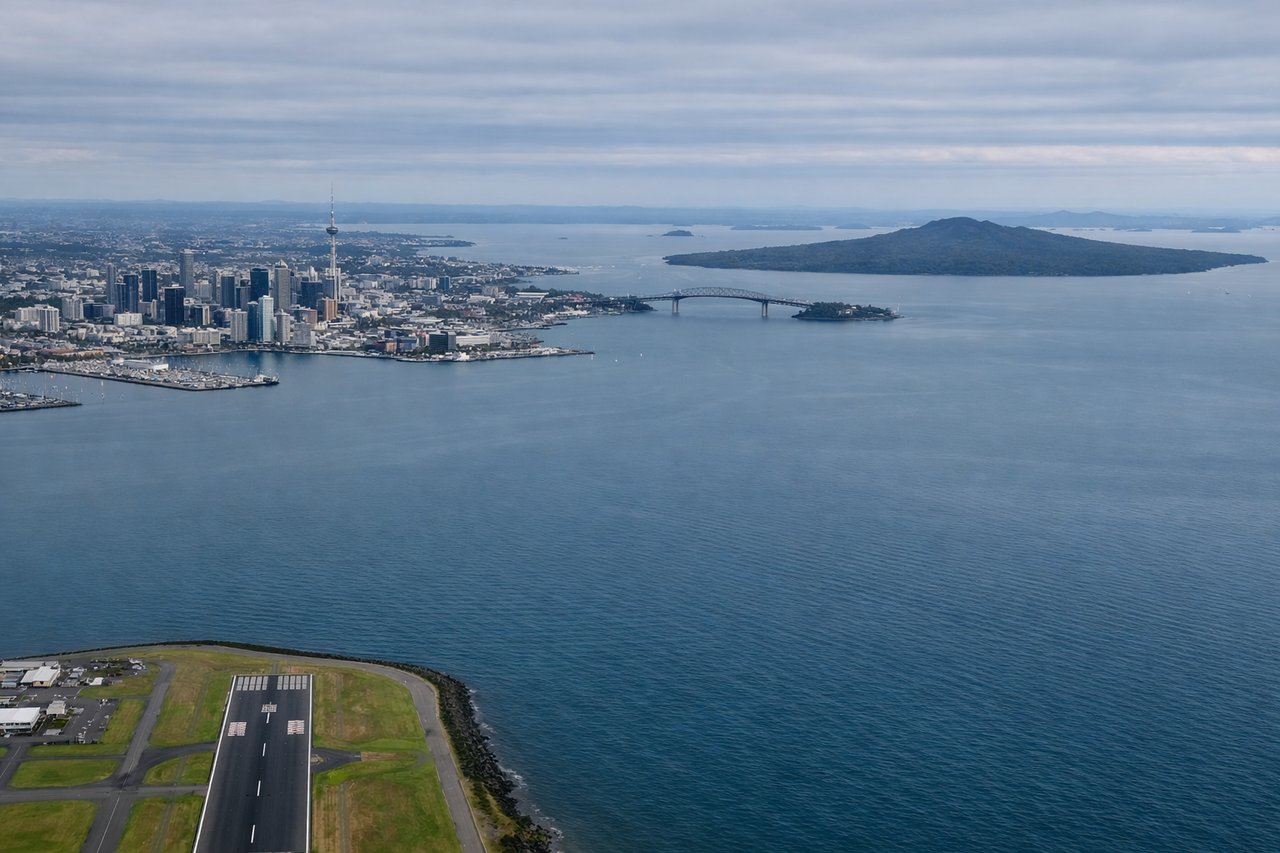
While right seats dominate the TPE departure, left seats provide the superior experience for the Auckland arrival—the most visually distinctive part of this long-haul flight. Rangitoto Island and the Hauraki Gulf are far more dramatic than the Taiwan departure scenery.
Flown TPE to AKL? Did we get it right?
Flight Path
Taipei to Auckland is 5,524 miles (8,890 km), a flight of about 12 hours.
This route crosses the South China Sea (with potential views of the Philippines if departing southbound), then transits over the Coral Sea and Tasman Sea. The flight path passes east of Australia, with no significant landmass visible for the majority of the journey. The Fiji region and Tonga may be crossed depending on exact routing, but at cruise altitude (35,000+ feet), individual islands are rarely distinguishable. The approach to New Zealand offers the first significant landfall in the southern hemisphere, with the North Island's geography becoming visible during descent into Auckland.
Great circle distance and headings ›Phase by phase

Takeoff from TPE
RIGHTTPE typically departs eastbound (Runways 05L/05R). Right-side seats face toward the Pacific and offer views of the northeast Taiwan coast, the Keelung area, and the transition from coastal plains to open ocean. Left seats show the western plains and are less visually interesting for this route.
Landing at AKL
LEFTAKL uses Runways 03L/03R for most arrivals (northbound approach). Left-side seats provide excellent views of the Waitemata Strait, Rangitoto Island's distinctive volcanic cone, the Hauraki Gulf, and Auckland's waterfront during descent. Right seats face inland toward the Manukau Harbour and are less scenic.
Will your flight be in sunlight?
Pick a date and time in the Sun Map to watch the sun move across your whole flight.
About This Route
Which side of the plane should I sit on flying from Chiang Kai Shek International (TPE) to Auckland International (AKL)?
Sit on the Left side of the plane for the best views on flights from Taipei to Auckland. While right seats dominate the TPE departure, left seats provide the superior experience for the Auckland arrival—the most visually distinctive part of this long-haul flight. Rangitoto Island and the Hauraki Gulf are far more dramatic than the Taiwan departure scenery.
What can I see during takeoff from Chiang Kai Shek International in Taipei?
During takeoff from Chiang Kai Shek International (TPE), sit on the Right side for the best views. TPE typically departs eastbound (Runways 05L/05R). Right-side seats face toward the Pacific and offer views of the northeast Taiwan coast, the Keelung area, and the transition from coastal plains to open ocean. Left seats show the western plains and are less visually interesting for this route. Notable sights include: Keelung Harbor and northeastern Taiwan coastline, Taipei Basin urban sprawl receding westward, Pacific Ocean opening to the east, Yangmingshan volcanic plateau on the northern horizon.
What can I see when landing at Auckland International in Auckland?
When landing at Auckland International (AKL), sit on the Left side for the best views. AKL uses Runways 03L/03R for most arrivals (northbound approach). Left-side seats provide excellent views of the Waitemata Strait, Rangitoto Island's distinctive volcanic cone, the Hauraki Gulf, and Auckland's waterfront during descent. Right seats face inland toward the Manukau Harbour and are less scenic. Notable sights include: Rangitoto Island (iconic volcanic cone), Waitemata Strait and Auckland waterfront, Hauraki Gulf with its scattered islands, Auckland city center and Sky Tower on the skyline.
How long is the flight from Taipei to Auckland?
The flight from Chiang Kai Shek International (TPE) to Auckland International (AKL) takes about 12 hours. The shortest flight path between them is 5,524 miles (8,890 km); winds and air traffic control usually add a few percent.
What does the Taipei to Auckland flight path pass over?
This route crosses the South China Sea (with potential views of the Philippines if departing southbound), then transits over the Coral Sea and Tasman Sea. The flight path passes east of Australia, with no significant landmass visible for the majority of the journey. The Fiji region and Tonga may be crossed depending on exact routing, but at cruise altitude (35,000+ feet), individual islands are rarely distinguishable. The approach to New Zealand offers the first significant landfall in the southern hemisphere, with the North Island's geography becoming visible during descent into Auckland.