Left side scores marginally higher due to superior takeoff scenery from Taipei—the urban harbor and coastline provide more visual interest than the right side's initial climb over suburban terrain. While the landing approach at Dallas is comparable on both sides, the Taipei departure advantage gives left a slight edge for the full flight experience.
Flown TPE to DAL? Did we get it right?
Flight Path
Taipei to Dallas is 7,715 miles (12,416 km), a flight of about 15 hours 20 minutes.
The flight crosses the Pacific Ocean for approximately 8 hours with minimal scenic features—open water dominates the midpoint. Notable waypoints include the Aleutian Islands region (far north of typical routing), the North American coastline near British Columbia or Alaska, and the transition over western Canada and the northern Great Plains. The Rocky Mountains may be visible during descent into Dallas if the aircraft routes through that corridor, though most transpacific flights to Dallas follow a more northerly great-circle path that minimizes mountain visibility.
Great circle distance and headings ›Phase by phase

Takeoff from TPE
LEFTLeft side captures Taipei's urban sprawl and the northern Taiwan coastline during initial climb. The city's harbor and surrounding developed areas provide brief but recognizable urban scenery before the aircraft turns westward over the Taiwan Strait.
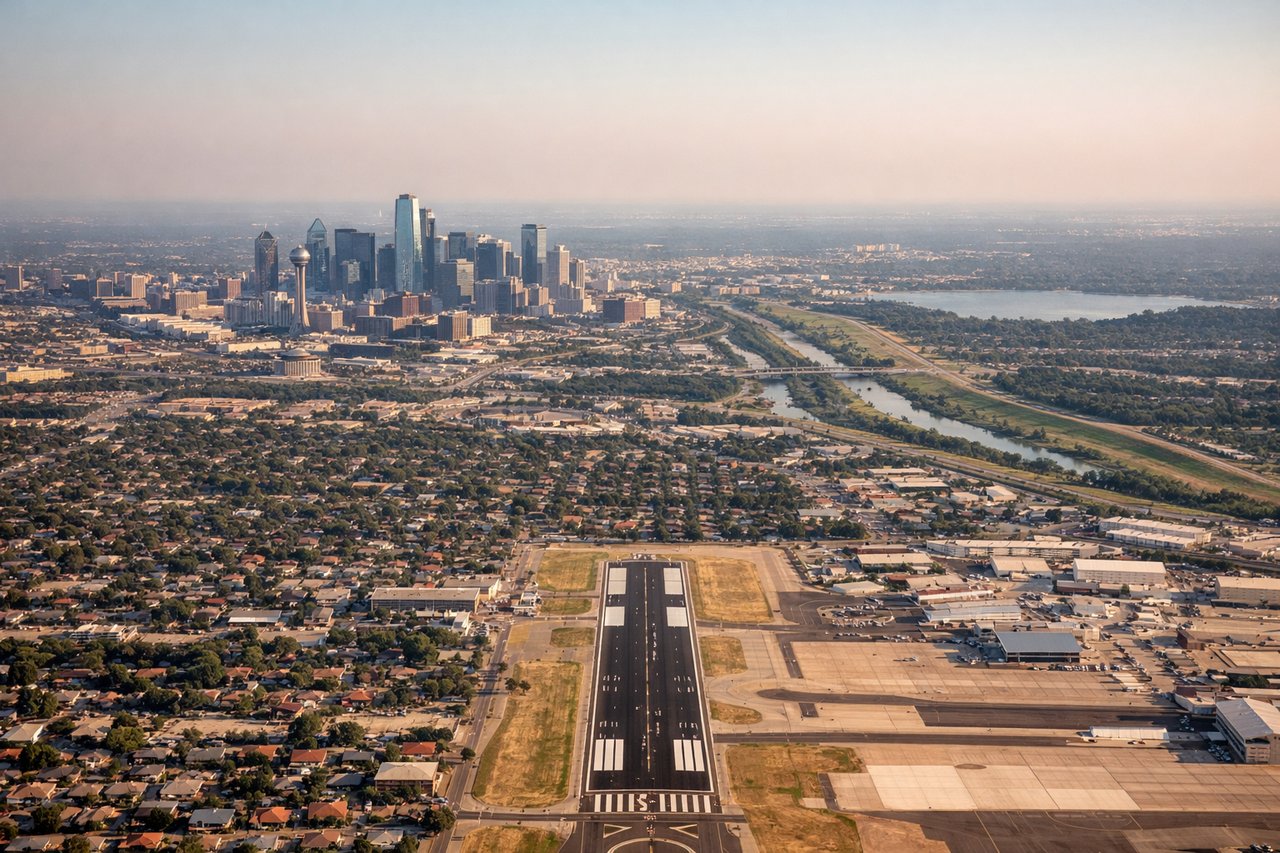
Landing at DAL
RIGHTRight side offers better views during the Dallas approach. Depending on wind conditions and runway assignment, right-side passengers see the Trinity River, downtown Dallas skyline, and the surrounding urban sprawl of the metroplex during descent and final approach into Love Field.
Will your flight be in sunlight?
Pick a date and time in the Sun Map to watch the sun move across your whole flight.
About This Route
Which side of the plane should I sit on flying from Chiang Kai Shek International (TPE) to Dallas Love Fld (DAL)?
Sit on the Left side of the plane for the best views on flights from Taipei to Dallas. Left side scores marginally higher due to superior takeoff scenery from Taipei—the urban harbor and coastline provide more visual interest than the right side's initial climb over suburban terrain. While the landing approach at Dallas is comparable on both sides, the Taipei departure advantage gives left a slight edge for the full flight experience.
What can I see during takeoff from Chiang Kai Shek International in Taipei?
During takeoff from Chiang Kai Shek International (TPE), sit on the Left side for the best views. Left side captures Taipei's urban sprawl and the northern Taiwan coastline during initial climb. The city's harbor and surrounding developed areas provide brief but recognizable urban scenery before the aircraft turns westward over the Taiwan Strait. Notable sights include: Taipei city grid and harbor, northern Taiwan coastline, Taiwan Strait opening to the west.
What can I see when landing at Dallas Love Fld in Dallas?
When landing at Dallas Love Fld (DAL), sit on the Right side for the best views. Right side offers better views during the Dallas approach. Depending on wind conditions and runway assignment, right-side passengers see the Trinity River, downtown Dallas skyline, and the surrounding urban sprawl of the metroplex during descent and final approach into Love Field. Notable sights include: Trinity River corridor, downtown Dallas skyline, Dallas-Fort Worth urban sprawl, Love Field airport complex.
How long is the flight from Taipei to Dallas?
The flight from Chiang Kai Shek International (TPE) to Dallas Love Fld (DAL) takes about 15 hours 20 minutes. The shortest flight path between them is 7,715 miles (12,416 km); winds and air traffic control usually add a few percent.
What does the Taipei to Dallas flight path pass over?
The flight crosses the Pacific Ocean for approximately 8 hours with minimal scenic features—open water dominates the midpoint. Notable waypoints include the Aleutian Islands region (far north of typical routing), the North American coastline near British Columbia or Alaska, and the transition over western Canada and the northern Great Plains. The Rocky Mountains may be visible during descent into Dallas if the aircraft routes through that corridor, though most transpacific flights to Dallas follow a more northerly great-circle path that minimizes mountain visibility.