Right-side seats win overall because the departure scenery from Taiwan is more visually distinctive—the Taiwan Strait, volcanic peaks, and coastal geography provide stronger visual interest than the relatively flat Houston approach. The 13-hour flight path crosses the Pacific with minimal notable landmarks visible at cruise altitude, so the takeoff experience carries more weight.
Flown TPE to IAH? Did we get it right?
Flight Path
Taipei to Houston is 7,926 miles (12,756 km), a flight of about 13 hours 30 minutes.
The flight path crosses the Pacific Ocean heading east-northeast, passing north of Hawaii (not visible from typical cruise altitude of 35,000+ feet). No major landmasses are visible during the mid-Pacific cruise phase. The aircraft approaches North America over the Pacific coast, with the California coastline and Sierra Nevada mountains potentially visible during descent into US airspace, though these are typically passed during night hours on this eastbound routing. The Gulf of Mexico becomes visible during the final descent phase into Houston.
Great circle distance and headings ›


Phase by phase

Takeoff from TPE
RIGHTRight-side seats offer views of the Taiwan Strait and northern Taiwan's coastline during the initial climb-out. The aircraft departs runway 10L/10R heading northeast, so right-side passengers see the strait and coastal geography immediately after liftoff.
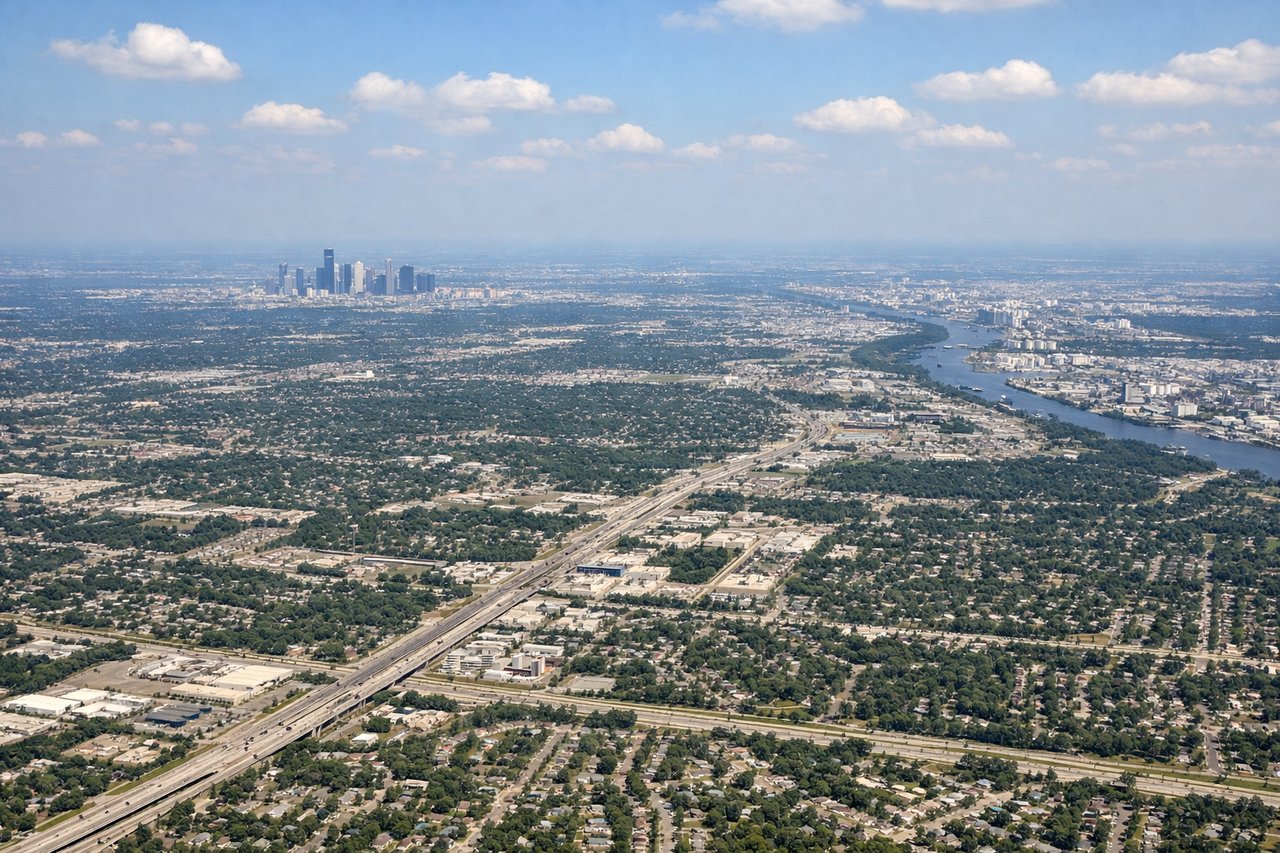
Landing at IAH
LEFTLeft-side seats provide views of the Houston metropolitan area, Buffalo Bayou, and the surrounding coastal plains during descent. IAH's approach from the east means left-side passengers see the city sprawl and bayou system as the aircraft descends toward runway 26L/26R.
Will your flight be in sunlight?
Pick a date and time in the Sun Map to watch the sun move across your whole flight.
About This Route
Which side of the plane should I sit on flying from Chiang Kai Shek International (TPE) to George Bush Intcntl Houston (IAH)?
Sit on the Right side of the plane for the best views on flights from Taipei to Houston. Right-side seats win overall because the departure scenery from Taiwan is more visually distinctive—the Taiwan Strait, volcanic peaks, and coastal geography provide stronger visual interest than the relatively flat Houston approach. The 13-hour flight path crosses the Pacific with minimal notable landmarks visible at cruise altitude, so the takeoff experience carries more weight.
What can I see during takeoff from Chiang Kai Shek International in Taipei?
During takeoff from Chiang Kai Shek International (TPE), sit on the Right side for the best views. Right-side seats offer views of the Taiwan Strait and northern Taiwan's coastline during the initial climb-out. The aircraft departs runway 10L/10R heading northeast, so right-side passengers see the strait and coastal geography immediately after liftoff. Notable sights include: Taiwan Strait (body of water separating Taiwan from mainland China), northern Taiwan coastline with Taipei basin visible inland, Yangmingshan volcanic peaks to the northwest, Keelung harbor and port facilities on the northeast coast.
What can I see when landing at George Bush Intcntl Houston in Houston?
When landing at George Bush Intcntl Houston (IAH), sit on the Left side for the best views. Left-side seats provide views of the Houston metropolitan area, Buffalo Bayou, and the surrounding coastal plains during descent. IAH's approach from the east means left-side passengers see the city sprawl and bayou system as the aircraft descends toward runway 26L/26R. Notable sights include: Houston downtown skyline and urban sprawl across the coastal plain, Buffalo Bayou winding through the city, Galveston Bay and coastal wetlands to the southeast, flat Gulf Coast prairie with sparse vegetation and industrial facilities.
How long is the flight from Taipei to Houston?
The flight from Chiang Kai Shek International (TPE) to George Bush Intcntl Houston (IAH) takes about 13 hours 30 minutes. The shortest flight path between them is 7,926 miles (12,756 km); winds and air traffic control usually add a few percent.
What does the Taipei to Houston flight path pass over?
The flight path crosses the Pacific Ocean heading east-northeast, passing north of Hawaii (not visible from typical cruise altitude of 35,000+ feet). No major landmasses are visible during the mid-Pacific cruise phase. The aircraft approaches North America over the Pacific coast, with the California coastline and Sierra Nevada mountains potentially visible during descent into US airspace, though these are typically passed during night hours on this eastbound routing. The Gulf of Mexico becomes visible during the final descent phase into Houston.