Tunis to Riyadh is 2,296 miles (3,695 km), a flight of about 5 hours.
The right side captures the most dramatic scenery at departure (Mediterranean and Tunisian coast), while the left side dominates the approach. However, right-side seats offer the more visually striking initial climb-out over water and coastline, making it the stronger overall choice for this route.
Flight Path
The flight path crosses the central Mediterranean, then transitions over Libya's coastal regions and interior desert. You'll pass over the Libyan coast near the Gulf of Sidra (visible from altitude as a broad indentation in the coastline), then inland over the Libyan Sahara with its flat, featureless tan terrain. The flight then crosses into Egypt briefly before entering Saudi Arabian airspace over the Red Sea's eastern shore, eventually reaching the Najd plateau where Riyadh sits. The most notable midpoint feature is the transition from Mediterranean blue water to the vast tan expanse of the Sahara and Arabian deserts—a stark color and texture change visible from cruising altitude.
Great circle distance and headings ›

Phase by phase
Takeoff from TUN
RIGHTRight-side seats offer views of the Mediterranean coastline and the Gulf of Tunis as the aircraft climbs out on its typical southeast heading. You'll see the Tunisian coast receding northward, with the city of Tunis and its suburbs visible below during initial climb.
Landing at RUH
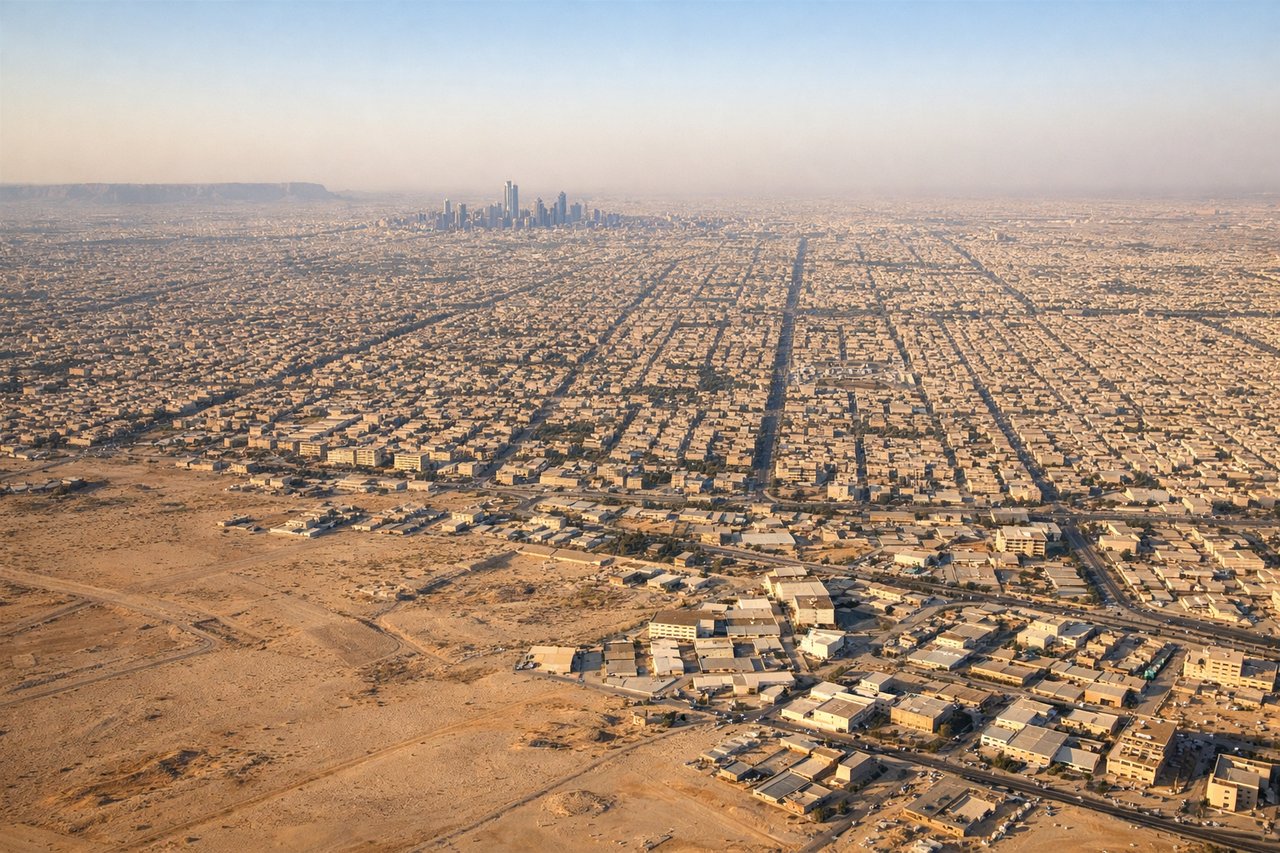
LEFTLeft-side seats provide excellent views during descent into Riyadh. As the aircraft approaches from the northwest on its typical landing vector, the left side reveals the Wadi Hanifah valley and the sprawling city of Riyadh with its distinctive urban grid and high-rise clusters becoming increasingly detailed.
Landmarks on this routeAll landmarks →
Will your flight be in sunlight?
Pick a date and time in the Sun Map to watch the sun move across your whole flight.
About This Route
Which side of the plane should I sit on flying from Carthage (TUN) to King Khaled International (RUH)?
Sit on the Right side of the plane for the best views on flights from Tunis to Riyadh. The right side captures the most dramatic scenery at departure (Mediterranean and Tunisian coast), while the left side dominates the approach. However, right-side seats offer the more visually striking initial climb-out over water and coastline, making it the stronger overall choice for this route.
What can I see during takeoff from Carthage in Tunis?
During takeoff from Carthage (TUN), sit on the Right side for the best views. Right-side seats offer views of the Mediterranean coastline and the Gulf of Tunis as the aircraft climbs out on its typical southeast heading. You'll see the Tunisian coast receding northward, with the city of Tunis and its suburbs visible below during initial climb. Notable sights include: Gulf of Tunis, Mediterranean coastline, Tunis city sprawl, Cap Bon peninsula (to the northeast).
What can I see when landing at King Khaled International in Riyadh?
When landing at King Khaled International (RUH), sit on the Left side for the best views. Left-side seats provide excellent views during descent into Riyadh. As the aircraft approaches from the northwest on its typical landing vector, the left side reveals the Wadi Hanifah valley and the sprawling city of Riyadh with its distinctive urban grid and high-rise clusters becoming increasingly detailed. Notable sights include: Wadi Hanifah valley, Riyadh city center and skyline, Saudi desert terrain, King Khaled International Airport runways.
How long is the flight from Tunis to Riyadh?
The flight from Carthage (TUN) to King Khaled International (RUH) takes about 5 hours. The shortest flight path between them is 2,296 miles (3,695 km); winds and air traffic control usually add a few percent.
What does the Tunis to Riyadh flight path pass over?
The flight path crosses the central Mediterranean, then transitions over Libya's coastal regions and interior desert. You'll pass over the Libyan coast near the Gulf of Sidra (visible from altitude as a broad indentation in the coastline), then inland over the Libyan Sahara with its flat, featureless tan terrain. The flight then crosses into Egypt briefly before entering Saudi Arabian airspace over the Red Sea's eastern shore, eventually reaching the Najd plateau where Riyadh sits. The most notable midpoint feature is the transition from Mediterranean blue water to the vast tan expanse of the Sahara and Arabian deserts—a stark color and texture change visible from cruising altitude.