Warsaw to Billund is 539 miles (867 km), a flight of about 1 hour 20 minutes.
While takeoff favors the right for Warsaw's river views, the landing approach over Billund's distinctive Danish lake-and-field landscape from the left side provides more visually interesting geography. The left side captures the Lillebælt strait and the characteristic Jutland terrain that defines this route's destination region.
Flight Path
The flight crosses the North German Plain from Warsaw northwest toward Denmark. Notable features along the route include the Oder River valley (visible during early climb), the flat Brandenburg and Mecklenburg plains of northeastern Germany, and the southern Baltic coast approaching Denmark. The Pomeranian Lakeland (Pommersches Seenland) with its glacial lakes becomes visible in the final approach phase. No significant mountain ranges; the entire route crosses lowland terrain with scattered forests and agricultural areas. The Baltic Sea remains visible to the north throughout much of the flight but typically too distant for detailed viewing from cruise altitude.
Great circle distance and headings ›Phase by phase
Takeoff from WAW
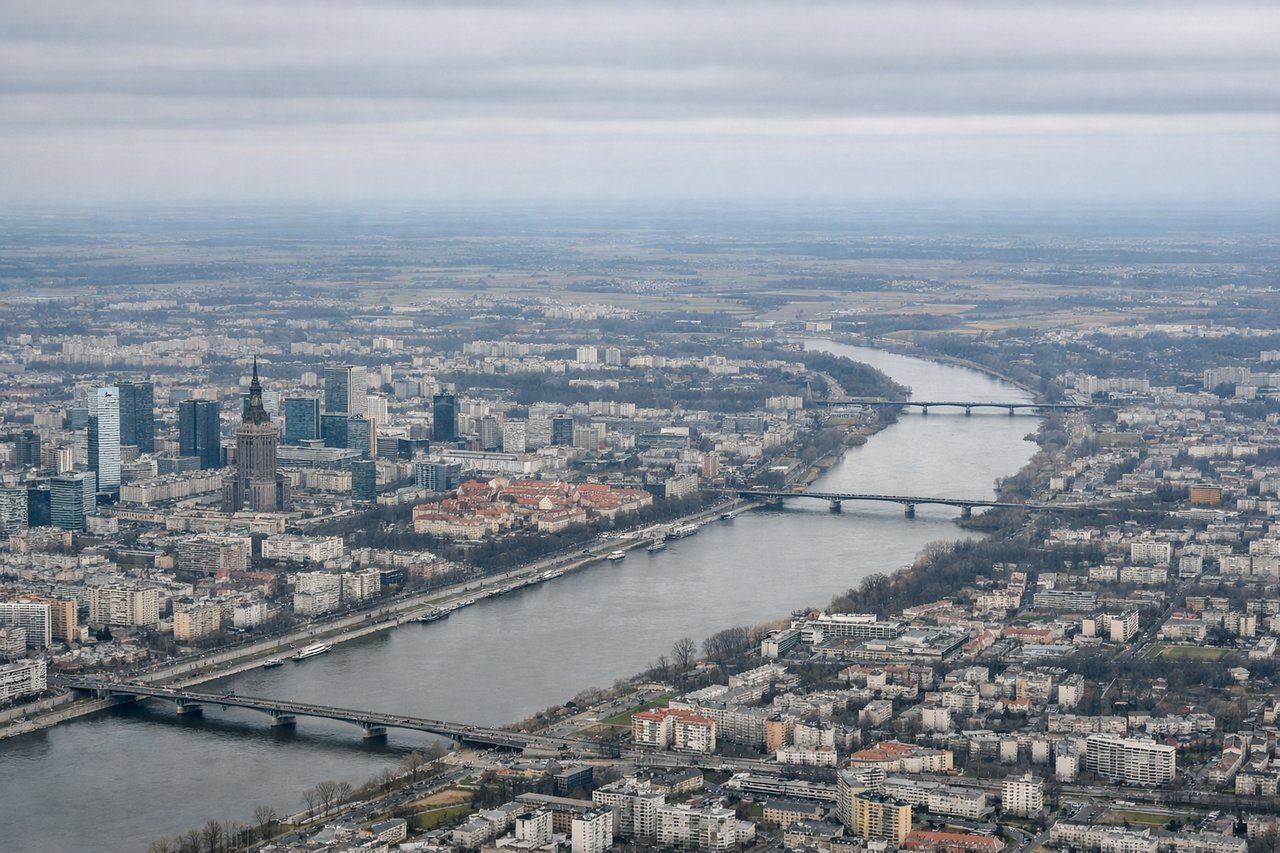
RIGHTWarsaw typically departs eastbound (runways 33L/33R). Right-side seats face north across the Vistula River valley and the flat Masovian plains, offering views of Warsaw's urban sprawl and the river's meandering path through the city.
Landing at BLL
LEFTBillund typically uses runways 27 or 09 depending on wind. On approach from the southeast, left-side seats face north and west across the Lillebælt strait and the Jutland Peninsula's distinctive lake-dotted landscape, with views of the approach path over Denmark's characteristic terrain.
Will your flight be in sunlight?
Pick a date and time in the Sun Map to watch the sun move across your whole flight.
About This Route
Which side of the plane should I sit on flying from Okecie (WAW) to Billund (BLL)?
Sit on the Left side of the plane for the best views on flights from Warsaw to Billund. While takeoff favors the right for Warsaw's river views, the landing approach over Billund's distinctive Danish lake-and-field landscape from the left side provides more visually interesting geography. The left side captures the Lillebælt strait and the characteristic Jutland terrain that defines this route's destination region.
What can I see during takeoff from Okecie in Warsaw?
During takeoff from Okecie (WAW), sit on the Right side for the best views. Warsaw typically departs eastbound (runways 33L/33R). Right-side seats face north across the Vistula River valley and the flat Masovian plains, offering views of Warsaw's urban sprawl and the river's meandering path through the city. Notable sights include: Vistula River (distinctive S-curves through Warsaw), Warsaw city center and Old Town district, Masovian plains extending north, Narew River confluence.
What can I see when landing at Billund in Billund?
When landing at Billund (BLL), sit on the Left side for the best views. Billund typically uses runways 27 or 09 depending on wind. On approach from the southeast, left-side seats face north and west across the Lillebælt strait and the Jutland Peninsula's distinctive lake-dotted landscape, with views of the approach path over Denmark's characteristic terrain. Notable sights include: Lillebælt strait (water body separating Jutland from Funen), Billund Airport's surrounding agricultural landscape, scattered Danish lakes and forest patches, Jutland Peninsula's gently rolling terrain.
How long is the flight from Warsaw to Billund?
The flight from Okecie (WAW) to Billund (BLL) takes about 1 hour 20 minutes. The shortest flight path between them is 539 miles (867 km); winds and air traffic control usually add a few percent.
What does the Warsaw to Billund flight path pass over?
The flight crosses the North German Plain from Warsaw northwest toward Denmark. Notable features along the route include the Oder River valley (visible during early climb), the flat Brandenburg and Mecklenburg plains of northeastern Germany, and the southern Baltic coast approaching Denmark. The Pomeranian Lakeland (Pommersches Seenland) with its glacial lakes becomes visible in the final approach phase. No significant mountain ranges; the entire route crosses lowland terrain with scattered forests and agricultural areas. The Baltic Sea remains visible to the north throughout much of the flight but typically too distant for detailed viewing from cruise altitude.