St. John's to Calgary is 2,686 miles (4,323 km), a flight of about 5 hours 15 minutes.
While takeoff offers coastal scenery, the landing approach provides the most dramatic and sustained visual experience—the Rocky Mountains are far more visually striking than the Atlantic coastline from altitude, and the mountain views dominate the western approach to Calgary.
Flight Path
The flight path crosses eastern Canada's interior, passing over Labrador and Quebec's boreal forest (sparse, low vegetation visible from altitude), then transitions over the Canadian Shield with its characteristic lakes and rocky terrain. The Hudson Bay region lies to the north of the typical flight path. As the aircraft moves westward over Manitoba and Saskatchewan, the landscape gradually flattens into prairie. The transition from forest to grassland is gradual but noticeable. No major mountain ranges are visible until the final descent approach when the Rocky Mountains appear on the western horizon.
Great circle distance and headings ›Phase by phase
Takeoff from YYT
RIGHTRight-side seats offer views of St. John's Harbor and the Atlantic coastline as the aircraft climbs westward. The city's distinctive geography—surrounded by water on three sides—is most visible from the right wing during initial climb.
Landing at YYC
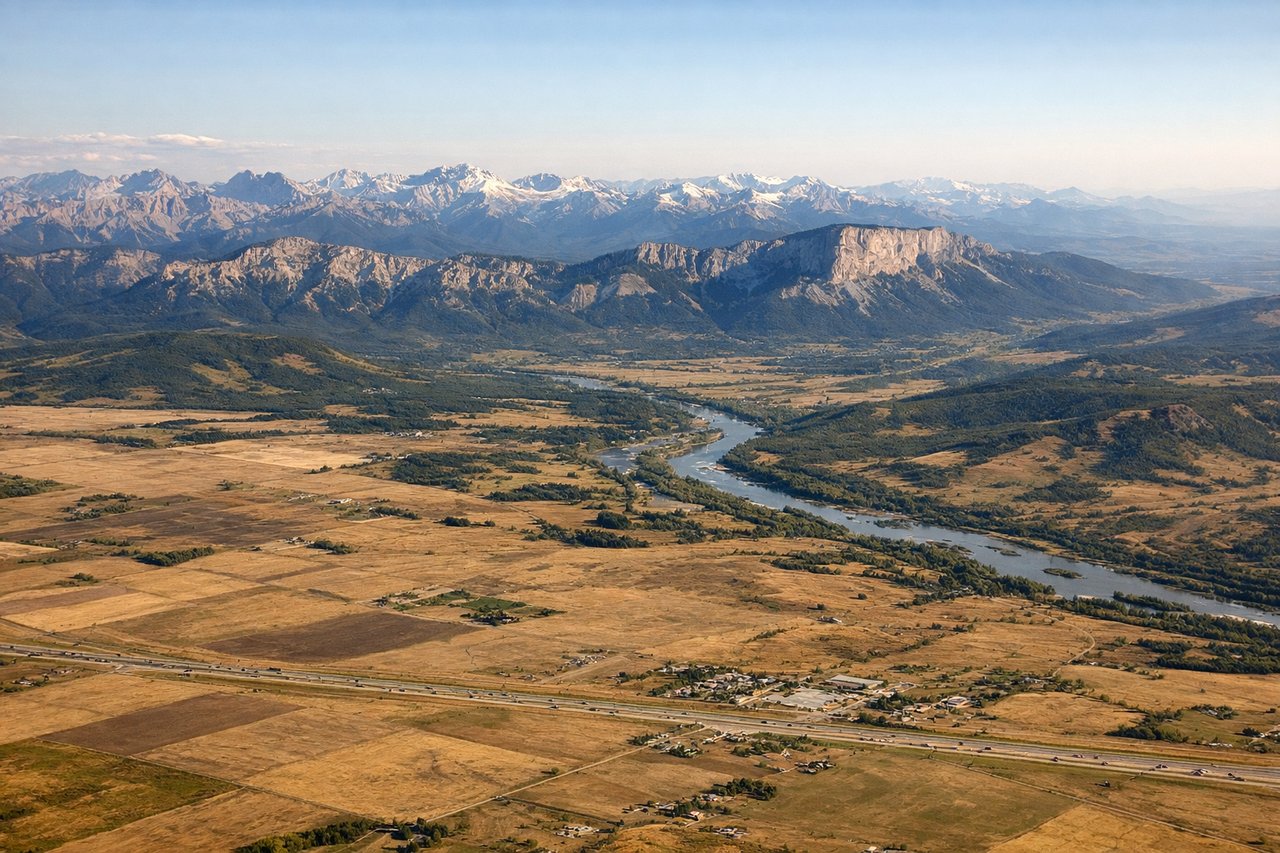
LEFTLeft-side seats provide excellent views of the Canadian Rockies and the approach into Calgary from the west. The mountains are most prominent on the left during descent, and the prairies stretching eastward toward the city are visible across the entire frame.
Landmarks on this routeAll landmarks →
Will your flight be in sunlight?
Pick a date and time in the Sun Map to watch the sun move across your whole flight.
About This Route
Which side of the plane should I sit on flying from St Johns International (YYT) to Calgary International (YYC)?
Sit on the Left side of the plane for the best views on flights from St. John's to Calgary. While takeoff offers coastal scenery, the landing approach provides the most dramatic and sustained visual experience—the Rocky Mountains are far more visually striking than the Atlantic coastline from altitude, and the mountain views dominate the western approach to Calgary.
What can I see during takeoff from St Johns International in St. John's?
During takeoff from St Johns International (YYT), sit on the Right side for the best views. Right-side seats offer views of St. John's Harbor and the Atlantic coastline as the aircraft climbs westward. The city's distinctive geography—surrounded by water on three sides—is most visible from the right wing during initial climb. Notable sights include: St. John's Harbor, Signal Hill, Atlantic coastline, Conception Bay.
What can I see when landing at Calgary International in Calgary?
When landing at Calgary International (YYC), sit on the Left side for the best views. Left-side seats provide excellent views of the Canadian Rockies and the approach into Calgary from the west. The mountains are most prominent on the left during descent, and the prairies stretching eastward toward the city are visible across the entire frame. Notable sights include: Canadian Rocky Mountains (Front Ranges), Bow River valley, Calgary skyline, Alberta prairie.
How long is the flight from St. John's to Calgary?
The flight from St Johns International (YYT) to Calgary International (YYC) takes about 5 hours 15 minutes. The shortest flight path between them is 2,686 miles (4,323 km); winds and air traffic control usually add a few percent.
What does the St. John's to Calgary flight path pass over?
The flight path crosses eastern Canada's interior, passing over Labrador and Quebec's boreal forest (sparse, low vegetation visible from altitude), then transitions over the Canadian Shield with its characteristic lakes and rocky terrain. The Hudson Bay region lies to the north of the typical flight path. As the aircraft moves westward over Manitoba and Saskatchewan, the landscape gradually flattens into prairie. The transition from forest to grassland is gradual but noticeable. No major mountain ranges are visible until the final descent approach when the Rocky Mountains appear on the western horizon.