The Brisbane landing on the right offers the most visually rewarding single moment of the flight — Moreton Bay, Stradbroke Island, and the coast are genuinely spectacular on approach. The Zurich takeoff on the left is excellent for Alps views, but the right side at Brisbane edges it overall. If you must pick one side for the whole flight, right gives you the better arrival.
Flight Path
Routing typically passes over the Indian subcontinent (Himalayas visible from high altitude on clear days), the Bay of Bengal, the Malay Peninsula and Singapore, then crosses the Indonesian archipelago — Sumatra, Java, and Bali are often visible below — before crossing the Timor Sea and entering Australian airspace over the Northern Territory, then tracking southeast over Queensland's interior.
Great circle distance and headings ›


Phase by phase

Takeoff from ZRH
LEFTZurich typically departs on runway 16 heading south, or runway 28 heading west. On a southbound departure, the left side faces east toward the Alps — you get a clear view of the Glarus Alps and the Säntis massif. On a westbound departure, left side still captures Lake Zurich stretching southeast and the Albis ridge.
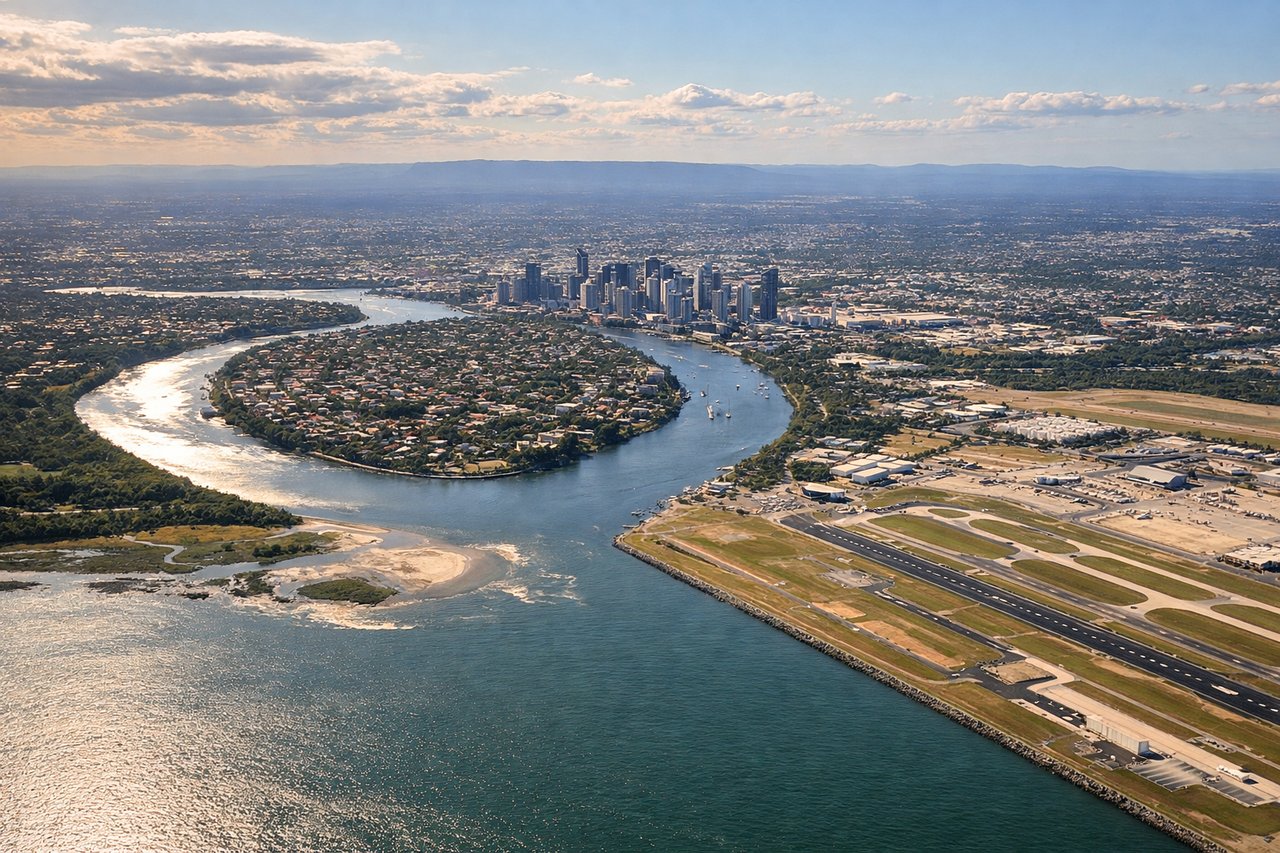
Landing at BNE
RIGHTBrisbane typically lands on runway 01 heading north or runway 19 heading south. On a runway 01 approach from the south, the right side faces east toward Moreton Bay, Stradbroke Island, and the Gold Coast coastline — a far more dramatic view than the western suburban sprawl. On runway 19, right side still captures the CBD and river bends.
Landmarks on this routeAll landmarks →
Will your flight be in sunlight?
See exactly which side of the plane gets sun and shade at your departure time.
About This Route
Which side of the plane should I sit on flying from Zurich (ZRH) to Brisbane International (BNE)?
Sit on the Right side of the plane for the best views on flights from Zurich to Brisbane. The Brisbane landing on the right offers the most visually rewarding single moment of the flight — Moreton Bay, Stradbroke Island, and the coast are genuinely spectacular on approach. The Zurich takeoff on the left is excellent for Alps views, but the right side at Brisbane edges it overall. If you must pick one side for the whole flight, right gives you the better arrival.
What can I see during takeoff from Zurich in Zurich?
During takeoff from Zurich (ZRH), sit on the Left side for the best views. Zurich typically departs on runway 16 heading south, or runway 28 heading west. On a southbound departure, the left side faces east toward the Alps — you get a clear view of the Glarus Alps and the Säntis massif. On a westbound departure, left side still captures Lake Zurich stretching southeast and the Albis ridge. Notable sights include: Lake Zurich, Säntis massif (Appenzell Alps), Glarus Alps, Zurich city center grid.
What can I see when landing at Brisbane International in Brisbane?
When landing at Brisbane International (BNE), sit on the Right side for the best views. Brisbane typically lands on runway 01 heading north or runway 19 heading south. On a runway 01 approach from the south, the right side faces east toward Moreton Bay, Stradbroke Island, and the Gold Coast coastline — a far more dramatic view than the western suburban sprawl. On runway 19, right side still captures the CBD and river bends. Notable sights include: Moreton Bay, North Stradbroke Island, Brisbane River meanders, Brisbane CBD.
How long is the flight from Zurich to Brisbane?
The flight from Zurich (ZRH) to Brisbane International (BNE) takes Approximately 21-23 hours with one stop (typically Singapore, Dubai, or Doha — no nonstop service exists).
What does the Zurich to Brisbane flight path pass over?
Routing typically passes over the Indian subcontinent (Himalayas visible from high altitude on clear days), the Bay of Bengal, the Malay Peninsula and Singapore, then crosses the Indonesian archipelago — Sumatra, Java, and Bali are often visible below — before crossing the Timor Sea and entering Australian airspace over the Northern Territory, then tracking southeast over Queensland's interior.