Anchorage to Juneau is 569 miles (916 km), a flight of about 1 hour 15 minutes.
The right side delivers a continuous sequence of Alaska's signature scenery — Turnagain Arm and the Chugach Mountains on departure, glacier-carved coastline during cruise, and the iconic Mendenhall Glacier on arrival — making it the stronger and more consistent view throughout the flight.
Flight Path
Prince William Sound's fjord coastline, Chugach Mountains icefields, and scattered tidewater glaciers along the Gulf of Alaska coast as the route parallels the shoreline toward the Alaska Panhandle.
Great circle distance and headings ›


Phase by phase
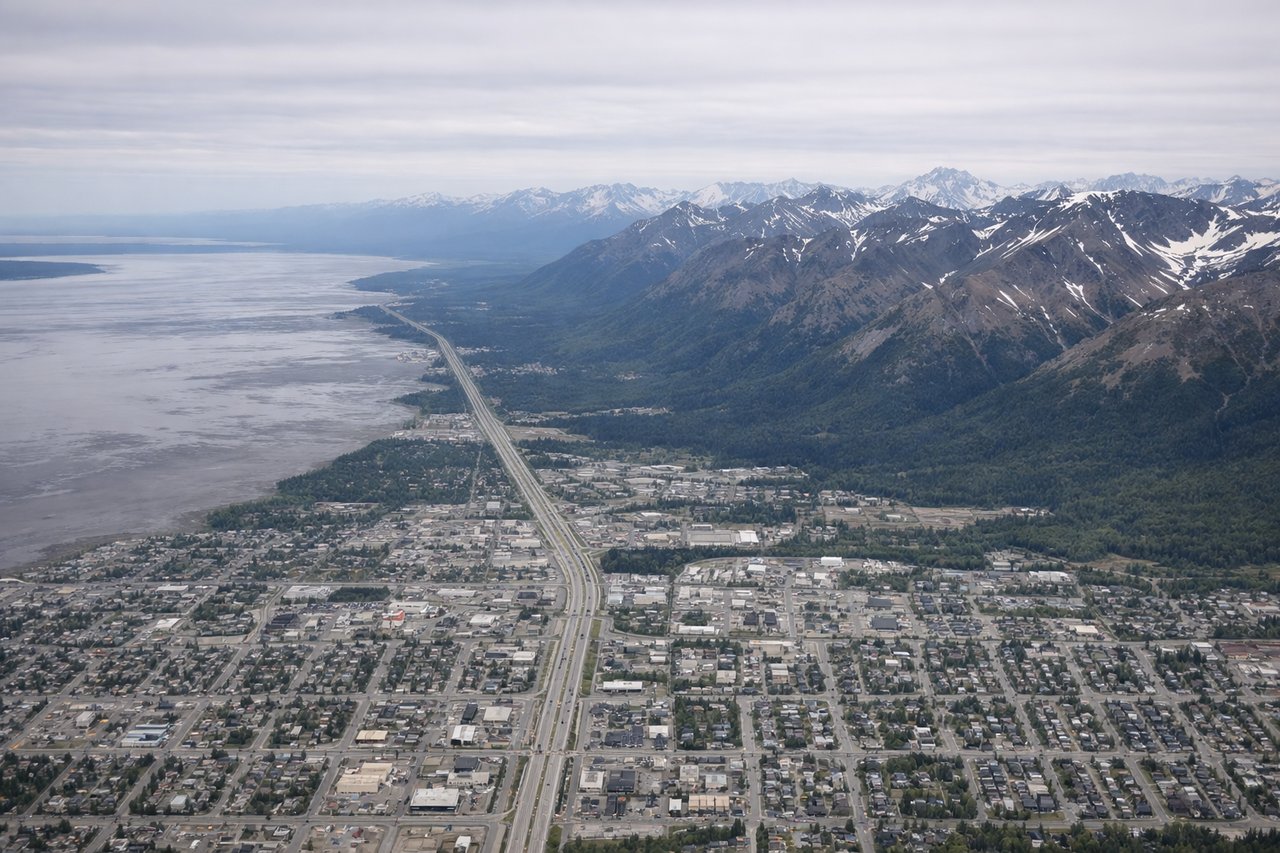
Takeoff from ANC
RIGHTDeparting ANC and turning southeast toward Juneau, the right side looks south across Turnagain Arm toward the Chugach Mountains and Portage Glacier area, with Cook Inlet's mudflats and Mount Susitna fading behind. It's a dramatic mix of water, tidal flats, and glaciated peaks right off the wingtip during climb-out.
Landing at JNU
RIGHTOn approach into JNU via Gastineau Channel, the aircraft typically banks with the north side of the valley in view, putting Mendenhall Glacier and its icefield squarely on the right side just before the final turn onto the channel. This is one of the most photographed glacier views from a commercial jet in the U.S.
Landmarks on this routeAll landmarks →
Will your flight be in sunlight?
Pick a date and time in the Sun Map to watch the sun move across your whole flight.
About This Route
Which side of the plane should I sit on flying from Ted Stevens Anchorage International (ANC) to Juneau International (JNU)?
Sit on the Right side of the plane for the best views on flights from Anchorage to Juneau. The right side delivers a continuous sequence of Alaska's signature scenery — Turnagain Arm and the Chugach Mountains on departure, glacier-carved coastline during cruise, and the iconic Mendenhall Glacier on arrival — making it the stronger and more consistent view throughout the flight.
What can I see during takeoff from Ted Stevens Anchorage International in Anchorage?
During takeoff from Ted Stevens Anchorage International (ANC), sit on the Right side for the best views. Departing ANC and turning southeast toward Juneau, the right side looks south across Turnagain Arm toward the Chugach Mountains and Portage Glacier area, with Cook Inlet's mudflats and Mount Susitna fading behind. It's a dramatic mix of water, tidal flats, and glaciated peaks right off the wingtip during climb-out. Notable sights include: Turnagain Arm, Chugach Mountains, Portage Glacier area, Cook Inlet.
What can I see when landing at Juneau International in Juneau?
When landing at Juneau International (JNU), sit on the Right side for the best views. On approach into JNU via Gastineau Channel, the aircraft typically banks with the north side of the valley in view, putting Mendenhall Glacier and its icefield squarely on the right side just before the final turn onto the channel. This is one of the most photographed glacier views from a commercial jet in the U.S. Notable sights include: Mendenhall Glacier, Mendenhall Valley, Gastineau Channel, Coast Mountains.
How long is the flight from Anchorage to Juneau?
The flight from Ted Stevens Anchorage International (ANC) to Juneau International (JNU) takes about 1 hour 15 minutes. The shortest flight path between them is 569 miles (916 km); winds and air traffic control usually add a few percent.
What does the Anchorage to Juneau flight path pass over?
Prince William Sound's fjord coastline, Chugach Mountains icefields, and scattered tidewater glaciers along the Gulf of Alaska coast as the route parallels the shoreline toward the Alaska Panhandle.