The right side scores higher due to superior cruise scenery. The flight path crosses the Syrian Desert and approaches the Persian Gulf's distinctive shallow turquoise waters and coastal features—more visually varied and geographically distinctive than the left side's open Mediterranean and gradual desert transition. Kuwait's harbor and urban approach also outweighs Beirut's departure advantage.
Flight Path
Anti-Lebanon range (Jabal al-Sharqi) visible inland from Beirut; Syrian Desert plateau dominating the cruise phase with sparse settlements; Euphrates River valley to the north (not directly on route but visible from altitude); transition from arid steppe to coastal lowlands approaching the Persian Gulf; shallow Persian Gulf waters with visible sandbars and tidal patterns near Kuwait
Great circle distance and headings ›Phase by phase
Takeoff from BEY
LEFTBeirut's coastal departure offers immediate urban and Mediterranean scenery. The left side captures the city skyline, harbor, and Mount Lebanon rising inland—dramatic relief from sea level.
Landing at KWI
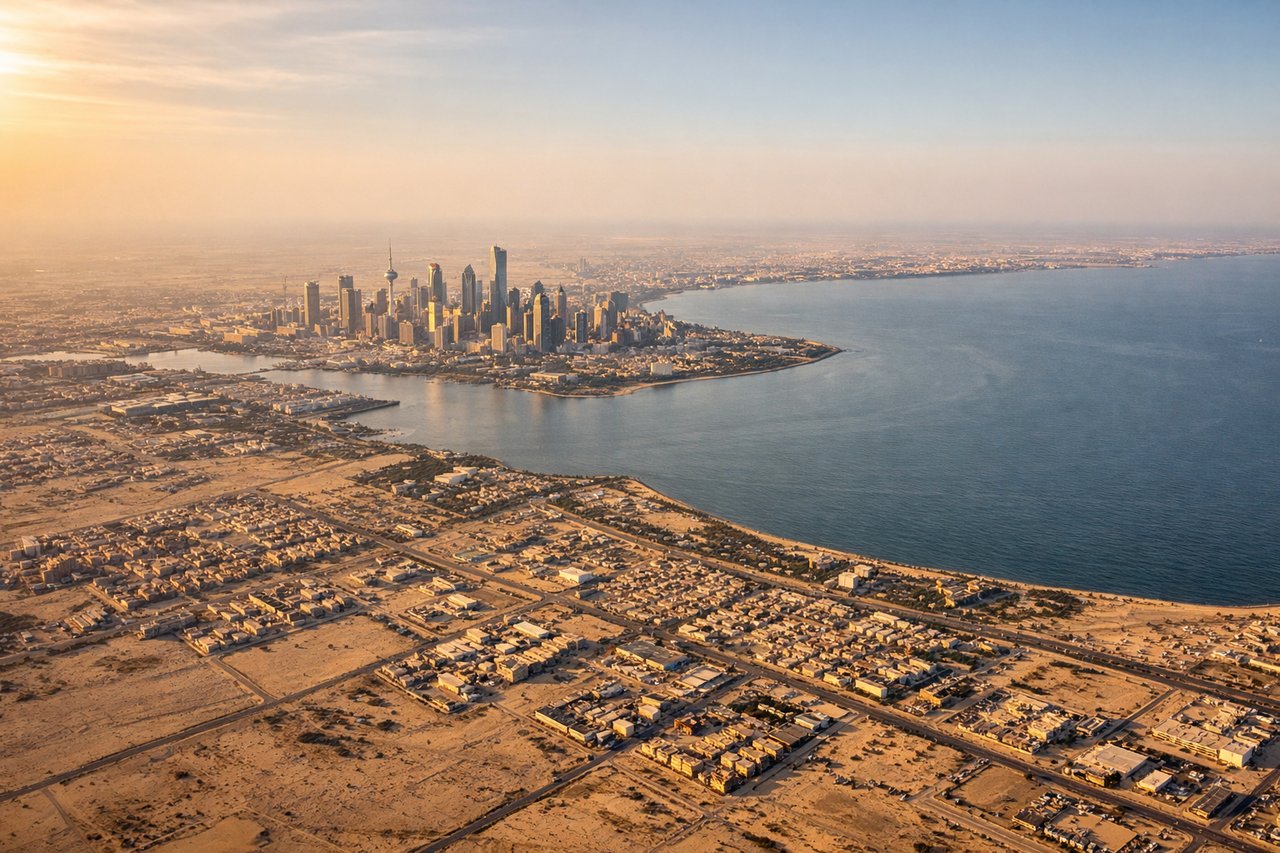
RIGHTThe right side during approach to Kuwait reveals the Persian Gulf's shallow turquoise waters, coastal salt marshes, and the dramatic transition from desert to sea. Kuwait's urban sprawl and harbor provide strong terminal scenery.
Will your flight be in sunlight?
See exactly which side of the plane gets sun and shade at your departure time.
About This Route
Which side of the plane should I sit on flying from Beirut International (BEY) to Kuwait International Airport (KWI)?
Sit on the Right side of the plane for the best views on flights from Beirut to Kuwait. The right side scores higher due to superior cruise scenery. The flight path crosses the Syrian Desert and approaches the Persian Gulf's distinctive shallow turquoise waters and coastal features—more visually varied and geographically distinctive than the left side's open Mediterranean and gradual desert transition. Kuwait's harbor and urban approach also outweighs Beirut's departure advantage.
What can I see during takeoff from Beirut International in Beirut?
During takeoff from Beirut International (BEY), sit on the Left side for the best views. Beirut's coastal departure offers immediate urban and Mediterranean scenery. The left side captures the city skyline, harbor, and Mount Lebanon rising inland—dramatic relief from sea level. Notable sights include: Beirut harbor and waterfront, Mount Lebanon (Jabal Lubnan) ridge, Mediterranean coastline, city sprawl extending south toward Sidon.
What can I see when landing at Kuwait International Airport in Kuwait?
When landing at Kuwait International Airport (KWI), sit on the Right side for the best views. The right side during approach to Kuwait reveals the Persian Gulf's shallow turquoise waters, coastal salt marshes, and the dramatic transition from desert to sea. Kuwait's urban sprawl and harbor provide strong terminal scenery. Notable sights include: Persian Gulf shallow waters and sandbars, Kuwait Bay and harbor, Kuwait City skyline, Warbah Island and coastal marshlands.
How long is the flight from Beirut to Kuwait?
The flight from Beirut International (BEY) to Kuwait International Airport (KWI) takes 2h 15m.
What does the Beirut to Kuwait flight path pass over?
Anti-Lebanon range (Jabal al-Sharqi) visible inland from Beirut; Syrian Desert plateau dominating the cruise phase with sparse settlements; Euphrates River valley to the north (not directly on route but visible from altitude); transition from arid steppe to coastal lowlands approaching the Persian Gulf; shallow Persian Gulf waters with visible sandbars and tidal patterns near Kuwait