San Carlos De Bariloch to Ushuaia is 955 miles (1,537 km), a flight of about 3 hours 15 minutes.
While left dominates the takeoff experience, right provides superior views for the longer descent phase and the dramatic Beagle Channel approach, which is the signature scenic element of this route.
Flight Path
Lago Viedma and Lago Argentino (visible as you pass over the Patagonian steppe south of Bariloche), the Río Santa Cruz valley, and the transition from Andean foothills to windswept Patagonian plateau with sparse vegetation and glacial meltwater rivers.
Great circle distance and headings ›

Phase by phase
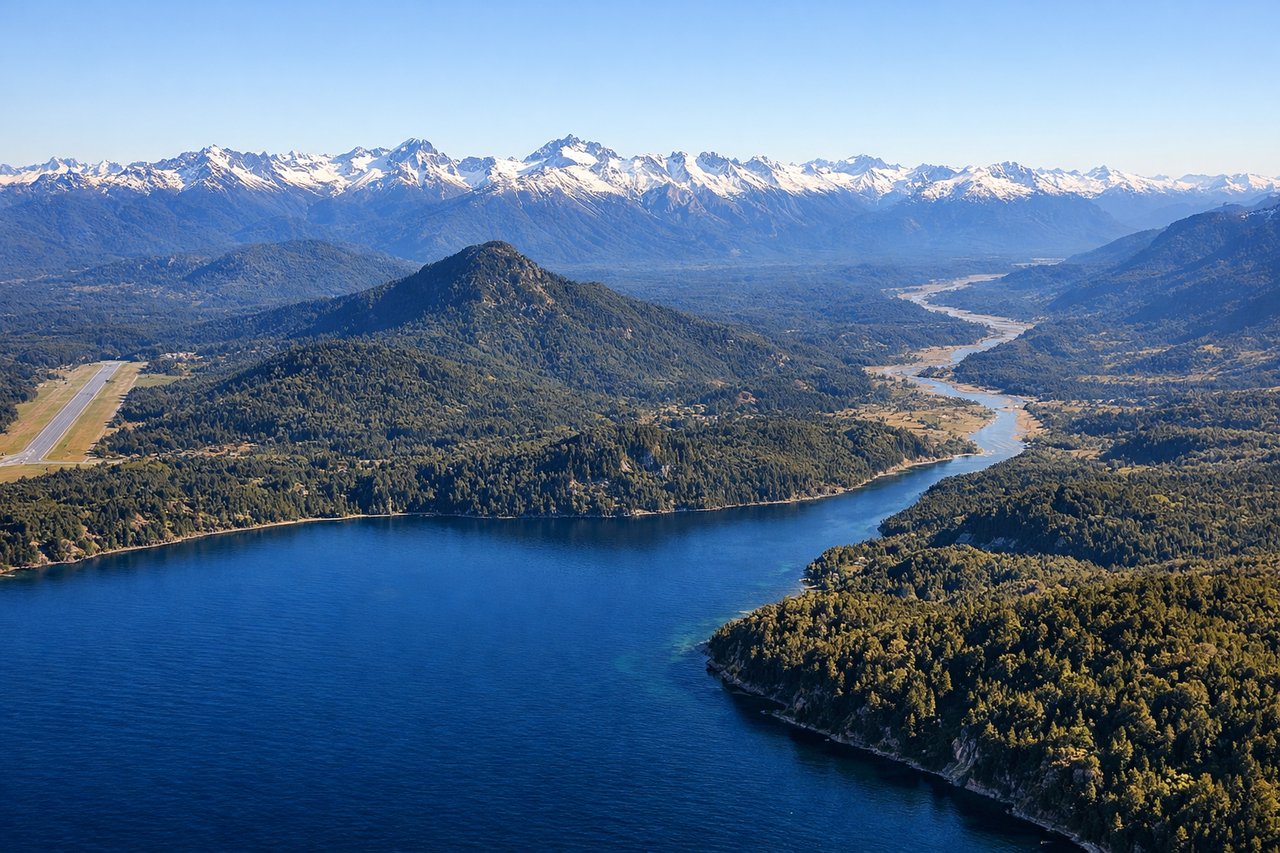
Takeoff from BRC
LEFTLeft side offers immediate views of Lago Nahuel Huapi and the Andes foothills as you climb out southbound. The lake's distinctive shape and surrounding peaks dominate the early climb phase.
Landing at USH
RIGHTRight side provides the best approach views of the Beagle Channel, Ushuaia's coastal position, and the Martial Mountains rising directly behind the city. The channel's distinctive geography and surrounding terrain are most visible from the right during southbound descent.
Landmarks on this routeAll landmarks →
Will your flight be in sunlight?
Pick a date and time in the Sun Map to watch the sun move across your whole flight.
About This Route
Which side of the plane should I sit on flying from San Carlos De Bariloche (BRC) to Ushuaia Malvinas Argentinas (USH)?
Sit on the Right side of the plane for the best views on flights from San Carlos De Bariloch to Ushuaia. While left dominates the takeoff experience, right provides superior views for the longer descent phase and the dramatic Beagle Channel approach, which is the signature scenic element of this route.
What can I see during takeoff from San Carlos De Bariloche in San Carlos De Bariloch?
During takeoff from San Carlos De Bariloche (BRC), sit on the Left side for the best views. Left side offers immediate views of Lago Nahuel Huapi and the Andes foothills as you climb out southbound. The lake's distinctive shape and surrounding peaks dominate the early climb phase. Notable sights include: Lago Nahuel Huapi, Cerro Campanario, Andes mountain ridgeline, Río Limay valley.
What can I see when landing at Ushuaia Malvinas Argentinas in Ushuaia?
When landing at Ushuaia Malvinas Argentinas (USH), sit on the Right side for the best views. Right side provides the best approach views of the Beagle Channel, Ushuaia's coastal position, and the Martial Mountains rising directly behind the city. The channel's distinctive geography and surrounding terrain are most visible from the right during southbound descent. Notable sights include: Beagle Channel, Ushuaia city waterfront, Martial Mountains, Isla de los Estados (distant).
How long is the flight from San Carlos De Bariloch to Ushuaia?
The flight from San Carlos De Bariloche (BRC) to Ushuaia Malvinas Argentinas (USH) takes about 3 hours 15 minutes. The shortest flight path between them is 955 miles (1,537 km); winds and air traffic control usually add a few percent.
What does the San Carlos De Bariloch to Ushuaia flight path pass over?
Lago Viedma and Lago Argentino (visible as you pass over the Patagonian steppe south of Bariloche), the Río Santa Cruz valley, and the transition from Andean foothills to windswept Patagonian plateau with sparse vegetation and glacial meltwater rivers.