Beauvais to Lisbon is 923 miles (1,485 km), a flight of about 2 hours 15 minutes.
While the right offers good departure views, the left side captures the dramatic Tagus estuary and Lisbon's iconic arrival scenery, which is more visually distinctive and memorable than the French departure plains.
Flight Path
The flight path crosses the Loire Valley (visible as a broad river valley with châteaux-dotted terrain around 1 hour into flight), then transitions over the Massif Central's northern edge. The Pyrenees remain too far south to be visible. Most of the route crosses the Aquitaine plains and northern Spain's Meseta plateau at cruise altitude, with limited dramatic terrain. The approach to Portugal brings views of the Atlantic coast and the Tagus estuary system.
Great circle distance and headings ›.jpg?width=600)
.jpg?width=600)
Phase by phase
Takeoff from BVA
RIGHTBeauvais typically departs to the southwest (runways 30/12). Right-side seats face toward the Seine valley and the Île-de-France region as you climb out, offering views of the agricultural plains and river systems that define this approach corridor.
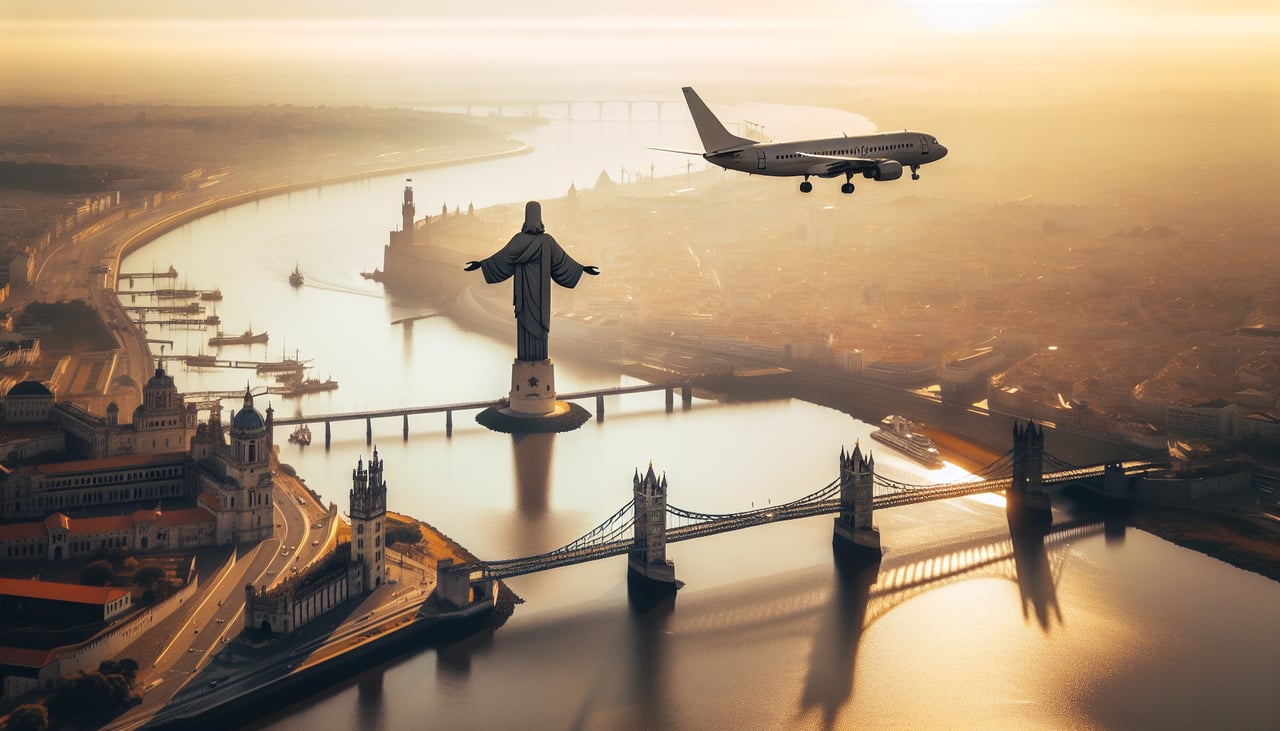
Landing at LIS
LEFTLisbon typically lands from the northeast on runway 03. Left-side seats during descent offer views of the Tagus River estuary, the city's distinctive topography on the seven hills, and the bridge approaches. This is the classic arrival view into Humberto Delgado Airport.
Landmarks on this routeAll landmarks →
Will your flight be in sunlight?
Pick a date and time in the Sun Map to watch the sun move across your whole flight.
About This Route
Which side of the plane should I sit on flying from Tille (BVA) to Lisboa (LIS)?
Sit on the Left side of the plane for the best views on flights from Beauvais to Lisbon. While the right offers good departure views, the left side captures the dramatic Tagus estuary and Lisbon's iconic arrival scenery, which is more visually distinctive and memorable than the French departure plains.
What can I see during takeoff from Tille in Beauvais?
During takeoff from Tille (BVA), sit on the Right side for the best views. Beauvais typically departs to the southwest (runways 30/12). Right-side seats face toward the Seine valley and the Île-de-France region as you climb out, offering views of the agricultural plains and river systems that define this approach corridor. Notable sights include: Seine River (visible as a winding ribbon below), Oise River confluence, Île-de-France agricultural grid pattern, distant Parisian urban sprawl on the horizon to the southeast.
What can I see when landing at Lisboa in Lisbon?
When landing at Lisboa (LIS), sit on the Left side for the best views. Lisbon typically lands from the northeast on runway 03. Left-side seats during descent offer views of the Tagus River estuary, the city's distinctive topography on the seven hills, and the bridge approaches. This is the classic arrival view into Humberto Delgado Airport. Notable sights include: Tagus River estuary (wide and prominent), Cristo Rei monument on the south bank, Ponte 25 de Abril bridge, Lisbon's hillside districts and castle ridge.
How long is the flight from Beauvais to Lisbon?
The flight from Tille (BVA) to Lisboa (LIS) takes about 2 hours 15 minutes. The shortest flight path between them is 923 miles (1,485 km); winds and air traffic control usually add a few percent.
What does the Beauvais to Lisbon flight path pass over?
The flight path crosses the Loire Valley (visible as a broad river valley with châteaux-dotted terrain around 1 hour into flight), then transitions over the Massif Central's northern edge. The Pyrenees remain too far south to be visible. Most of the route crosses the Aquitaine plains and northern Spain's Meseta plateau at cruise altitude, with limited dramatic terrain. The approach to Portugal brings views of the Atlantic coast and the Tagus estuary system.