Paris to Brest is 320 miles (515 km), a flight of about 1 hour 15 minutes.
While takeoff offers Paris views, the landing approach to Brest provides more dramatic and distinctive scenery—the Rade de Brest and Breton coastline are geographically unique and visually striking. The right side captures this better during descent.
Flight Path
The flight path westward crosses Normandy and Brittany. Notable features include the Loire River valley (if visible at cruising altitude), the Armorican Massif (low granite hills of Brittany), and the transition from agricultural Normandy to the rockier, more forested terrain of Brittany. The Breton coast becomes increasingly visible as you approach Brest, with its characteristic rocky headlands and sheltered harbors.
Great circle distance and headings ›.jpg?width=600)


Phase by phase
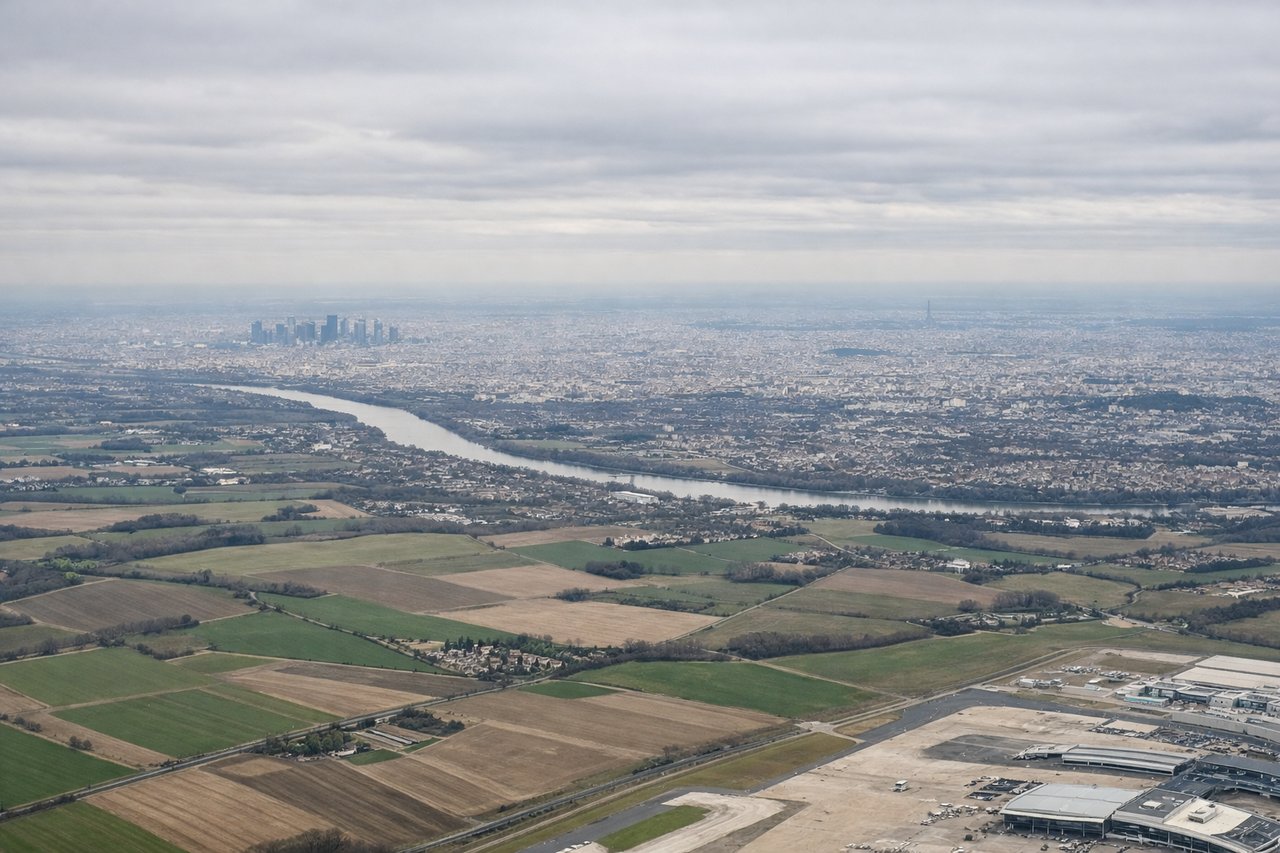
Takeoff from CDG
LEFTLeft side offers views of Paris and the Seine's meanders through the Île-de-France region as you climb westward. You'll see the urban sprawl of Paris receding, with the river's distinctive loops visible below.
Landing at BES
RIGHTRight side provides views of the Rade de Brest (Brest Roads anchorage) and the Breton coastline as you descend toward Guipavas. The distinctive natural harbor and Atlantic coastline are visually striking on approach.
Landmarks on this routeAll landmarks →
Will your flight be in sunlight?
Pick a date and time in the Sun Map to watch the sun move across your whole flight.
About This Route
Which side of the plane should I sit on flying from Charles De Gaulle (CDG) to Guipavas (BES)?
Sit on the Right side of the plane for the best views on flights from Paris to Brest. While takeoff offers Paris views, the landing approach to Brest provides more dramatic and distinctive scenery—the Rade de Brest and Breton coastline are geographically unique and visually striking. The right side captures this better during descent.
What can I see during takeoff from Charles De Gaulle in Paris?
During takeoff from Charles De Gaulle (CDG), sit on the Left side for the best views. Left side offers views of Paris and the Seine's meanders through the Île-de-France region as you climb westward. You'll see the urban sprawl of Paris receding, with the river's distinctive loops visible below. Notable sights include: Seine River (multiple bends), Paris urban area, Versailles region, forests of Île-de-France.
What can I see when landing at Guipavas in Brest?
When landing at Guipavas (BES), sit on the Right side for the best views. Right side provides views of the Rade de Brest (Brest Roads anchorage) and the Breton coastline as you descend toward Guipavas. The distinctive natural harbor and Atlantic coastline are visually striking on approach. Notable sights include: Rade de Brest (natural harbor), Breton coastline, Penfeld River estuary, Atlantic Ocean.
How long is the flight from Paris to Brest?
The flight from Charles De Gaulle (CDG) to Guipavas (BES) takes about 1 hour 15 minutes. The shortest flight path between them is 320 miles (515 km); winds and air traffic control usually add a few percent.
What does the Paris to Brest flight path pass over?
The flight path westward crosses Normandy and Brittany. Notable features include the Loire River valley (if visible at cruising altitude), the Armorican Massif (low granite hills of Brittany), and the transition from agricultural Normandy to the rockier, more forested terrain of Brittany. The Breton coast becomes increasingly visible as you approach Brest, with its characteristic rocky headlands and sheltered harbors.