The left side offers the more dramatic and varied scenery overall—starting with a glimpse of Paris on departure, continuing through the dramatic crossing of the western Alps during cruise, and finishing with a picturesque descent over the Tuscan hills into Florence.
Flight Path
The flight path crosses the western Alps near the France-Switzerland-Italy border, offering views of snow-capped peaks including the Mont Blanc massif, before descending over the Po Valley plains and the northern Apennines en route to Florence.
Great circle distance and headings ›.jpg?width=600)
_Panoramica_del_centro_della_citt%C3%A0_dal_lago.jpg?width=600)


.jpg?width=600)

Phase by phase
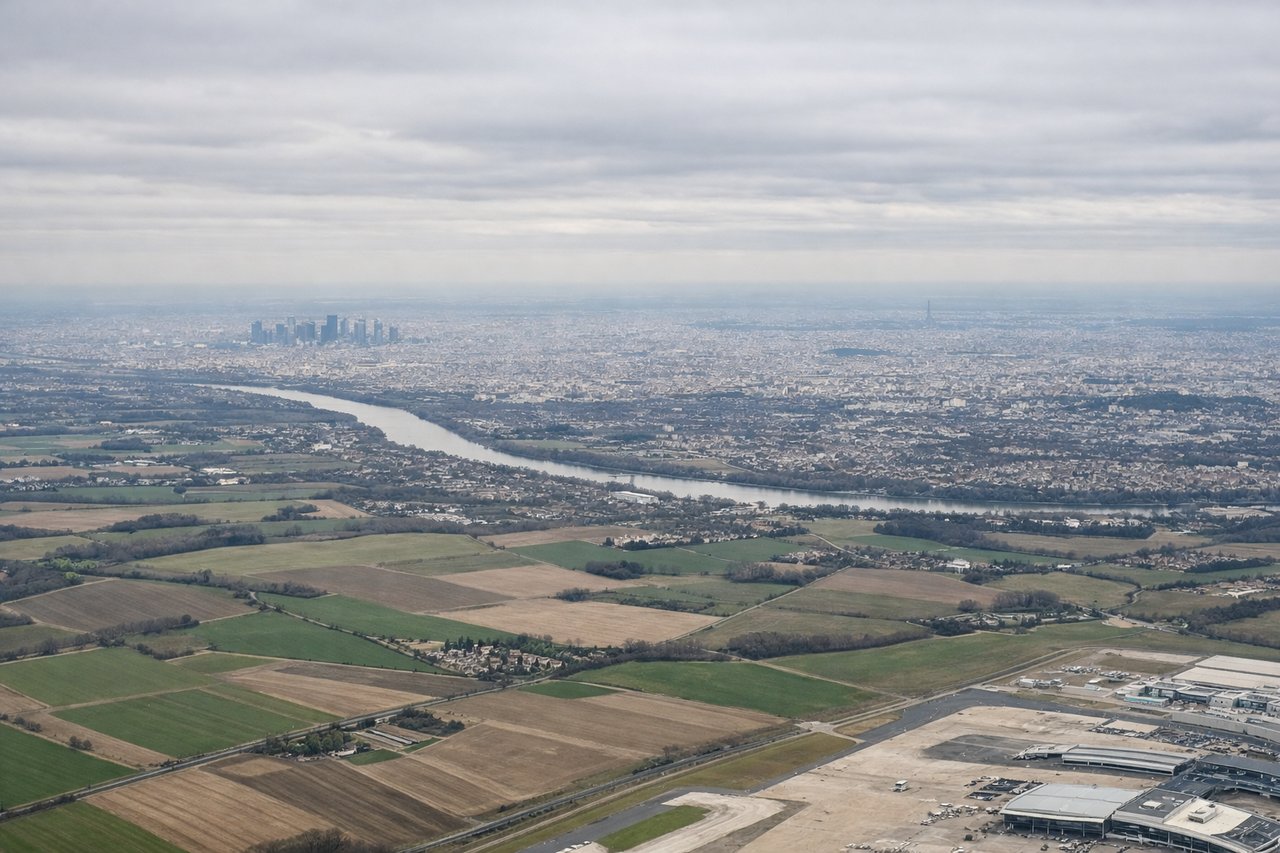
Takeoff from CDG
LEFTDeparting CDG on a southeast heading toward Italy, the initial climb and turn put central Paris on the left side of the aircraft, giving a brief but recognizable view of the city before the route heads out over the French countryside toward Burgundy and the Alps.
Landing at FLR
LEFTOn the approach into Florence, the aircraft descends over the Tuscan hills and turns toward runway 05, putting the city of Florence and the Arno valley on the left side of the cabin—offering passengers a classic view of the Duomo and surrounding hill towns just before touchdown.
Landmarks on this routeAll landmarks →
Will your flight be in sunlight?
See exactly which side of the plane gets sun and shade at your departure time.
About This Route
Which side of the plane should I sit on flying from Charles De Gaulle (CDG) to Peretola (FLR)?
Sit on the Left side of the plane for the best views on flights from Paris to Firenze. The left side offers the more dramatic and varied scenery overall—starting with a glimpse of Paris on departure, continuing through the dramatic crossing of the western Alps during cruise, and finishing with a picturesque descent over the Tuscan hills into Florence.
What can I see during takeoff from Charles De Gaulle in Paris?
During takeoff from Charles De Gaulle (CDG), sit on the Left side for the best views. Departing CDG on a southeast heading toward Italy, the initial climb and turn put central Paris on the left side of the aircraft, giving a brief but recognizable view of the city before the route heads out over the French countryside toward Burgundy and the Alps. Notable sights include: Eiffel Tower, Seine River, Paris rooftops, Bois de Boulogne.
What can I see when landing at Peretola in Firenze?
When landing at Peretola (FLR), sit on the Left side for the best views. On the approach into Florence, the aircraft descends over the Tuscan hills and turns toward runway 05, putting the city of Florence and the Arno valley on the left side of the cabin—offering passengers a classic view of the Duomo and surrounding hill towns just before touchdown. Notable sights include: Florence Duomo dome, Arno River, Fiesole hills, Chianti vineyards.
How long is the flight from Paris to Firenze?
The flight from Charles De Gaulle (CDG) to Peretola (FLR) takes 1h50m.
What does the Paris to Firenze flight path pass over?
The flight path crosses the western Alps near the France-Switzerland-Italy border, offering views of snow-capped peaks including the Mont Blanc massif, before descending over the Po Valley plains and the northern Apennines en route to Florence.