Left side wins at both ends of the flight. During the cruise over Siberia and the Russian Far East the difference is minimal as both sides see tundra and taiga, but the left side offers marginally better views of the Yenisei and Lena river systems as the route tracks northeast. Combined with the Paris departure views and the Tokyo Bay arrival, left is the clear overall choice.
Flown CDG to NRT? Did we get it right?
Flight Path
Paris to Tokyo is 6,033 miles (9,710 km), a flight of about 11 hours 30 minutes.
The route tracks northeast over Germany and Poland, then across Belarus and into Russia over the Ural Mountains (a low, broad ridge visible as a subtle change in terrain texture), continuing over the vast West Siberian Plain with the Ob and Yenisei river systems as enormous braided silver ribbons cutting through boreal taiga. Further east the route crosses the Central Siberian Plateau and the Lena River basin before descending toward the Russian Far East coast, the Sea of Okhotsk, and finally the Japanese archipelago approaching from the northeast over Hokkaido.
Great circle distance and headings ›

Phase by phase
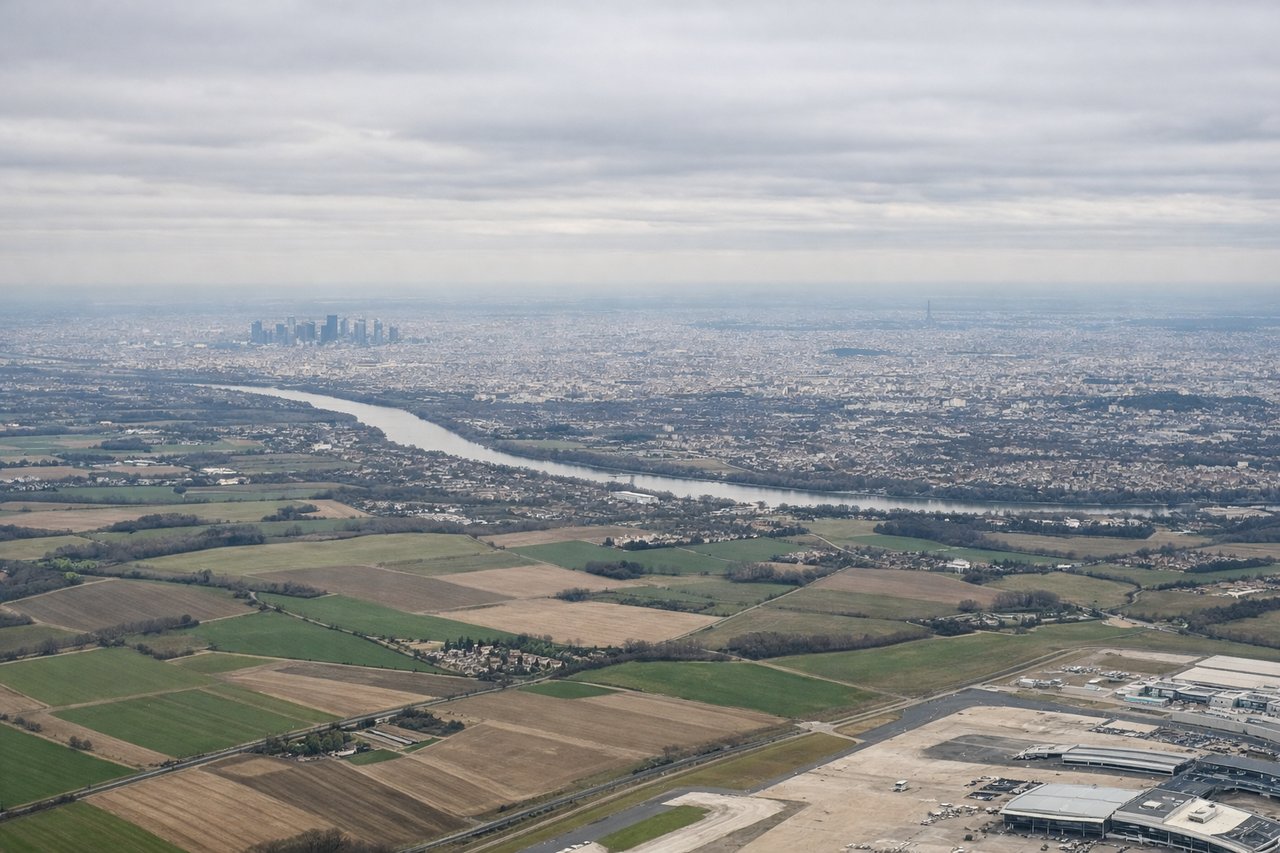
Takeoff from CDG
LEFTCDG typically departs eastward on runways 08L/08R or northeastward on 09L/09R. A left-side seat gives you a view south toward Paris as you climb out — the Seine river bends, the Eiffel Tower, and the dense urban grid of central Paris are clearly visible before you turn east. Right side faces north toward flat agricultural Picardy with little of interest.
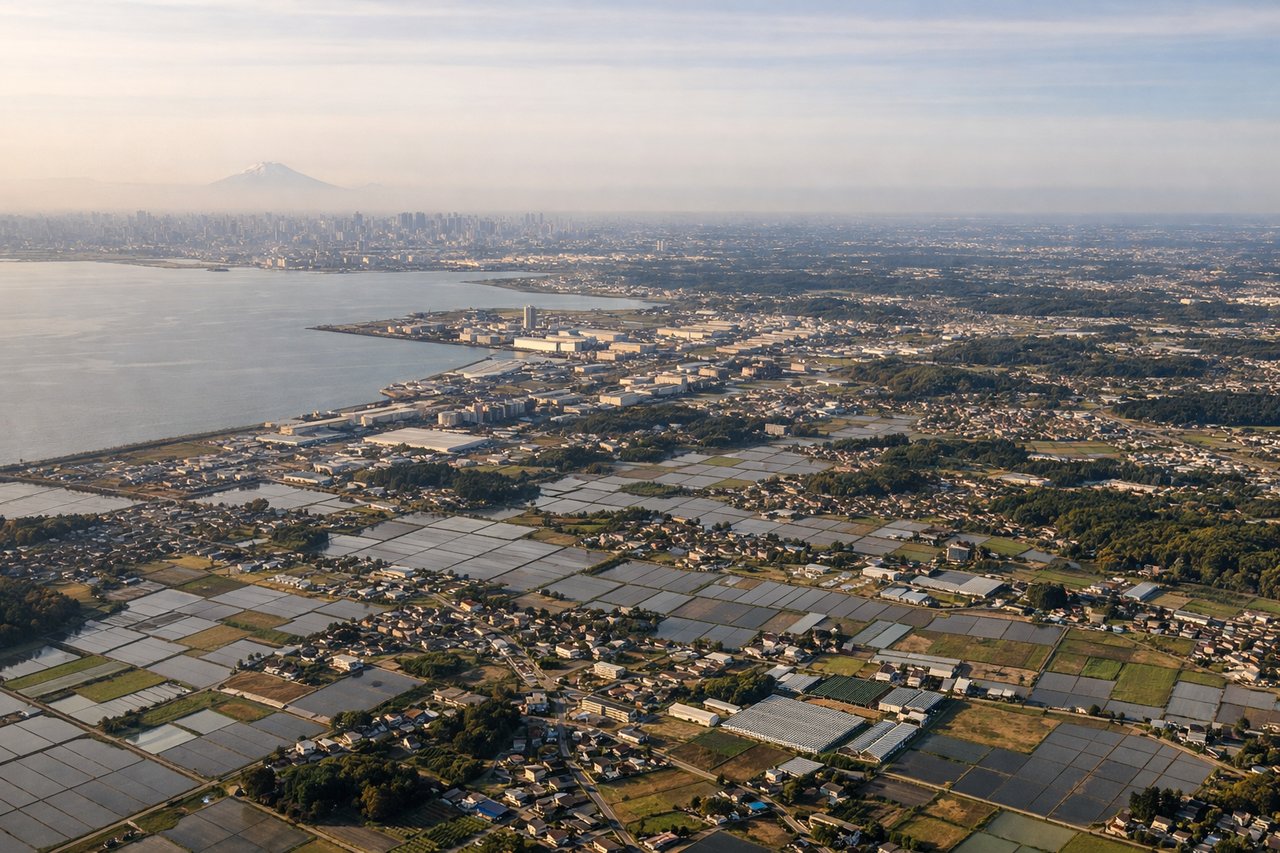
Landing at NRT
LEFTNRT approaches from the east or northeast on runway 34L/34R or 16L/16R depending on wind. On the common southward landing (runway 16), the left side faces east over the Pacific coastline and Tokyo Bay, giving views of the bay, the Chiba peninsula, and the urban sprawl of greater Tokyo across the water. Right side faces inland over flat Kanto plain farmland.
Will your flight be in sunlight?
Pick a date and time in the Sun Map to watch the sun move across your whole flight.
About This Route
Which side of the plane should I sit on flying from Charles De Gaulle (CDG) to New Tokyo International (NRT)?
Sit on the Left side of the plane for the best views on flights from Paris to Tokyo. Left side wins at both ends of the flight. During the cruise over Siberia and the Russian Far East the difference is minimal as both sides see tundra and taiga, but the left side offers marginally better views of the Yenisei and Lena river systems as the route tracks northeast. Combined with the Paris departure views and the Tokyo Bay arrival, left is the clear overall choice.
What can I see during takeoff from Charles De Gaulle in Paris?
During takeoff from Charles De Gaulle (CDG), sit on the Left side for the best views. CDG typically departs eastward on runways 08L/08R or northeastward on 09L/09R. A left-side seat gives you a view south toward Paris as you climb out — the Seine river bends, the Eiffel Tower, and the dense urban grid of central Paris are clearly visible before you turn east. Right side faces north toward flat agricultural Picardy with little of interest. Notable sights include: Central Paris urban grid and Seine river bends, Eiffel Tower (visible as a thin spire from altitude), Bois de Boulogne forest patch west of the city, La Défense business district cluster.
What can I see when landing at New Tokyo International in Tokyo?
When landing at New Tokyo International (NRT), sit on the Left side for the best views. NRT approaches from the east or northeast on runway 34L/34R or 16L/16R depending on wind. On the common southward landing (runway 16), the left side faces east over the Pacific coastline and Tokyo Bay, giving views of the bay, the Chiba peninsula, and the urban sprawl of greater Tokyo across the water. Right side faces inland over flat Kanto plain farmland. Notable sights include: Tokyo Bay and its distinctive enclosed shape, Chiba city and peninsula coastline, Tokyo urban core visible across the bay to the west, Narita city and surrounding flat Kanto agricultural plain.
How long is the flight from Paris to Tokyo?
The flight from Charles De Gaulle (CDG) to New Tokyo International (NRT) takes about 11 hours 30 minutes. The shortest flight path between them is 6,033 miles (9,710 km); winds and air traffic control usually add a few percent.
What does the Paris to Tokyo flight path pass over?
The route tracks northeast over Germany and Poland, then across Belarus and into Russia over the Ural Mountains (a low, broad ridge visible as a subtle change in terrain texture), continuing over the vast West Siberian Plain with the Ob and Yenisei river systems as enormous braided silver ribbons cutting through boreal taiga. Further east the route crosses the Central Siberian Plateau and the Lena River basin before descending toward the Russian Far East coast, the Sea of Okhotsk, and finally the Japanese archipelago approaching from the northeast over Hokkaido.