Right side scores 3.5 versus left's 2.5 due to superior scenic variety: the Seine valley and Paris during departure, followed by the Nemunas River valley and Lithuanian forest landscape during cruise, and finally Vilnius's urban approach. Left side offers only flat Normandy plains and featureless agricultural terrain throughout most of the flight. The right side captures both urban and natural landmarks with genuine visual interest.
Flown CDG to VNO? Did we get it right?
Flight Path
Paris to Vilnius is 1,040 miles (1,674 km), a flight of about 2 hours 45 minutes.
The flight path crosses the North European Plain, passing over Belgium (Meuse River valley), the Rhine-Meuse delta region, and northern Germany. Notable midpoint features include the Ardennes plateau region (subtle elevation), the Rhine valley near the German-Dutch border, and the transition into the North German Plain. The route then crosses into Poland, passing over the Vistula River valley before entering Lithuania. The landscape is predominantly flat to gently rolling with extensive forests, agricultural plains, and scattered river valleys. No major mountain ranges are visible from cruise altitude on this route.
Great circle distance and headings ›Phase by phase
Takeoff from CDG
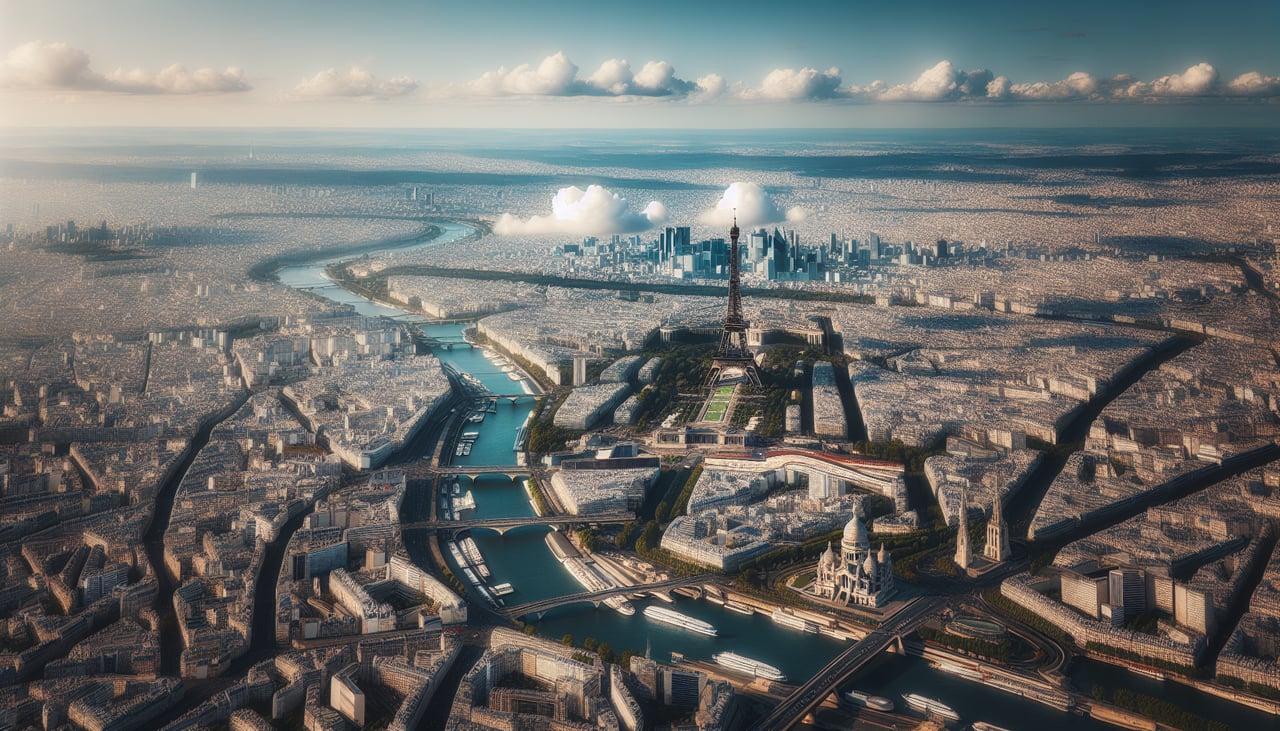
RIGHTRight side captures the Seine valley and Île-de-France region during climb-out from CDG, with Paris city sprawl visible below. Left side faces northwest toward Normandy's relatively flat agricultural plains with minimal dramatic features.
Landing at VNO
RIGHTRight side offers superior approach scenery: the Nemunas River valley, Lithuanian forests, and the gradual transition from rural landscape to Vilnius's urban core. Left side shows only flat agricultural plains and forest with minimal visual interest during descent.
Will your flight be in sunlight?
Pick a date and time in the Sun Map to watch the sun move across your whole flight.
About This Route
Which side of the plane should I sit on flying from Charles De Gaulle (CDG) to Vilnius International Airport (VNO)?
Sit on the Right side of the plane for the best views on flights from Paris to Vilnius. Right side scores 3.5 versus left's 2.5 due to superior scenic variety: the Seine valley and Paris during departure, followed by the Nemunas River valley and Lithuanian forest landscape during cruise, and finally Vilnius's urban approach. Left side offers only flat Normandy plains and featureless agricultural terrain throughout most of the flight. The right side captures both urban and natural landmarks with genuine visual interest.
What can I see during takeoff from Charles De Gaulle in Paris?
During takeoff from Charles De Gaulle (CDG), sit on the Right side for the best views. Right side captures the Seine valley and Île-de-France region during climb-out from CDG, with Paris city sprawl visible below. Left side faces northwest toward Normandy's relatively flat agricultural plains with minimal dramatic features. Notable sights include: Paris metropolitan area and Seine meanders, Versailles region, Fontainebleau forest to the southeast.
What can I see when landing at Vilnius International Airport in Vilnius?
When landing at Vilnius International Airport (VNO), sit on the Right side for the best views. Right side offers superior approach scenery: the Nemunas River valley, Lithuanian forests, and the gradual transition from rural landscape to Vilnius's urban core. Left side shows only flat agricultural plains and forest with minimal visual interest during descent. Notable sights include: Nemunas River and its valley, Vilnius old town and cathedral district, surrounding Lithuanian pine and birch forests, Vilnius airport approach corridor.
How long is the flight from Paris to Vilnius?
The flight from Charles De Gaulle (CDG) to Vilnius International Airport (VNO) takes about 2 hours 45 minutes. The shortest flight path between them is 1,040 miles (1,674 km); winds and air traffic control usually add a few percent.
What does the Paris to Vilnius flight path pass over?
The flight path crosses the North European Plain, passing over Belgium (Meuse River valley), the Rhine-Meuse delta region, and northern Germany. Notable midpoint features include the Ardennes plateau region (subtle elevation), the Rhine valley near the German-Dutch border, and the transition into the North German Plain. The route then crosses into Poland, passing over the Vistula River valley before entering Lithuania. The landscape is predominantly flat to gently rolling with extensive forests, agricultural plains, and scattered river valleys. No major mountain ranges are visible from cruise altitude on this route.