While the takeoff offers good views of the Alban Hills, the landing into Lisbon provides more dramatic and visually distinctive scenery—the Tagus estuary, Lisbon's hillside topography, and the Atlantic coastline are more striking than the relatively subtle terrain around Rome's departure.
Flown CIA to LIS? Did we get it right?
Flight Path
Rome to Lisbon is 1,161 miles (1,868 km), a flight of about 2 hours 15 minutes.
Tyrrhenian Sea crossing (visible at cruise altitude), Corsica and Sardinia passing to the south (weather permitting), transition over the Mediterranean to the Spanish coast, Sierra de Gredos mountains in central Spain (distant, on southern horizon), Portuguese interior plateau, Douro River valley approaching Lisbon
Great circle distance and headings ›


Phase by phase
Takeoff from CIA
LEFTLeft side offers immediate views of the Alban Hills (Castelli Romani) and the Tiber River valley as you climb southwest from Ciampino. Right side faces inland toward less dramatic terrain.
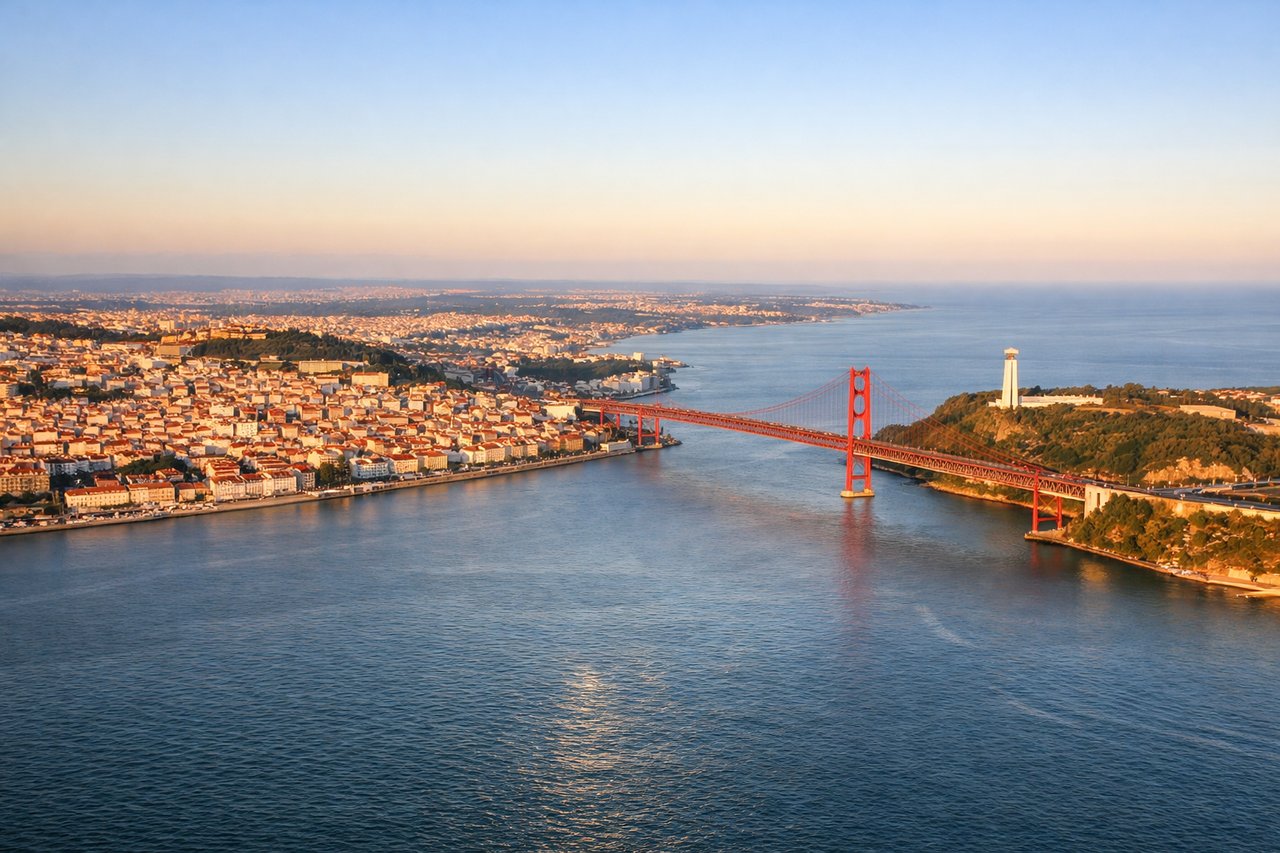
Landing at LIS
RIGHTRight side provides excellent views of the Tagus River estuary, Lisbon's distinctive hills and urban layout, and the Atlantic coastline as you descend into Humberto Delgado Airport. Left side faces the interior plateau with less visual interest.
Will your flight be in sunlight?
Pick a date and time in the Sun Map to watch the sun move across your whole flight.
About This Route
Which side of the plane should I sit on flying from Ciampino (CIA) to Lisboa (LIS)?
Sit on the Right side of the plane for the best views on flights from Rome to Lisbon. While the takeoff offers good views of the Alban Hills, the landing into Lisbon provides more dramatic and visually distinctive scenery—the Tagus estuary, Lisbon's hillside topography, and the Atlantic coastline are more striking than the relatively subtle terrain around Rome's departure.
What can I see during takeoff from Ciampino in Rome?
During takeoff from Ciampino (CIA), sit on the Left side for the best views. Left side offers immediate views of the Alban Hills (Castelli Romani) and the Tiber River valley as you climb southwest from Ciampino. Right side faces inland toward less dramatic terrain. Notable sights include: Alban Hills (volcanic ridge southeast of Rome), Tiber River valley, Rome urban sprawl, Tyrrhenian Sea coastline (visible at cruise altitude).
What can I see when landing at Lisboa in Lisbon?
When landing at Lisboa (LIS), sit on the Right side for the best views. Right side provides excellent views of the Tagus River estuary, Lisbon's distinctive hills and urban layout, and the Atlantic coastline as you descend into Humberto Delgado Airport. Left side faces the interior plateau with less visual interest. Notable sights include: Tagus River estuary and delta, Lisbon city center and Alfama district on the north bank, Atlantic Ocean coastline, Cristo Rei monument area on south bank.
How long is the flight from Rome to Lisbon?
The flight from Ciampino (CIA) to Lisboa (LIS) takes about 2 hours 15 minutes. The shortest flight path between them is 1,161 miles (1,868 km); winds and air traffic control usually add a few percent.
What does the Rome to Lisbon flight path pass over?
Tyrrhenian Sea crossing (visible at cruise altitude), Corsica and Sardinia passing to the south (weather permitting), transition over the Mediterranean to the Spanish coast, Sierra de Gredos mountains in central Spain (distant, on southern horizon), Portuguese interior plateau, Douro River valley approaching Lisbon