Cairns to Hobart is 1,797 miles (2,891 km), a flight of about 3 hours 15 minutes.
Right-side seats win overall due to superior takeoff views of the Great Barrier Reef and Trinity Bay, which are more visually distinctive than the landing approach. The reef system is a globally unique landmark visible only from this route segment.
Flight Path
The flight path crosses inland over Queensland's coastal ranges and tablelands. Notable features include the Atherton Tableland (elevated plateau visible around 45 minutes into flight), the Mackay region with its sugar cane plains, and the Queensland-New South Wales border near the Macpherson Range. The aircraft then crosses the New England Plateau before descending toward Tasmania. The Bass Strait crossing offers open water views with occasional glimpses of the Victorian coast to the west, though this is typically at higher altitude and less distinctive than reef or mountain scenery.
Great circle distance and headings ›Phase by phase
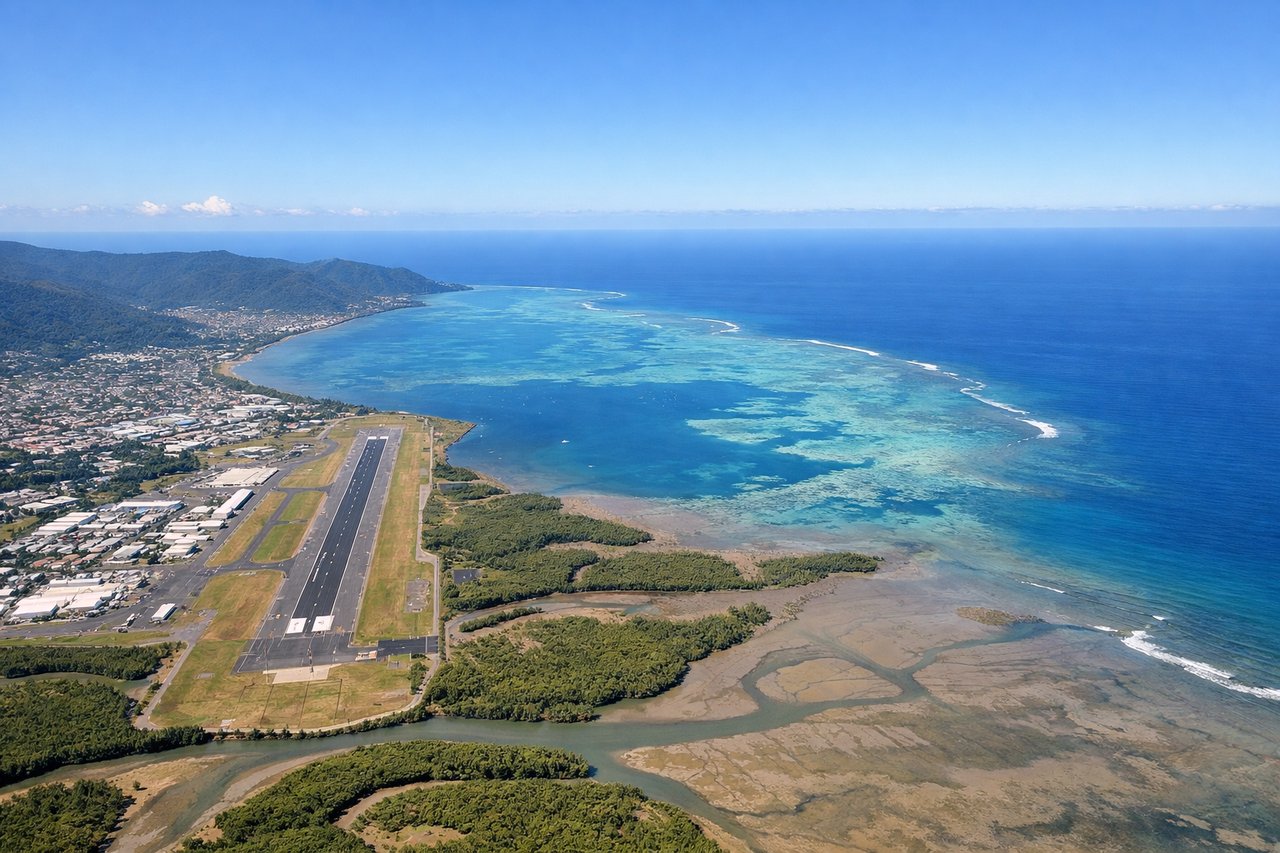
Takeoff from CNS
RIGHTRight-side seats capture the Cairns coastline and Great Barrier Reef lagoon during initial climb-out. The aircraft departs northeastward initially before turning south, giving right-side passengers a clear view of Trinity Bay and the reef system.
Landing at HBA
LEFTLeft-side seats offer the best view during descent into Hobart. The aircraft approaches from the north, and left-side passengers see the Derwent River estuary, Mount Wellington, and the city sprawl before touchdown.
Landmarks on this routeAll landmarks →
Will your flight be in sunlight?
Pick a date and time in the Sun Map to watch the sun move across your whole flight.
About This Route
Which side of the plane should I sit on flying from Cairns International (CNS) to Hobart (HBA)?
Sit on the Right side of the plane for the best views on flights from Cairns to Hobart. Right-side seats win overall due to superior takeoff views of the Great Barrier Reef and Trinity Bay, which are more visually distinctive than the landing approach. The reef system is a globally unique landmark visible only from this route segment.
What can I see during takeoff from Cairns International in Cairns?
During takeoff from Cairns International (CNS), sit on the Right side for the best views. Right-side seats capture the Cairns coastline and Great Barrier Reef lagoon during initial climb-out. The aircraft departs northeastward initially before turning south, giving right-side passengers a clear view of Trinity Bay and the reef system. Notable sights include: Trinity Bay, Great Barrier Reef outer edge (visible as pale turquoise water), Barron River delta, Cairns city waterfront.
What can I see when landing at Hobart in Hobart?
When landing at Hobart (HBA), sit on the Left side for the best views. Left-side seats offer the best view during descent into Hobart. The aircraft approaches from the north, and left-side passengers see the Derwent River estuary, Mount Wellington, and the city sprawl before touchdown. Notable sights include: Mount Wellington (1,271 m, snow-capped peak visible year-round from altitude), Derwent River estuary, Hobart city waterfront and port, Bruny Island (southern approach).
How long is the flight from Cairns to Hobart?
The flight from Cairns International (CNS) to Hobart (HBA) takes about 3 hours 15 minutes. The shortest flight path between them is 1,797 miles (2,891 km); winds and air traffic control usually add a few percent.
What does the Cairns to Hobart flight path pass over?
The flight path crosses inland over Queensland's coastal ranges and tablelands. Notable features include the Atherton Tableland (elevated plateau visible around 45 minutes into flight), the Mackay region with its sugar cane plains, and the Queensland-New South Wales border near the Macpherson Range. The aircraft then crosses the New England Plateau before descending toward Tasmania. The Bass Strait crossing offers open water views with occasional glimpses of the Victorian coast to the west, though this is typically at higher altitude and less distinctive than reef or mountain scenery.