Cairns to Horn is 493 miles (793 km), a flight of about 1 hour 15 minutes.
The northwestbound flight path from Cairns to Horn Island favors right-side seating for the majority of the journey. Takeoff offers superior reef views, and while landing favors the left, the longer climb-out phase and sustained views of the Coral Sea and reef system make right-side seats the better overall choice.
Flight Path
During cruise, the flight passes over open Coral Sea waters with occasional visibility of reef structures and small islands. The Ribbon Reefs and outer reef formations are visible as pale turquoise lines in darker blue water. As the aircraft approaches the Torres Strait region, the water becomes progressively shallower and more turquoise, with increasing numbers of small islands and sand banks visible. The transition from deep ocean to shallow strait waters is gradual but noticeable, with color shifting from dark blue to pale turquoise over approximately 20 nautical miles.
Great circle distance and headings ›Phase by phase
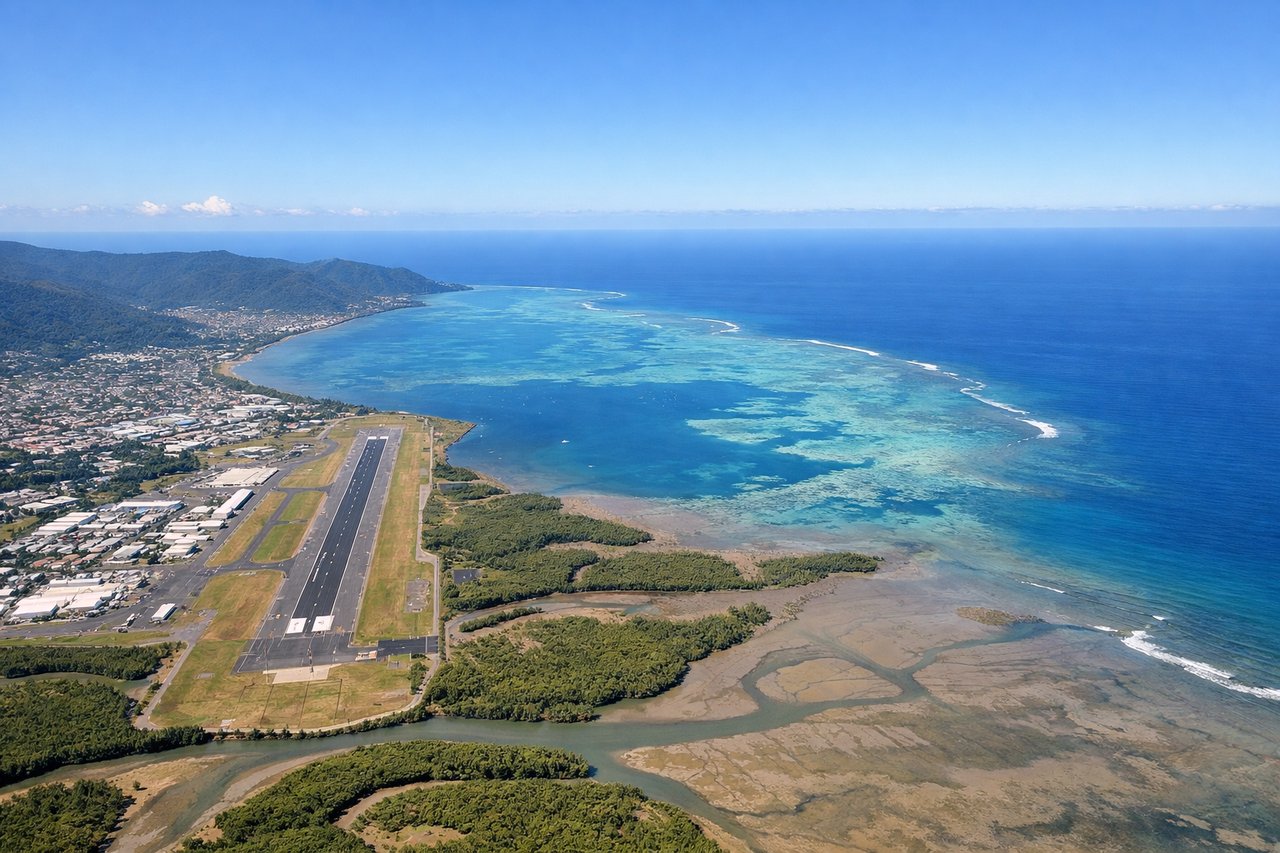
Takeoff from CNS
RIGHTRight-side seats offer views of the Coral Sea and the Great Barrier Reef structure as the aircraft climbs northwestward from Cairns. The reef's shallow turquoise waters and darker channels are clearly visible during initial climb to cruising altitude.
Landing at HID
LEFTLeft-side seats provide views of the Torres Strait and the approach path over the northern tip of Australia. Passengers see the distinctive shallow waters, small islands, and the transition from mainland to island geography as the aircraft descends toward Horn Island.
Will your flight be in sunlight?
Pick a date and time in the Sun Map to watch the sun move across your whole flight.
About This Route
Which side of the plane should I sit on flying from Cairns International (CNS) to Horn Island Airport (HID)?
Sit on the Right side of the plane for the best views on flights from Cairns to Horn. The northwestbound flight path from Cairns to Horn Island favors right-side seating for the majority of the journey. Takeoff offers superior reef views, and while landing favors the left, the longer climb-out phase and sustained views of the Coral Sea and reef system make right-side seats the better overall choice.
What can I see during takeoff from Cairns International in Cairns?
During takeoff from Cairns International (CNS), sit on the Right side for the best views. Right-side seats offer views of the Coral Sea and the Great Barrier Reef structure as the aircraft climbs northwestward from Cairns. The reef's shallow turquoise waters and darker channels are clearly visible during initial climb to cruising altitude. Notable sights include: Coral Sea, Great Barrier Reef (outer reef structure), Trinity Inlet, Barron River estuary.
What can I see when landing at Horn Island Airport in Horn?
When landing at Horn Island Airport (HID), sit on the Left side for the best views. Left-side seats provide views of the Torres Strait and the approach path over the northern tip of Australia. Passengers see the distinctive shallow waters, small islands, and the transition from mainland to island geography as the aircraft descends toward Horn Island. Notable sights include: Torres Strait, Endeavour Strait, Prince of Wales Island, Thursday Island (visible as developed area).
How long is the flight from Cairns to Horn?
The flight from Cairns International (CNS) to Horn Island Airport (HID) takes about 1 hour 15 minutes. The shortest flight path between them is 493 miles (793 km); winds and air traffic control usually add a few percent.
What does the Cairns to Horn flight path pass over?
During cruise, the flight passes over open Coral Sea waters with occasional visibility of reef structures and small islands. The Ribbon Reefs and outer reef formations are visible as pale turquoise lines in darker blue water. As the aircraft approaches the Torres Strait region, the water becomes progressively shallower and more turquoise, with increasing numbers of small islands and sand banks visible. The transition from deep ocean to shallow strait waters is gradual but noticeable, with color shifting from dark blue to pale turquoise over approximately 20 nautical miles.