The Cuzco departure over high-altitude Andean terrain with dramatic mountain scenery and the Sacred Valley provides more sustained visual interest than the London landing approach. While London's Docklands arrival is visually distinctive, the cruise phase over the Atlantic (5+ hours of open ocean) severely limits the right side's overall score. The left side benefits from exceptional takeoff scenery and more varied terrain throughout the flight path across South America, Africa, and Europe.
Flown CUZ to LCY? Did we get it right?
Flight Path
Cuzco to London is 6,203 miles (9,983 km), a flight of about 11 hours 15 minutes.
Amazon Basin rainforest (visible during early cruise phase), Sahara Desert (central Atlantic crossing shows African coast), Atlas Mountains (approaching North Africa), Mediterranean coastline (southern Spain/Portugal), Bay of Biscay, English Channel and Thames estuary (approach to London)
Great circle distance and headings ›Phase by phase
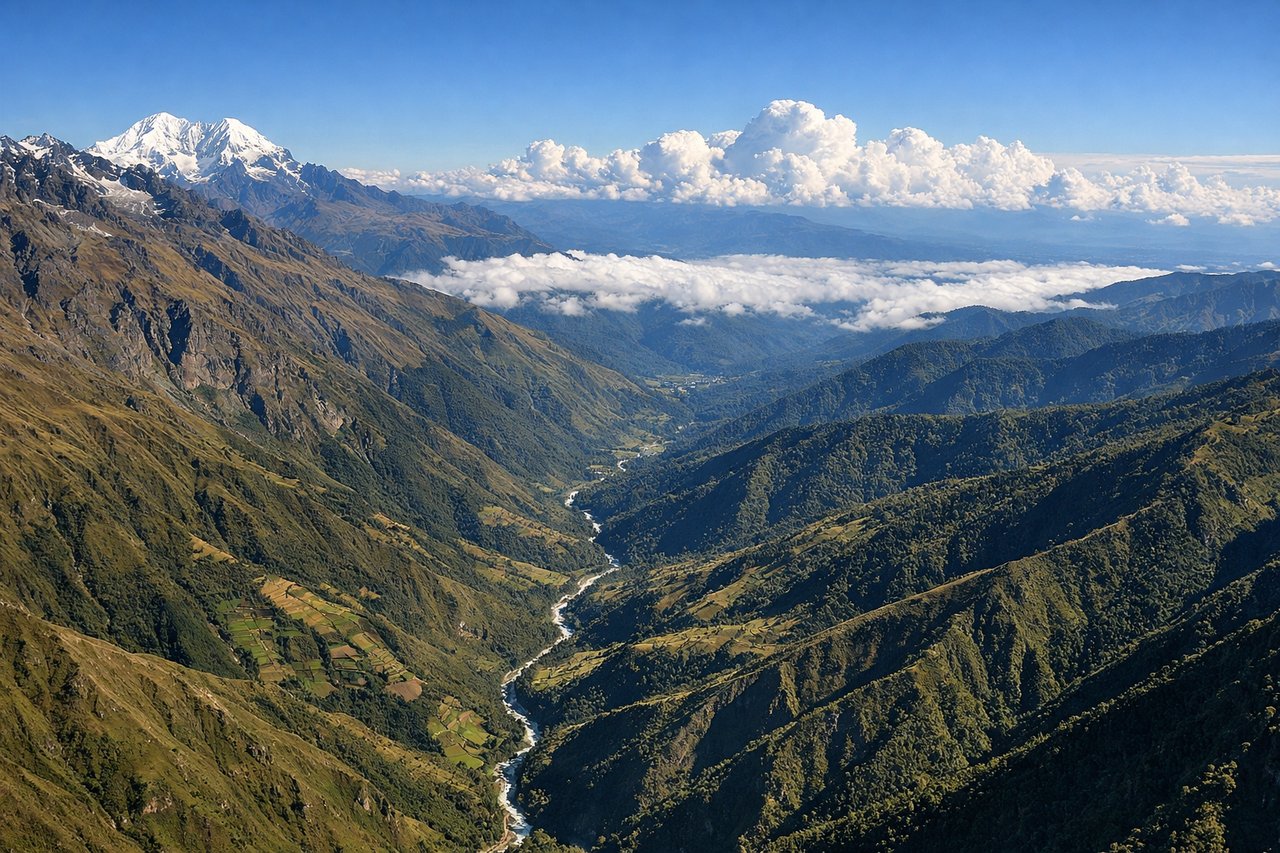
Takeoff from CUZ
LEFTCuzco sits at 11,150 feet in the Andes with dramatic terrain immediately surrounding the airport. Departing eastbound on runway 10, the left side captures the high-altitude Andean plateau, deep valleys, and the Sacred Valley terrain as the aircraft climbs away from the city. The right side faces back toward Cuzco's urban area and lower terrain to the west.
Landing at LCY
RIGHTApproaching London City from the southeast, aircraft descend over the Thames estuary and enter the final approach corridor over the Docklands. The right side (south bank) captures the Thames meanders, the Isle of Dogs, Canary Wharf's distinctive towers, and the approach over the river itself. The left side faces north toward less distinctive suburban terrain and the river's far bank.
Will your flight be in sunlight?
Pick a date and time in the Sun Map to watch the sun move across your whole flight.
About This Route
Which side of the plane should I sit on flying from Velazco Astete (CUZ) to City (LCY)?
Sit on the Left side of the plane for the best views on flights from Cuzco to London. The Cuzco departure over high-altitude Andean terrain with dramatic mountain scenery and the Sacred Valley provides more sustained visual interest than the London landing approach. While London's Docklands arrival is visually distinctive, the cruise phase over the Atlantic (5+ hours of open ocean) severely limits the right side's overall score. The left side benefits from exceptional takeoff scenery and more varied terrain throughout the flight path across South America, Africa, and Europe.
What can I see during takeoff from Velazco Astete in Cuzco?
During takeoff from Velazco Astete (CUZ), sit on the Left side for the best views. Cuzco sits at 11,150 feet in the Andes with dramatic terrain immediately surrounding the airport. Departing eastbound on runway 10, the left side captures the high-altitude Andean plateau, deep valleys, and the Sacred Valley terrain as the aircraft climbs away from the city. The right side faces back toward Cuzco's urban area and lower terrain to the west. Notable sights include: Andes mountain ridges surrounding Cuzco, Sacred Valley drainage patterns, high-altitude plateau terrain, Cuzco city sprawl.
What can I see when landing at City in London?
When landing at City (LCY), sit on the Right side for the best views. Approaching London City from the southeast, aircraft descend over the Thames estuary and enter the final approach corridor over the Docklands. The right side (south bank) captures the Thames meanders, the Isle of Dogs, Canary Wharf's distinctive towers, and the approach over the river itself. The left side faces north toward less distinctive suburban terrain and the river's far bank. Notable sights include: Thames estuary and meanders, Isle of Dogs peninsula, Canary Wharf financial district towers, Docklands waterfront development.
How long is the flight from Cuzco to London?
The flight from Velazco Astete (CUZ) to City (LCY) takes about 11 hours 15 minutes. The shortest flight path between them is 6,203 miles (9,983 km); winds and air traffic control usually add a few percent.
What does the Cuzco to London flight path pass over?
Amazon Basin rainforest (visible during early cruise phase), Sahara Desert (central Atlantic crossing shows African coast), Atlas Mountains (approaching North Africa), Mediterranean coastline (southern Spain/Portugal), Bay of Biscay, English Channel and Thames estuary (approach to London)