Left-side seats capture the most dramatic scenery on both legs: the Potomac River and D.C. monuments during departure, and the Ko'olau mountains and windward Oahu during arrival. The landing views are particularly striking and make left the superior choice overall.
Flight Path
The flight path crosses the continental United States heading southwest, passing over the Appalachian Mountains (visible from altitude as a ridge system in West Virginia and Kentucky), the Mississippi River valley, the Great Plains, and eventually the Rocky Mountain region before heading out over the Pacific. The Pacific crossing itself offers open ocean views for roughly 2,000 miles with no significant landmarks until approaching the Hawaiian Islands. Clear days may reveal the curvature of the Earth and the transition from continental to oceanic atmosphere.
Great circle distance and headings ›.jpeg?width=600)

.jpg?width=600)


Phase by phase
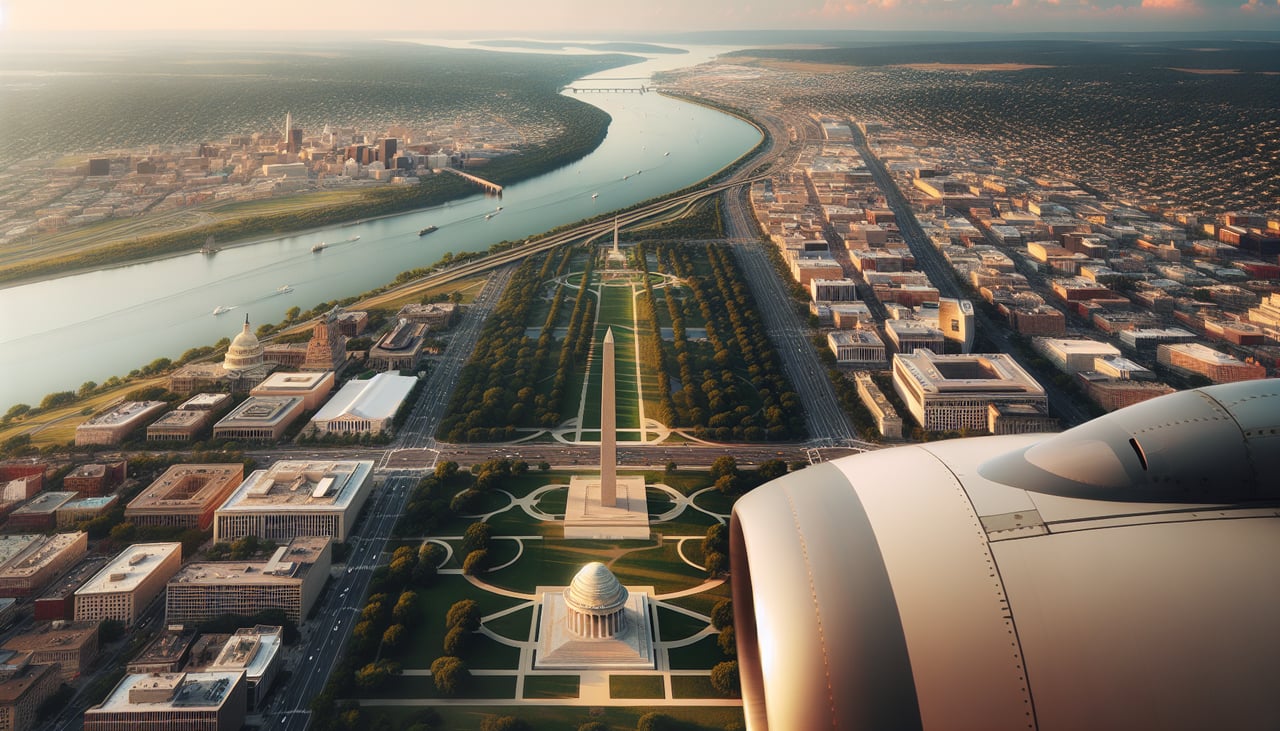
Takeoff from DCA
RIGHTRight-side seats offer views of the Potomac River winding through central Washington, D.C., and the city's monumental core as the aircraft climbs southwestward. The left side faces the Virginia suburbs with less distinctive landmarks during initial climb.
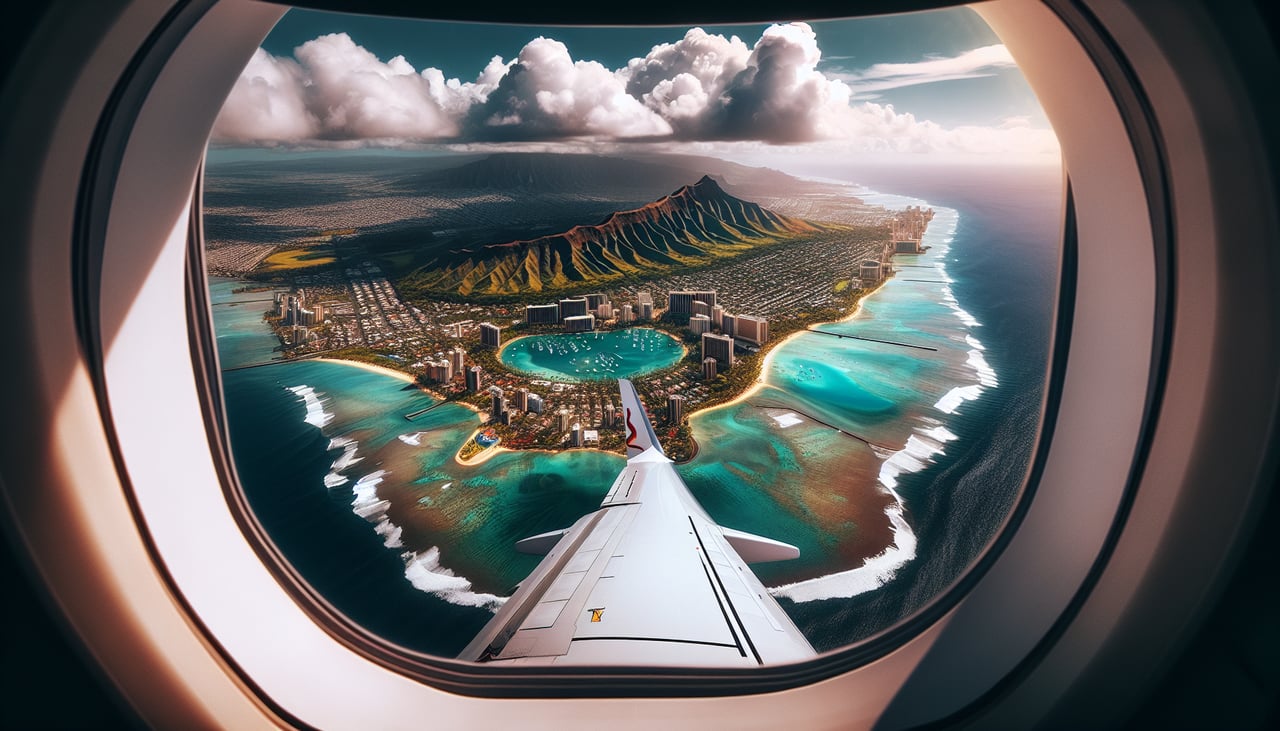
Landing at HNL
LEFTLeft-side seats provide excellent views of Oahu's windward coast, the Ko'olau mountain range, and Honolulu's urban sprawl as the aircraft descends from the northeast. The right side faces the open Pacific Ocean with minimal visual interest during final approach.
Landmarks on this routeAll landmarks →
Will your flight be in sunlight?
See exactly which side of the plane gets sun and shade at your departure time.
About This Route
Which side of the plane should I sit on flying from Ronald Reagan Washington National (DCA) to Honolulu International (HNL)?
Sit on the Left side of the plane for the best views on flights from Washington to Honolulu. Left-side seats capture the most dramatic scenery on both legs: the Potomac River and D.C. monuments during departure, and the Ko'olau mountains and windward Oahu during arrival. The landing views are particularly striking and make left the superior choice overall.
What can I see during takeoff from Ronald Reagan Washington National in Washington?
During takeoff from Ronald Reagan Washington National (DCA), sit on the Right side for the best views. Right-side seats offer views of the Potomac River winding through central Washington, D.C., and the city's monumental core as the aircraft climbs southwestward. The left side faces the Virginia suburbs with less distinctive landmarks during initial climb. Notable sights include: Potomac River, Washington Monument and Lincoln Memorial area, Arlington National Cemetery, Dulles Airport corridor to the west.
What can I see when landing at Honolulu International in Honolulu?
When landing at Honolulu International (HNL), sit on the Left side for the best views. Left-side seats provide excellent views of Oahu's windward coast, the Ko'olau mountain range, and Honolulu's urban sprawl as the aircraft descends from the northeast. The right side faces the open Pacific Ocean with minimal visual interest during final approach. Notable sights include: Ko'olau mountain range, Windward Oahu coastline, Kailua Bay, Honolulu city grid and Diamond Head.
How long is the flight from Washington to Honolulu?
The flight from Ronald Reagan Washington National (DCA) to Honolulu International (HNL) takes Approximately 5 hours 15 minutes.
What does the Washington to Honolulu flight path pass over?
The flight path crosses the continental United States heading southwest, passing over the Appalachian Mountains (visible from altitude as a ridge system in West Virginia and Kentucky), the Mississippi River valley, the Great Plains, and eventually the Rocky Mountain region before heading out over the Pacific. The Pacific crossing itself offers open ocean views for roughly 2,000 miles with no significant landmarks until approaching the Hawaiian Islands. Clear days may reveal the curvature of the Earth and the transition from continental to oceanic atmosphere.