While the Fairbanks departure offers dramatic Alaska Range foothills and river scenery, the JFK landing approach provides iconic Manhattan skyline views, harbor complexity, and urban density that outweigh the cruise segment. The landing experience at JFK is significantly more visually rewarding than the Fairbanks takeoff, and the right side captures this advantage. The cruise segment over Canada and the northern United States is relatively monotonous on both sides (boreal forest, then Great Lakes region), so the landing dominates the overall score.
Flown FAI to JFK? Did we get it right?
Flight Path
Fairbanks to New York is 3,269 miles (5,261 km), a flight of about 5 hours 45 minutes.
Mackenzie River delta (Northwest Territories), Great Slave Lake, Canadian Shield lakes and forests, Hudson Bay (distant, far north of track), Great Lakes (Superior, Michigan, Huron visible during descent into eastern North America), Appalachian ridgelines in Pennsylvania and New York
Great circle distance and headings ›

Phase by phase
Takeoff from FAI
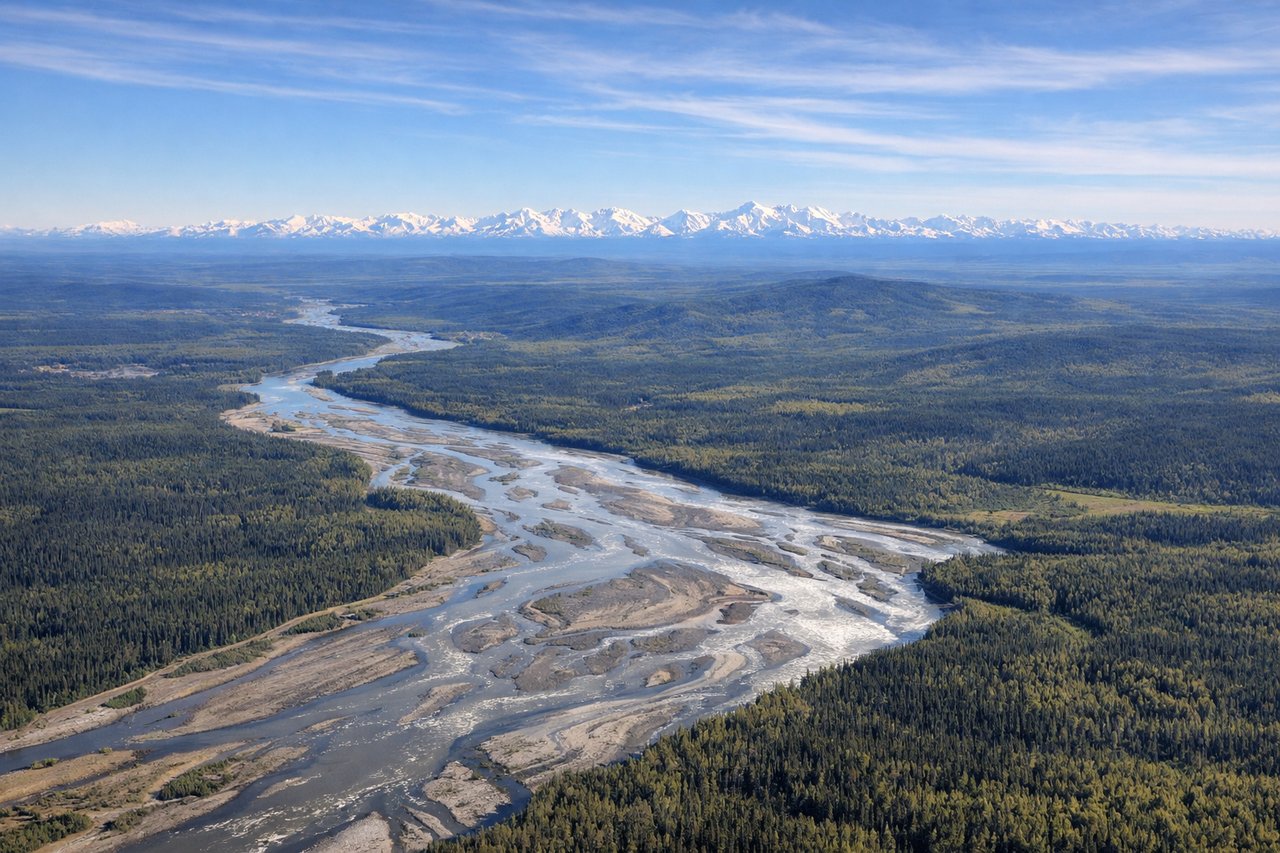
LEFTLeft side captures the Tanana River valley and the Alaska Range foothills immediately after departure from Fairbanks. The terrain rises dramatically to the south with visible peaks and forested valleys, providing immediate visual interest during climb-out.

Landing at JFK
RIGHTRight side offers the superior landing approach into JFK, with views of the Hudson River, Manhattan's skyline, and the New York harbor complex. The urban density and iconic waterfront features create a dramatic final descent with recognizable landmarks.
Will your flight be in sunlight?
Pick a date and time in the Sun Map to watch the sun move across your whole flight.
About This Route
Which side of the plane should I sit on flying from Fairbanks International (FAI) to John F Kennedy International (JFK)?
Sit on the Right side of the plane for the best views on flights from Fairbanks to New York. While the Fairbanks departure offers dramatic Alaska Range foothills and river scenery, the JFK landing approach provides iconic Manhattan skyline views, harbor complexity, and urban density that outweigh the cruise segment. The landing experience at JFK is significantly more visually rewarding than the Fairbanks takeoff, and the right side captures this advantage. The cruise segment over Canada and the northern United States is relatively monotonous on both sides (boreal forest, then Great Lakes region), so the landing dominates the overall score.
What can I see during takeoff from Fairbanks International in Fairbanks?
During takeoff from Fairbanks International (FAI), sit on the Left side for the best views. Left side captures the Tanana River valley and the Alaska Range foothills immediately after departure from Fairbanks. The terrain rises dramatically to the south with visible peaks and forested valleys, providing immediate visual interest during climb-out. Notable sights include: Tanana River (winding through the valley), Alaska Range foothills, Fairbanks city grid, boreal forest canopy.
What can I see when landing at John F Kennedy International in New York?
When landing at John F Kennedy International (JFK), sit on the Right side for the best views. Right side offers the superior landing approach into JFK, with views of the Hudson River, Manhattan's skyline, and the New York harbor complex. The urban density and iconic waterfront features create a dramatic final descent with recognizable landmarks. Notable sights include: Hudson River, Manhattan skyline, East River, Jamaica Bay and surrounding wetlands.
How long is the flight from Fairbanks to New York?
The flight from Fairbanks International (FAI) to John F Kennedy International (JFK) takes about 5 hours 45 minutes. The shortest flight path between them is 3,269 miles (5,261 km); winds and air traffic control usually add a few percent.
What does the Fairbanks to New York flight path pass over?
Mackenzie River delta (Northwest Territories), Great Slave Lake, Canadian Shield lakes and forests, Hudson Bay (distant, far north of track), Great Lakes (Superior, Michigan, Huron visible during descent into eastern North America), Appalachian ridgelines in Pennsylvania and New York