While takeoff favors left seats for Sierra Nevada views, the landing approach into Dallas offers more dramatic and recognizable urban landmarks from right seats. The downtown skyline and White Rock Lake provide superior visual interest compared to the relatively featureless San Joaquin Valley departure.
Flight Path
Flight path crosses the southern Sierra Nevada passes (Tehachapi area), then traverses the Mojave Desert with visible dry lake beds and mountain ranges, enters Arizona crossing the Colorado River drainage patterns, continues across New Mexico high desert with sparse vegetation, finally descends into Texas crossing the Caprock Escarpment transition zone before reaching the Dallas-Fort Worth metroplex. Most of the route is over sparsely populated terrain with limited ground features; the Mojave and New Mexico high desert sections offer the most distinctive visual geography during cruise altitude.
Great circle distance and headings ›


.jpeg?width=600)

.jpg?width=600)
Phase by phase
Takeoff from FAT
LEFTFresno typically departs westbound (Runway 11 or 29 depending on wind). Left seats face north initially, giving views of the Sierra Nevada foothills and the San Joaquin Valley's agricultural grid. Right seats see only flat valley farmland.
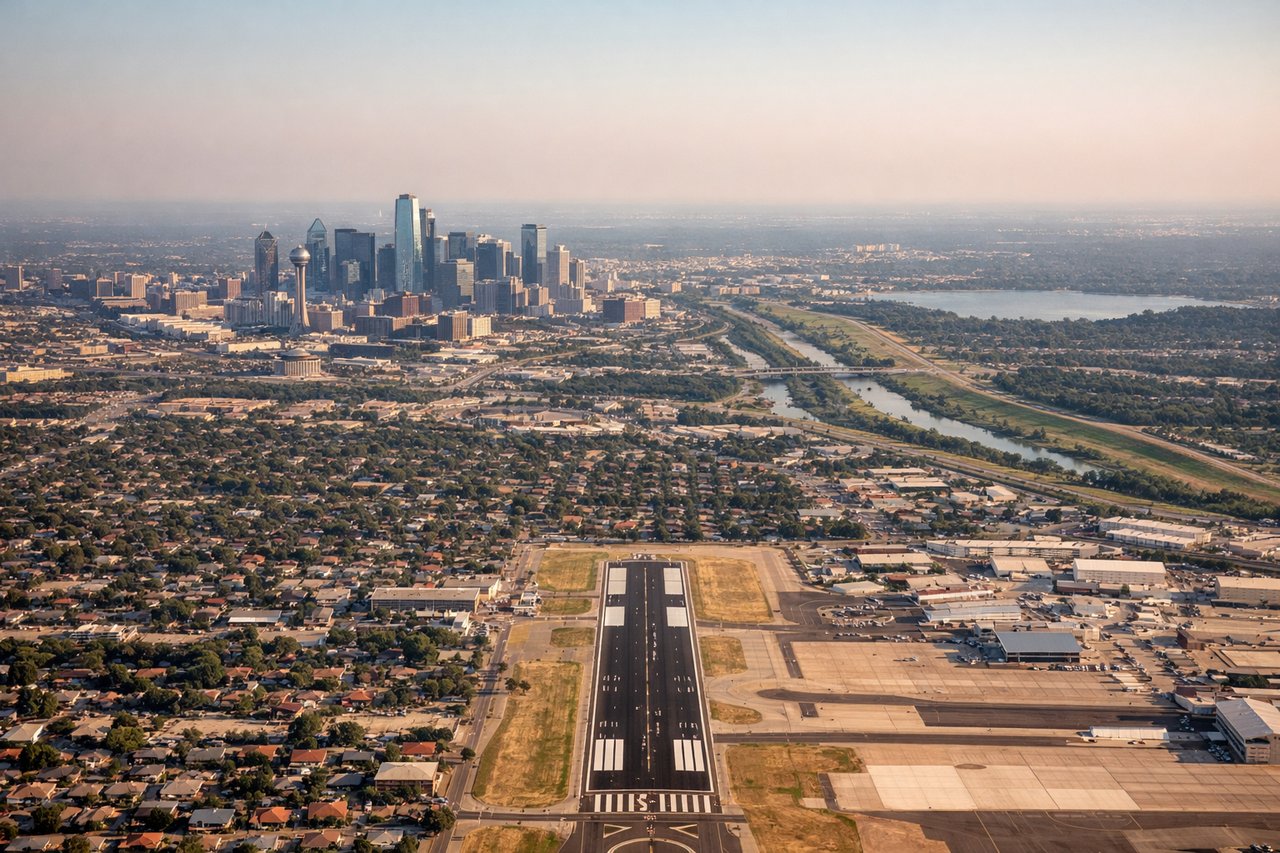
Landing at DAL
RIGHTDallas Love Field typically uses Runways 31L/R for eastbound arrivals. Right seats face south during approach, offering views of downtown Dallas skyline, White Rock Lake, and the Trinity River. Left seats see only suburban sprawl and industrial areas north of the airport.
Landmarks on this routeAll landmarks →
Will your flight be in sunlight?
See exactly which side of the plane gets sun and shade at your departure time.
About This Route
Which side of the plane should I sit on flying from Fresno Yosemite International (FAT) to Dallas Love Fld (DAL)?
Sit on the Right side of the plane for the best views on flights from Fresno to Dallas. While takeoff favors left seats for Sierra Nevada views, the landing approach into Dallas offers more dramatic and recognizable urban landmarks from right seats. The downtown skyline and White Rock Lake provide superior visual interest compared to the relatively featureless San Joaquin Valley departure.
What can I see during takeoff from Fresno Yosemite International in Fresno?
During takeoff from Fresno Yosemite International (FAT), sit on the Left side for the best views. Fresno typically departs westbound (Runway 11 or 29 depending on wind). Left seats face north initially, giving views of the Sierra Nevada foothills and the San Joaquin Valley's agricultural grid. Right seats see only flat valley farmland. Notable sights include: Sierra Nevada eastern escarpment (distant, 40+ miles northeast), San Joaquin River valley floor, Fresno urban sprawl to the south, foothills transition zone.
What can I see when landing at Dallas Love Fld in Dallas?
When landing at Dallas Love Fld (DAL), sit on the Right side for the best views. Dallas Love Field typically uses Runways 31L/R for eastbound arrivals. Right seats face south during approach, offering views of downtown Dallas skyline, White Rock Lake, and the Trinity River. Left seats see only suburban sprawl and industrial areas north of the airport. Notable sights include: Downtown Dallas skyline with distinctive Reunion Tower, White Rock Lake (prominent water body southeast of downtown), Trinity River corridor, Fair Park area.
How long is the flight from Fresno to Dallas?
The flight from Fresno Yosemite International (FAT) to Dallas Love Fld (DAL) takes Approximately 3 hours 45 minutes to 4 hours 15 minutes.
What does the Fresno to Dallas flight path pass over?
Flight path crosses the southern Sierra Nevada passes (Tehachapi area), then traverses the Mojave Desert with visible dry lake beds and mountain ranges, enters Arizona crossing the Colorado River drainage patterns, continues across New Mexico high desert with sparse vegetation, finally descends into Texas crossing the Caprock Escarpment transition zone before reaching the Dallas-Fort Worth metroplex. Most of the route is over sparsely populated terrain with limited ground features; the Mojave and New Mexico high desert sections offer the most distinctive visual geography during cruise altitude.