Right-side seats win overall because the departure view from Guatemala City's highlands is more geographically dramatic than the landing approach. While the landing offers coastal scenery, the takeoff provides views of multiple volcanoes and the highland terrain that defines Guatemala's geography. The flight path itself crosses the Caribbean, offering little distinctive midpoint scenery from either side.
Flown GUA to FLL? Did we get it right?
Flight Path
Guatemala City to Fort Lauderdale is 1,039 miles (1,672 km), a flight of about 2 hours 40 minutes.
The flight crosses the Yucatan Channel and the Caribbean Sea. At cruise altitude (around 35,000 feet), the Yucatan Peninsula's flat limestone platform is visible as a pale tan landmass with distinctive cenote patterns if flying over it. The Caribbean itself offers minimal visual interest—open water with occasional cloud formations. The Bahamas' shallow banks and turquoise waters may be visible on the approach to Florida, showing the contrast between deep blue ocean and pale shallow banks.
Great circle distance and headings ›


Phase by phase

Takeoff from GUA
RIGHTLa Aurora typically departs to the east or northeast. Right-side seats offer views of the volcanic highlands and the city sprawl of Guatemala City itself as you climb out. The left side faces toward the Pacific slope, which is less visually distinctive during initial climb.
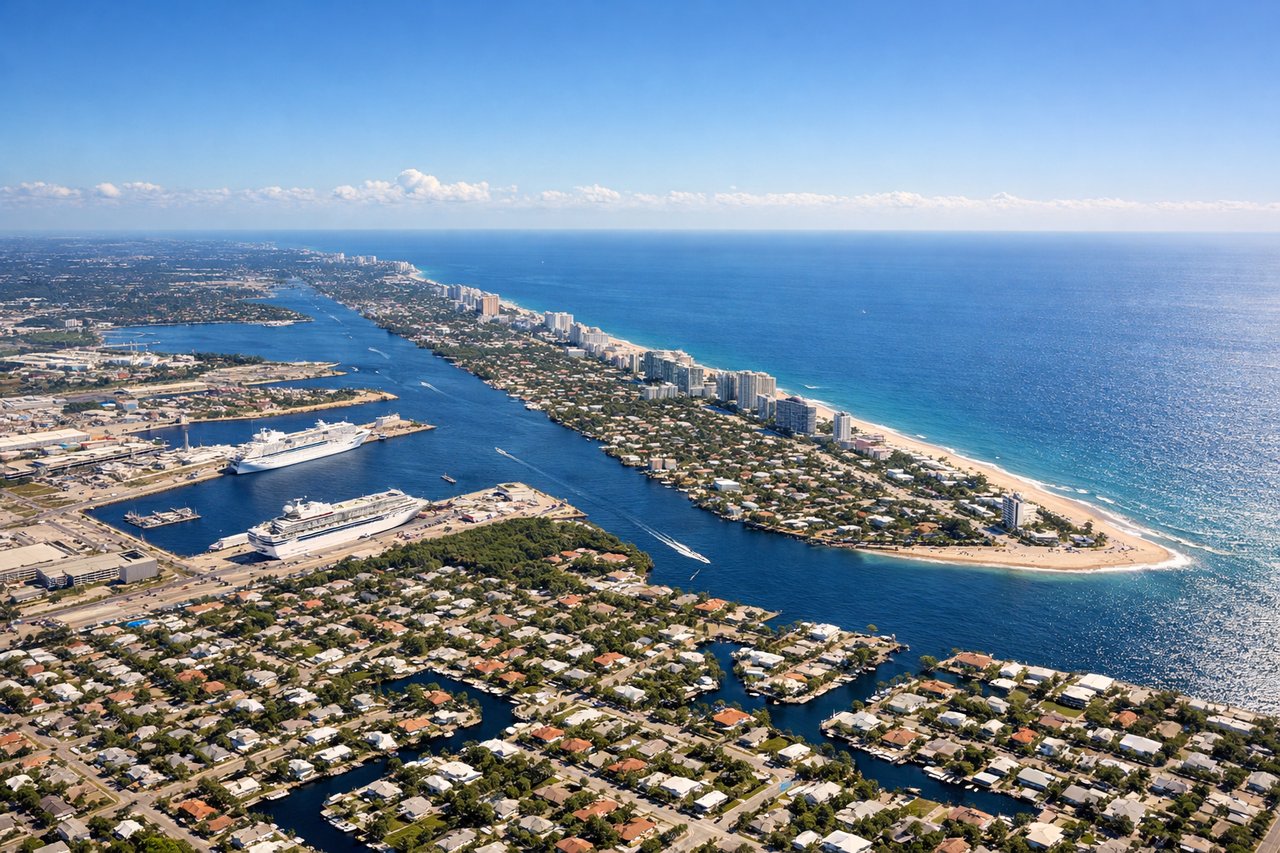
Landing at FLL
LEFTFort Lauderdale typically lands from the west or northwest (runways 09L/09R or 10L/10R). Left-side seats provide clear views of the Atlantic coast, the Intracoastal Waterway, and the distinctive pattern of barrier islands and developed beachfront as you descend toward the airport. Right side faces inland over suburban sprawl with less geographic interest.
Will your flight be in sunlight?
Pick a date and time in the Sun Map to watch the sun move across your whole flight.
About This Route
Which side of the plane should I sit on flying from La Aurora (GUA) to Fort Lauderdale Hollywood International (FLL)?
Sit on the Right side of the plane for the best views on flights from Guatemala City to Fort Lauderdale. Right-side seats win overall because the departure view from Guatemala City's highlands is more geographically dramatic than the landing approach. While the landing offers coastal scenery, the takeoff provides views of multiple volcanoes and the highland terrain that defines Guatemala's geography. The flight path itself crosses the Caribbean, offering little distinctive midpoint scenery from either side.
What can I see during takeoff from La Aurora in Guatemala City?
During takeoff from La Aurora (GUA), sit on the Right side for the best views. La Aurora typically departs to the east or northeast. Right-side seats offer views of the volcanic highlands and the city sprawl of Guatemala City itself as you climb out. The left side faces toward the Pacific slope, which is less visually distinctive during initial climb. Notable sights include: Guatemala City urban grid (immediate foreground), Volcán Pacaya (southeast, visible as a distant peak), Volcán de Agua (south-southeast on horizon), Sierra de las Minas ridge (east, appearing as a blue-gray line of highlands).
What can I see when landing at Fort Lauderdale Hollywood International in Fort Lauderdale?
When landing at Fort Lauderdale Hollywood International (FLL), sit on the Left side for the best views. Fort Lauderdale typically lands from the west or northwest (runways 09L/09R or 10L/10R). Left-side seats provide clear views of the Atlantic coast, the Intracoastal Waterway, and the distinctive pattern of barrier islands and developed beachfront as you descend toward the airport. Right side faces inland over suburban sprawl with less geographic interest. Notable sights include: Atlantic Ocean (left, dominant feature), Intracoastal Waterway (center-left, visible as a darker linear waterway), Fort Lauderdale Beach and beachfront high-rises (left-center), Port Everglades shipping channel (center, appearing as a geometric cut through developed land).
How long is the flight from Guatemala City to Fort Lauderdale?
The flight from La Aurora (GUA) to Fort Lauderdale Hollywood International (FLL) takes about 2 hours 40 minutes. The shortest flight path between them is 1,039 miles (1,672 km); winds and air traffic control usually add a few percent.
What does the Guatemala City to Fort Lauderdale flight path pass over?
The flight crosses the Yucatan Channel and the Caribbean Sea. At cruise altitude (around 35,000 feet), the Yucatan Peninsula's flat limestone platform is visible as a pale tan landmass with distinctive cenote patterns if flying over it. The Caribbean itself offers minimal visual interest—open water with occasional cloud formations. The Bahamas' shallow banks and turquoise waters may be visible on the approach to Florida, showing the contrast between deep blue ocean and pale shallow banks.