The right side captures Tokyo Bay and the urban sprawl on departure, then as the flight tracks northeast up Honshu and crosses into Hokkaido, the right side offers views over the Pacific coastline and the Tsugaru Strait crossing. The left side wins at landing, but the right side delivers more sustained interest across the full flight.
Flown HND to HKD? Did we get it right?
Flight Path
Tokyo to Hakodate is 433 miles (697 km), a flight of about 1 hour 15 minutes.
The flight tracks northeast over the Tohoku region of Honshu, passing over the Kitakami Mountains and the Pacific coastal plain of Iwate and Aomori prefectures. The Tsugaru Strait crossing is a highlight — roughly 20 kilometers of open water separating Honshu from Hokkaido — before descending over the flat agricultural lowlands of southern Hokkaido toward Hakodate.
Great circle distance and headings ›Phase by phase
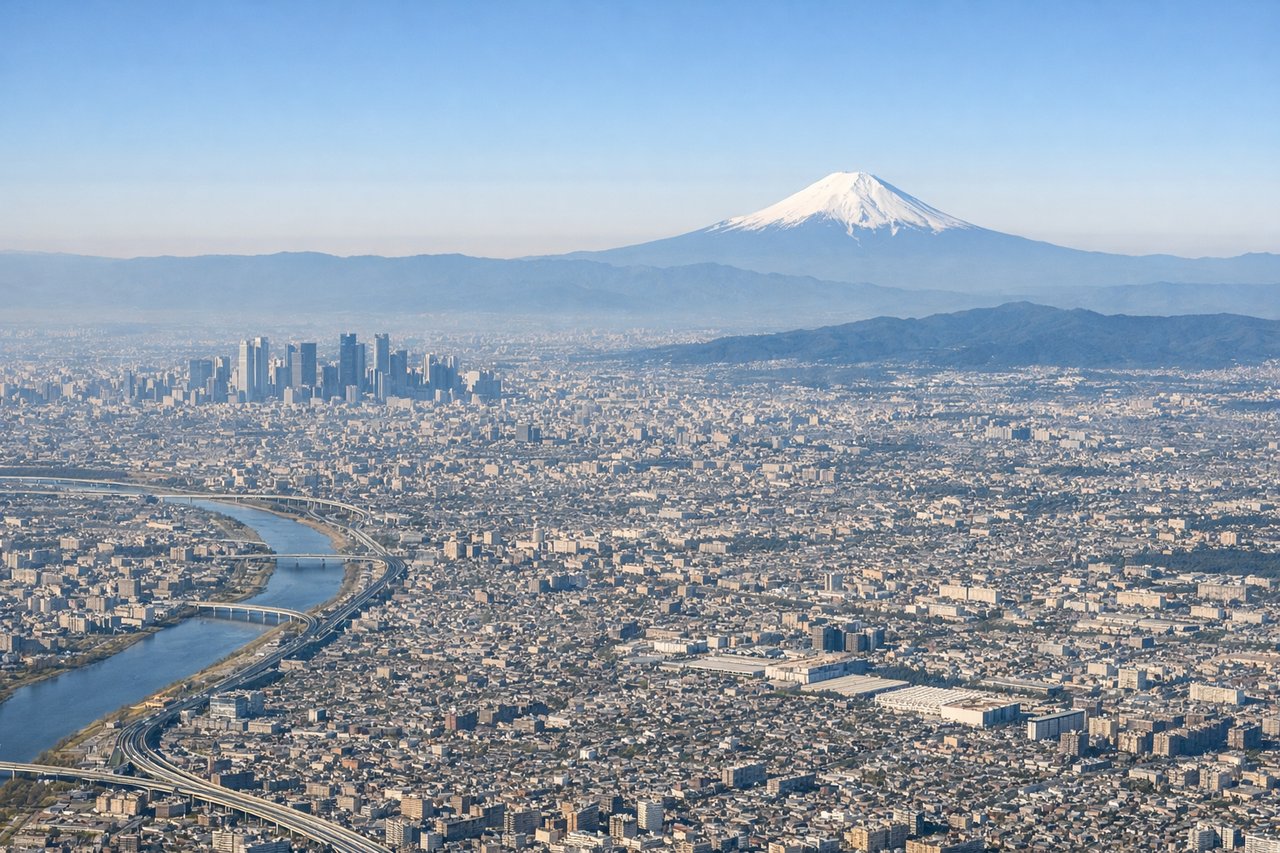
Takeoff from HND
RIGHTHND typically departs northbound on Runway 34L/34R, and the right side gives you a clear view east over Tokyo Bay and the Boso Peninsula. You'll see the dense urban grid of central Tokyo and the bay's industrial waterfront receding behind you.
Landing at HKD
LEFTHakodate Airport sits on the eastern side of the Hakodate Peninsula, and aircraft typically approach from the northeast on Runway 12. The left side gives you a direct view of Hakodate Bay and the distinctive narrow isthmus connecting the Hakodate Peninsula, one of Japan's most recognizable geographic features from the air.
Will your flight be in sunlight?
Pick a date and time in the Sun Map to watch the sun move across your whole flight.
About This Route
Which side of the plane should I sit on flying from Tokyo International (HND) to Hakodate (HKD)?
Sit on the Right side of the plane for the best views on flights from Tokyo to Hakodate. The right side captures Tokyo Bay and the urban sprawl on departure, then as the flight tracks northeast up Honshu and crosses into Hokkaido, the right side offers views over the Pacific coastline and the Tsugaru Strait crossing. The left side wins at landing, but the right side delivers more sustained interest across the full flight.
What can I see during takeoff from Tokyo International in Tokyo?
During takeoff from Tokyo International (HND), sit on the Right side for the best views. HND typically departs northbound on Runway 34L/34R, and the right side gives you a clear view east over Tokyo Bay and the Boso Peninsula. You'll see the dense urban grid of central Tokyo and the bay's industrial waterfront receding behind you. Notable sights include: Tokyo Bay, Boso Peninsula, Tokyo urban grid, Haneda airport reconfiguration islands.
What can I see when landing at Hakodate in Hakodate?
When landing at Hakodate (HKD), sit on the Left side for the best views. Hakodate Airport sits on the eastern side of the Hakodate Peninsula, and aircraft typically approach from the northeast on Runway 12. The left side gives you a direct view of Hakodate Bay and the distinctive narrow isthmus connecting the Hakodate Peninsula, one of Japan's most recognizable geographic features from the air. Notable sights include: Hakodate Bay, Hakodate Peninsula isthmus, Tsugaru Strait, Mount Hakodate.
How long is the flight from Tokyo to Hakodate?
The flight from Tokyo International (HND) to Hakodate (HKD) takes about 1 hour 15 minutes. The shortest flight path between them is 433 miles (697 km); winds and air traffic control usually add a few percent.
What does the Tokyo to Hakodate flight path pass over?
The flight tracks northeast over the Tohoku region of Honshu, passing over the Kitakami Mountains and the Pacific coastal plain of Iwate and Aomori prefectures. The Tsugaru Strait crossing is a highlight — roughly 20 kilometers of open water separating Honshu from Hokkaido — before descending over the flat agricultural lowlands of southern Hokkaido toward Hakodate.