Left wins at takeoff for Tokyo and Fuji views, but right side delivers the dramatic Alpine arrival into Munich which is one of the finest approaches in Europe. Right also captures Siberian river systems and Lake Baikal during the cruise portion of the polar route. On balance, right side offers more sustained geographic interest across the full flight.
Flight Path
The route tracks northwest over the Sea of Japan, crosses the Korean Peninsula, then traverses the vast Siberian taiga. Notable features include the Amur River basin, Lake Baikal (the world's deepest lake, clearly visible as a long dark slash in the landscape), the West Siberian Plain, the Ural Mountains as a low ridge marking the Europe-Asia boundary, then descent over Poland and the Czech Republic into Bavaria.
Great circle distance and headings ›
.jpg?width=600)
Phase by phase

Takeoff from HND
LEFTHND's primary departure runway 34L/34R sends aircraft northward over Tokyo Bay. Left side gives you the city of Tokyo, the dense urban grid of Shinjuku and Shibuya, and a clear view of Mount Fuji to the southwest as the aircraft climbs and banks northwest. Right side faces the open Pacific.
Landing at MUC
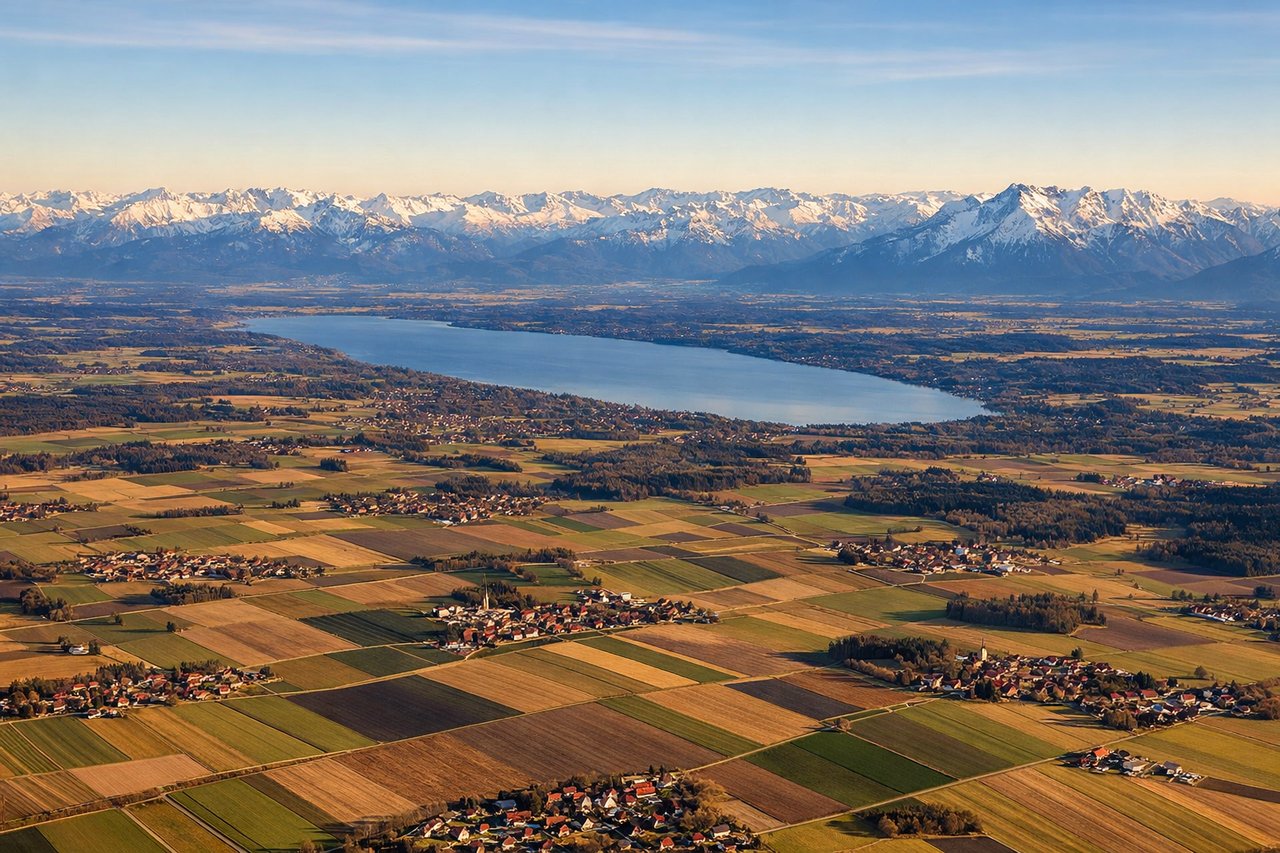
RIGHTMUC sits north of the Alps, and aircraft typically approach from the northeast on runway 26L/26R heading west. The right side faces south toward the Bavarian Alps — you get a long, clear view of the Inn Valley, the Zugspitze massif, and the Bavarian foothills as you descend. Left side faces north toward flat Bavarian farmland.
Landmarks on this routeAll landmarks →
Will your flight be in sunlight?
See exactly which side of the plane gets sun and shade at your departure time.
About This Route
Which side of the plane should I sit on flying from Tokyo International (HND) to Munich (MUC)?
Sit on the Right side of the plane for the best views on flights from Tokyo to Munich. Left wins at takeoff for Tokyo and Fuji views, but right side delivers the dramatic Alpine arrival into Munich which is one of the finest approaches in Europe. Right also captures Siberian river systems and Lake Baikal during the cruise portion of the polar route. On balance, right side offers more sustained geographic interest across the full flight.
What can I see during takeoff from Tokyo International in Tokyo?
During takeoff from Tokyo International (HND), sit on the Left side for the best views. HND's primary departure runway 34L/34R sends aircraft northward over Tokyo Bay. Left side gives you the city of Tokyo, the dense urban grid of Shinjuku and Shibuya, and a clear view of Mount Fuji to the southwest as the aircraft climbs and banks northwest. Right side faces the open Pacific. Notable sights include: Mount Fuji (3,776m, unmistakable cone), Tokyo Bay and its reclaimed land causeways, the dense urban sprawl of central Tokyo including Shinjuku skyscrapers, Rainbow Bridge and Tokyo waterfront.
What can I see when landing at Munich in Munich?
When landing at Munich (MUC), sit on the Right side for the best views. MUC sits north of the Alps, and aircraft typically approach from the northeast on runway 26L/26R heading west. The right side faces south toward the Bavarian Alps — you get a long, clear view of the Inn Valley, the Zugspitze massif, and the Bavarian foothills as you descend. Left side faces north toward flat Bavarian farmland. Notable sights include: Bavarian Alps including Zugspitze (2,962m, Germany's highest peak), Inn Valley cutting through the foothills, Chiemsee lake visible to the southeast, Bavarian agricultural patchwork of the Munich plain.
How long is the flight from Tokyo to Munich?
The flight from Tokyo International (HND) to Munich (MUC) takes Approximately 12 to 13 hours.
What does the Tokyo to Munich flight path pass over?
The route tracks northwest over the Sea of Japan, crosses the Korean Peninsula, then traverses the vast Siberian taiga. Notable features include the Amur River basin, Lake Baikal (the world's deepest lake, clearly visible as a long dark slash in the landscape), the West Siberian Plain, the Ural Mountains as a low ridge marking the Europe-Asia boundary, then descent over Poland and the Czech Republic into Bavaria.