Right side scores higher due to superior scenery on both takeoff and landing. Tokyo Bay departure offers urban-maritime drama, while the Fiji approach delivers genuine tropical island and coral reef scenery—the most visually distinctive segment of the entire 7+ hour flight. Left side is dominated by open ocean for most of the journey, limiting scenic value despite the long flight duration.
Flight Path
The flight path crosses the Pacific Ocean for approximately 5.5 hours with no significant landmarks visible—only open water, occasional cloud formations, and the gradual transition from temperate to tropical latitudes. The Equator is crossed roughly 3.5 hours into the flight. No islands or land features are visible during the cruise phase. The approach to Fiji begins around 6h 50m into the flight as the aircraft descends toward Viti Levu's western coast.
Great circle distance and headings ›

Phase by phase

Takeoff from HND
RIGHTRight side captures Tokyo Bay and the Kanto Plain during departure. Aircraft departing on runway 16R or 05 (south-wind daytime config) climb over the bay, offering views of the water, harbor infrastructure, and the urban sprawl of greater Tokyo receding inland. Left side sees only the city grid and inland plains immediately.
Landing at NAN
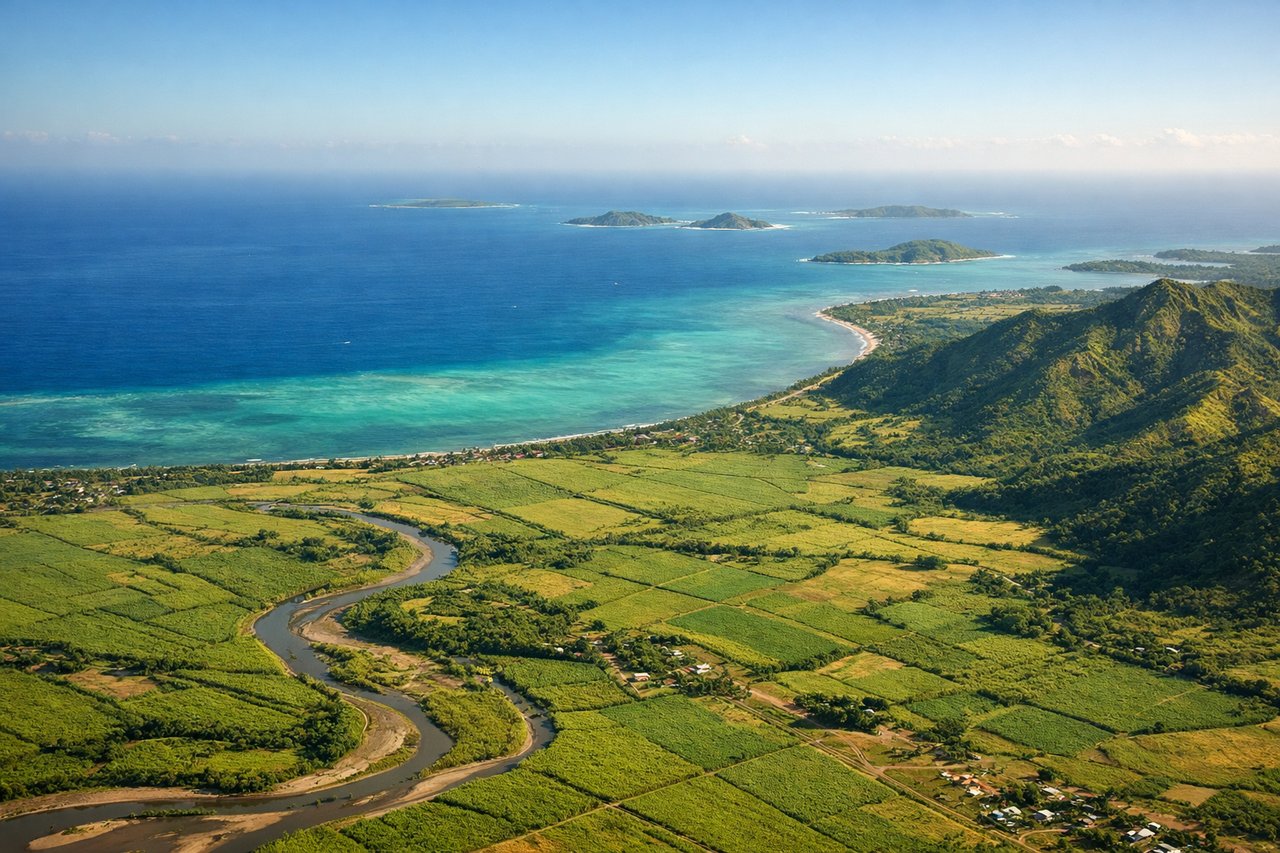
RIGHTRight side benefits from the typical approach into Nadi on runway 02 (heading northeast into prevailing winds). The descent path brings aircraft over Fiji's western coastline, coral reefs, and the Viti Levu island interior. Left side sees only open Pacific Ocean for the final 30+ minutes of descent.
Landmarks on this routeAll landmarks →
Will your flight be in sunlight?
See exactly which side of the plane gets sun and shade at your departure time.
About This Route
Which side of the plane should I sit on flying from Tokyo International (HND) to Nadi International (NAN)?
Sit on the Right side of the plane for the best views on flights from Tokyo to Nandi. Right side scores higher due to superior scenery on both takeoff and landing. Tokyo Bay departure offers urban-maritime drama, while the Fiji approach delivers genuine tropical island and coral reef scenery—the most visually distinctive segment of the entire 7+ hour flight. Left side is dominated by open ocean for most of the journey, limiting scenic value despite the long flight duration.
What can I see during takeoff from Tokyo International in Tokyo?
During takeoff from Tokyo International (HND), sit on the Right side for the best views. Right side captures Tokyo Bay and the Kanto Plain during departure. Aircraft departing on runway 16R or 05 (south-wind daytime config) climb over the bay, offering views of the water, harbor infrastructure, and the urban sprawl of greater Tokyo receding inland. Left side sees only the city grid and inland plains immediately. Notable sights include: Tokyo Bay, Haneda Airport complex, Kanto Plain extending inland, Tokyo metropolitan area skyline.
What can I see when landing at Nadi International in Nandi?
When landing at Nadi International (NAN), sit on the Right side for the best views. Right side benefits from the typical approach into Nadi on runway 02 (heading northeast into prevailing winds). The descent path brings aircraft over Fiji's western coastline, coral reefs, and the Viti Levu island interior. Left side sees only open Pacific Ocean for the final 30+ minutes of descent. Notable sights include: Viti Levu island (Fiji's largest), coral reef systems and lagoons, Nadi Bay, volcanic interior ridgeline.
How long is the flight from Tokyo to Nandi?
The flight from Tokyo International (HND) to Nadi International (NAN) takes 7h 25m.
What does the Tokyo to Nandi flight path pass over?
The flight path crosses the Pacific Ocean for approximately 5.5 hours with no significant landmarks visible—only open water, occasional cloud formations, and the gradual transition from temperate to tropical latitudes. The Equator is crossed roughly 3.5 hours into the flight. No islands or land features are visible during the cruise phase. The approach to Fiji begins around 6h 50m into the flight as the aircraft descends toward Viti Levu's western coast.