The right side delivers the dramatic Tokyo Bay and city skyline departure, and during the cruise over the Ryukyu island chain you get views of the Pacific Ocean side with occasional island sightings. The left side wins at landing for Kerama Islands, but the takeoff spectacle from the right is the highlight of this route.
Flight Path
The flight tracks southwest over the Kii Peninsula and Osaka Bay area, then crosses the Bungo Channel between Shikoku and Kyushu, before heading over the East China Sea. The Ryukyu island chain becomes visible in the final 45 minutes, with Amami Oshima and the smaller Ryukyu islands appearing as green hilly landmasses in the ocean below.
Great circle distance and headings ›

Phase by phase
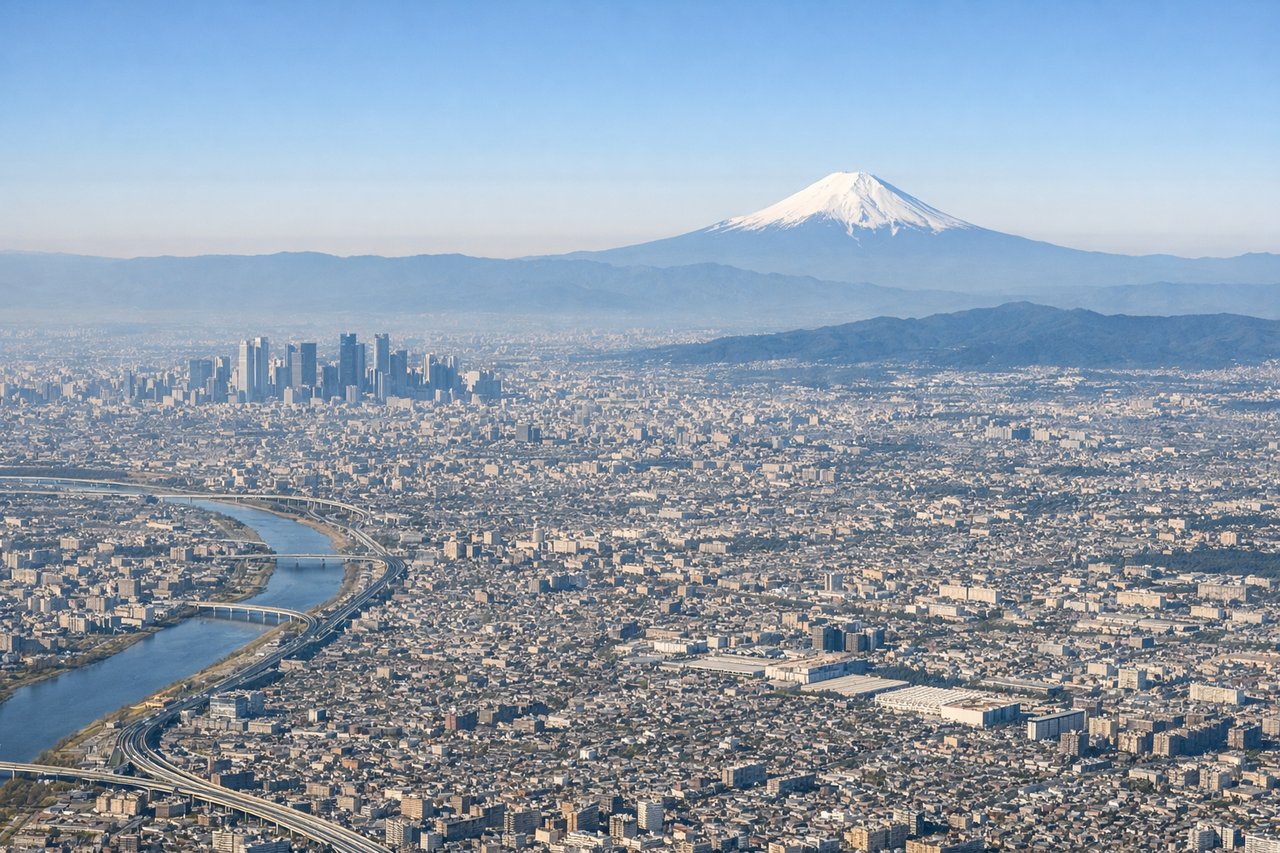
Takeoff from HND
RIGHTHaneda typically departs southward or westward over Tokyo Bay on runways 16R/16L or 34L/34R. A right-side seat gives you the Tokyo waterfront, Rainbow Bridge, and the dense urban grid of central Tokyo as you climb out over the bay. Left side faces open water early on.
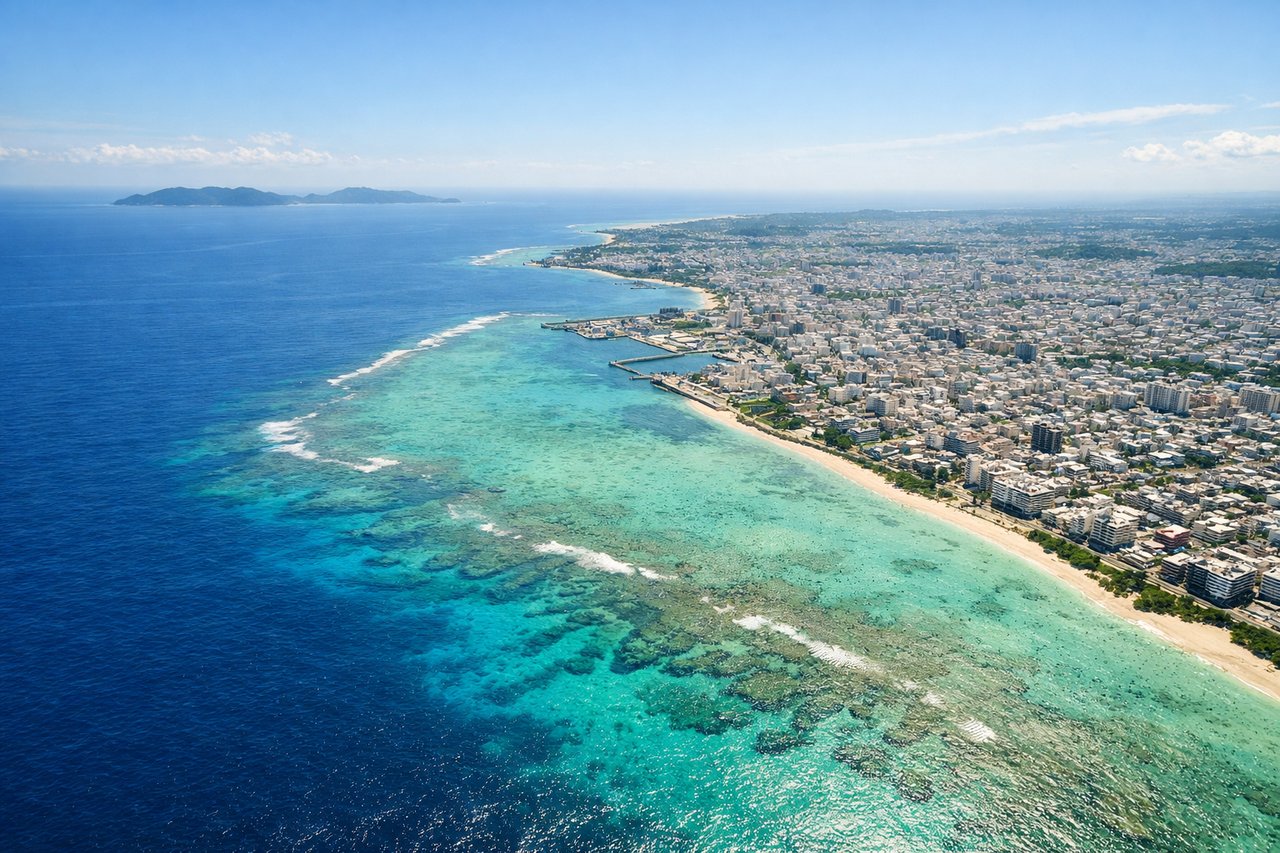
Landing at OKA
LEFTNaha Airport sits on the southwest coast of Okinawa and typically lands from the north on runway 18, or from the south on runway 36. On the common northerly approach over the island, the left side faces the East China Sea and the Kerama Islands visible to the west, while also catching views of Naha city and Shuri Castle area. Right side faces inland hills with less visual interest.
Landmarks on this routeAll landmarks →
Will your flight be in sunlight?
See exactly which side of the plane gets sun and shade at your departure time.
About This Route
Which side of the plane should I sit on flying from Tokyo International (HND) to Naha (OKA)?
Sit on the Right side of the plane for the best views on flights from Tokyo to Naha. The right side delivers the dramatic Tokyo Bay and city skyline departure, and during the cruise over the Ryukyu island chain you get views of the Pacific Ocean side with occasional island sightings. The left side wins at landing for Kerama Islands, but the takeoff spectacle from the right is the highlight of this route.
What can I see during takeoff from Tokyo International in Tokyo?
During takeoff from Tokyo International (HND), sit on the Right side for the best views. Haneda typically departs southward or westward over Tokyo Bay on runways 16R/16L or 34L/34R. A right-side seat gives you the Tokyo waterfront, Rainbow Bridge, and the dense urban grid of central Tokyo as you climb out over the bay. Left side faces open water early on. Notable sights include: Tokyo Bay, Rainbow Bridge and Odaiba, central Tokyo skyline including Shinjuku towers, Tokyo Tower.
What can I see when landing at Naha in Naha?
When landing at Naha (OKA), sit on the Left side for the best views. Naha Airport sits on the southwest coast of Okinawa and typically lands from the north on runway 18, or from the south on runway 36. On the common northerly approach over the island, the left side faces the East China Sea and the Kerama Islands visible to the west, while also catching views of Naha city and Shuri Castle area. Right side faces inland hills with less visual interest. Notable sights include: Kerama Islands in the East China Sea, Naha city waterfront, Okinawa's coral reef fringing the coast, Shuri Castle district.
How long is the flight from Tokyo to Naha?
The flight from Tokyo International (HND) to Naha (OKA) takes Approximately 2 hours 30 minutes.
What does the Tokyo to Naha flight path pass over?
The flight tracks southwest over the Kii Peninsula and Osaka Bay area, then crosses the Bungo Channel between Shikoku and Kyushu, before heading over the East China Sea. The Ryukyu island chain becomes visible in the final 45 minutes, with Amami Oshima and the smaller Ryukyu islands appearing as green hilly landmasses in the ocean below.