Seoul to Agana is 2,005 miles (3,227 km), a flight of about 4 hours.
While takeoff favors the right for Seoul views, the landing approach to Guam strongly favors left seats for Mount Lam Lam and Apra Harbor. Since landing views are more dramatic and memorable on this route, left wins overall.
Flight Path
The flight crosses the Philippine Sea for most of its duration. Notable waypoints include passing east of the Izu Islands (Japan) at cruise altitude, then tracking south-southwest across open ocean. The Mariana Trench lies roughly 200 miles east of the flight path—not visible but geographically significant. Guam sits at the western edge of the Mariana Islands chain. No significant landmasses are visible during the cruise phase; the route is predominantly over deep ocean with occasional scattered clouds.
Great circle distance and headings ›Phase by phase
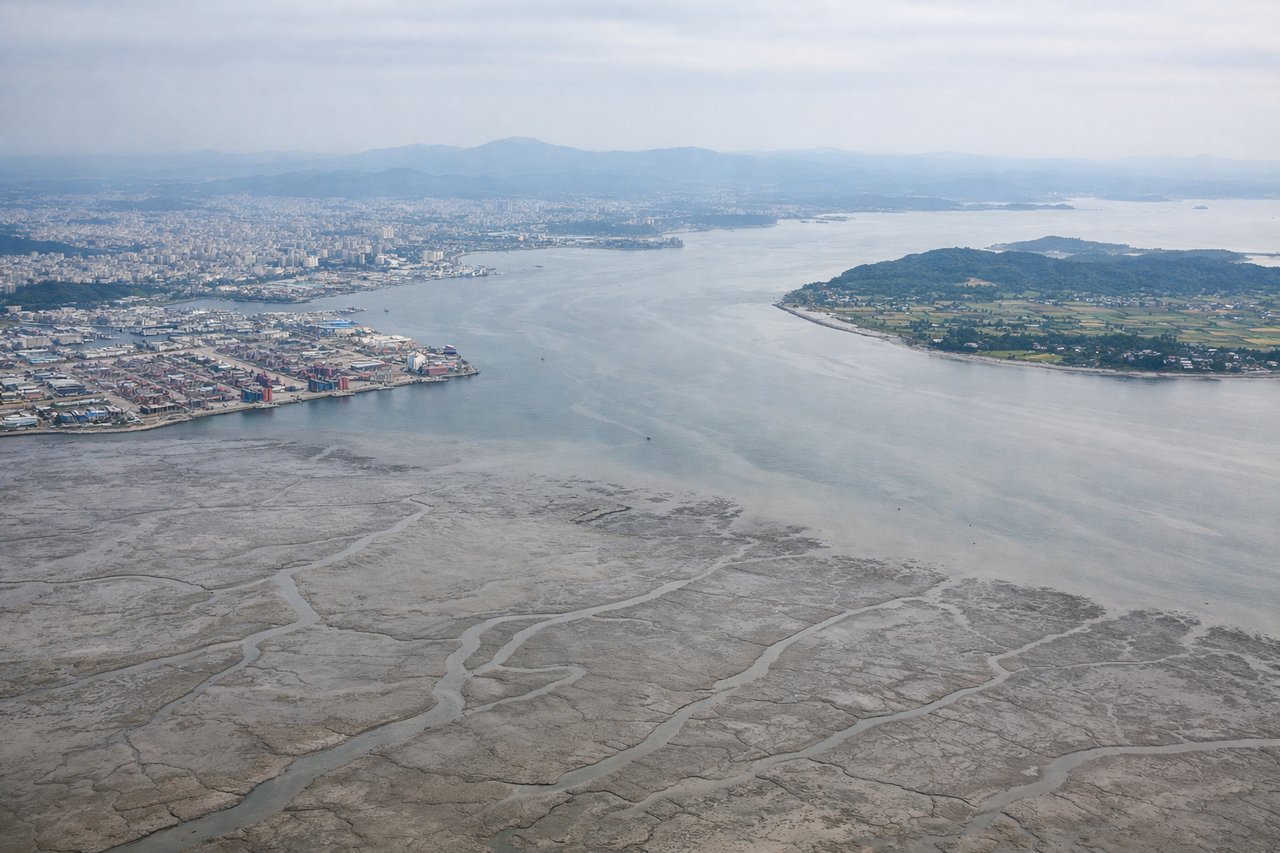
Takeoff from ICN
RIGHTIncheon typically departs eastbound (Runway 16L/R or 34L/R depending on wind). Right-side seats offer views of Seoul's urban sprawl and the Han River delta as you climb out over the Yellow Sea. Left seats face inland toward mountains with less dramatic scenery during initial climb.
Landing at GUM
LEFTGuam approaches typically use Runway 06L/R (northeasterly) or 24L/R (southwesterly) depending on wind. Left-side seats on descent offer views of the Philippine Sea, Guam's distinctive volcanic topography (Mount Lam Lam), and the island's narrow profile. Right seats face open ocean with less geographic interest.
Landmarks on this routeAll landmarks →
Will your flight be in sunlight?
Pick a date and time in the Sun Map to watch the sun move across your whole flight.
About This Route
Which side of the plane should I sit on flying from Incheon International (ICN) to Guam International (GUM)?
Sit on the Left side of the plane for the best views on flights from Seoul to Agana. While takeoff favors the right for Seoul views, the landing approach to Guam strongly favors left seats for Mount Lam Lam and Apra Harbor. Since landing views are more dramatic and memorable on this route, left wins overall.
What can I see during takeoff from Incheon International in Seoul?
During takeoff from Incheon International (ICN), sit on the Right side for the best views. Incheon typically departs eastbound (Runway 16L/R or 34L/R depending on wind). Right-side seats offer views of Seoul's urban sprawl and the Han River delta as you climb out over the Yellow Sea. Left seats face inland toward mountains with less dramatic scenery during initial climb. Notable sights include: Han River estuary (wide, braided waterway directly below during climb), Seoul metropolitan area (dense urban grid to the southeast), Incheon's reclaimed land islands (geometric patterns of industrial zones), Yellow Sea (expanding westward as altitude increases).
What can I see when landing at Guam International in Agana?
When landing at Guam International (GUM), sit on the Left side for the best views. Guam approaches typically use Runway 06L/R (northeasterly) or 24L/R (southwesterly) depending on wind. Left-side seats on descent offer views of the Philippine Sea, Guam's distinctive volcanic topography (Mount Lam Lam), and the island's narrow profile. Right seats face open ocean with less geographic interest. Notable sights include: Mount Lam Lam (Guam's highest point, 1,296 feet, visible as a distinct volcanic peak), Philippine Sea (deep blue water surrounding the island), Apra Harbor (large natural harbor on the western side, visible as a protected water body), Guam's coral reef system (lighter turquoise shallows contrasting with deep blue).
How long is the flight from Seoul to Agana?
The flight from Incheon International (ICN) to Guam International (GUM) takes about 4 hours. The shortest flight path between them is 2,005 miles (3,227 km); winds and air traffic control usually add a few percent.
What does the Seoul to Agana flight path pass over?
The flight crosses the Philippine Sea for most of its duration. Notable waypoints include passing east of the Izu Islands (Japan) at cruise altitude, then tracking south-southwest across open ocean. The Mariana Trench lies roughly 200 miles east of the flight path—not visible but geographically significant. Guam sits at the western edge of the Mariana Islands chain. No significant landmasses are visible during the cruise phase; the route is predominantly over deep ocean with occasional scattered clouds.