The left side captures the scenic bookends of the flight — Incheon's coastal islands on departure and Helsinki's archipelago on arrival — plus a better chance of viewing Lake Baikal during the Siberian crossing, since the great-circle route bulges north of the lake, placing it to the south (left) of the aircraft.
Flown ICN to HEL? Did we get it right?
Flight Path
Seoul to Helsinki is 4,370 miles (7,032 km), a flight of about 9 hours 45 minutes.
Southern Siberian taiga and river plains, with the flight path passing north of Lake Baikal and later crossing the low, forested Ural Mountains that mark the Asia-Europe boundary.
Great circle distance and headings ›

Phase by phase
Takeoff from ICN
LEFTDepartures from ICN typically roll southeast then bank northwest toward China/Russia, and that left-hand turn puts Incheon's island-studded coastline and the Han River estuary directly below on the left side. Right-side passengers mostly just see open Yellow Sea haze during the turn.
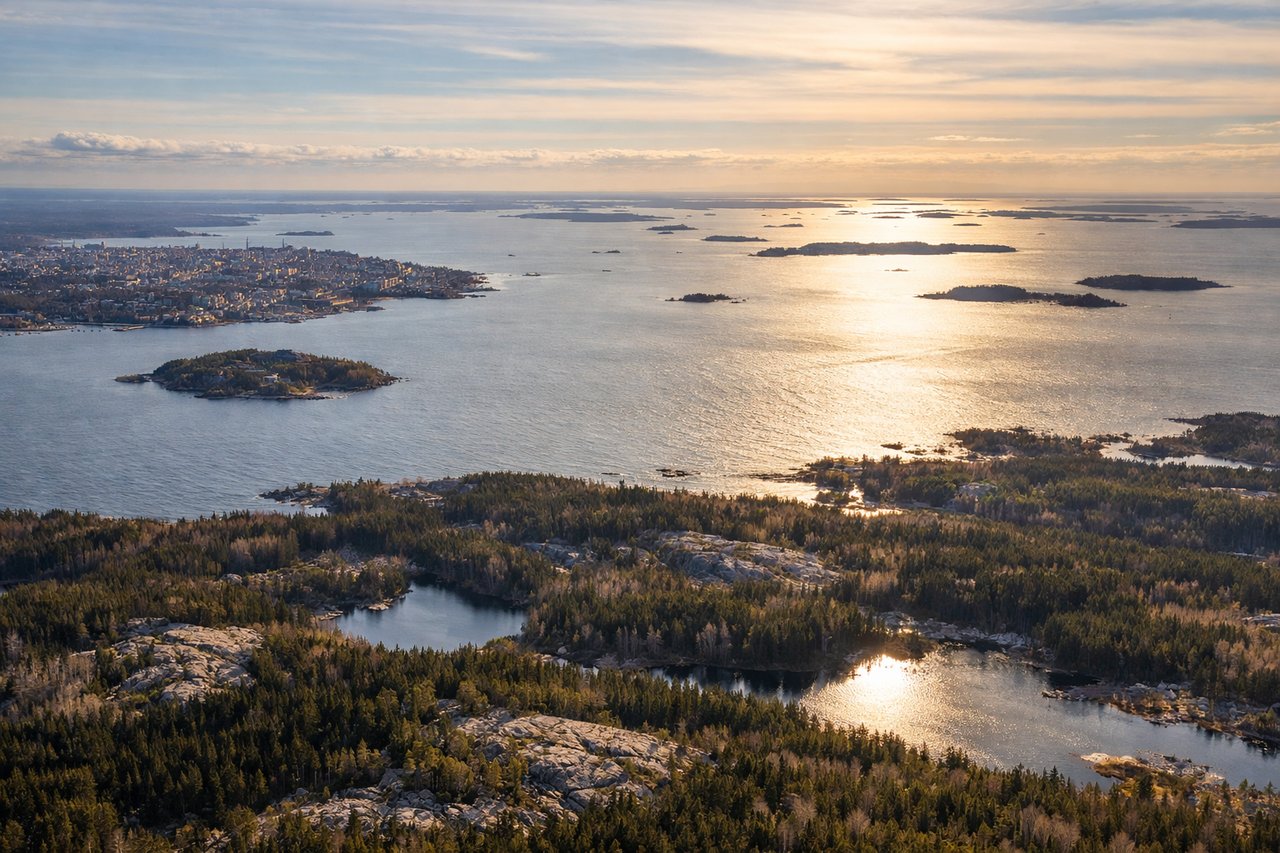
Landing at HEL
LEFTOn the common southwesterly approach into HEL, aircraft descend from the northeast and swing toward runway 22, putting Helsinki's coastal archipelago and the city's skyline on the left side. The right side mainly faces open water toward the Gulf of Bothnia with little to see.
Will your flight be in sunlight?
Pick a date and time in the Sun Map to watch the sun move across your whole flight.
About This Route
Which side of the plane should I sit on flying from Incheon International (ICN) to Helsinki Vantaa (HEL)?
Sit on the Left side of the plane for the best views on flights from Seoul to Helsinki. The left side captures the scenic bookends of the flight — Incheon's coastal islands on departure and Helsinki's archipelago on arrival — plus a better chance of viewing Lake Baikal during the Siberian crossing, since the great-circle route bulges north of the lake, placing it to the south (left) of the aircraft.
What can I see during takeoff from Incheon International in Seoul?
During takeoff from Incheon International (ICN), sit on the Left side for the best views. Departures from ICN typically roll southeast then bank northwest toward China/Russia, and that left-hand turn puts Incheon's island-studded coastline and the Han River estuary directly below on the left side. Right-side passengers mostly just see open Yellow Sea haze during the turn. Notable sights include: Yeongjongdo Island (ICN's home island), Ganghwa Island, Han River estuary, Yellow Sea coastline.
What can I see when landing at Helsinki Vantaa in Helsinki?
When landing at Helsinki Vantaa (HEL), sit on the Left side for the best views. On the common southwesterly approach into HEL, aircraft descend from the northeast and swing toward runway 22, putting Helsinki's coastal archipelago and the city's skyline on the left side. The right side mainly faces open water toward the Gulf of Bothnia with little to see. Notable sights include: Helsinki archipelago islands, Gulf of Finland coastline, distant Helsinki city skyline, Suomenlinna fortress island.
How long is the flight from Seoul to Helsinki?
The flight from Incheon International (ICN) to Helsinki Vantaa (HEL) takes about 9 hours 45 minutes. The shortest flight path between them is 4,370 miles (7,032 km); winds and air traffic control usually add a few percent.
What does the Seoul to Helsinki flight path pass over?
Southern Siberian taiga and river plains, with the flight path passing north of Lake Baikal and later crossing the low, forested Ural Mountains that mark the Asia-Europe boundary.