While the right side wins at Incheon departure, the left side dominates the majority of the flight. Once airborne and tracking south-southwest, the left side faces east toward the Korean Peninsula coastline, then over the East China Sea with occasional views of Chinese coastal islands, and delivers the outstanding Manila Bay arrival sequence. The left side's landing view over Manila Bay is the single most dramatic moment of the entire flight.
Flown ICN to MNL? Did we get it right?
Flight Path
Seoul to Manila is 1,621 miles (2,609 km), a flight of about 3 hours 55 minutes.
The flight tracks south-southwest from Incheon across the Yellow Sea, passing west of Jeju Island (visible to the left around 30-40 minutes after departure), then crossing the East China Sea. The midpoint falls roughly over open water between the Chinese coast and Taiwan. The flight passes well west of Taiwan, with the island potentially visible as a faint landmass to the left in clear conditions. The South China Sea is crossed in the final hour, with the Luzon Strait and northern Philippine islands appearing to the left before landfall on Luzon's northern coast, followed by the Central Luzon plain and Sierra Madre mountain range visible to the right on descent into Manila.
Great circle distance and headings ›Phase by phase
Takeoff from ICN
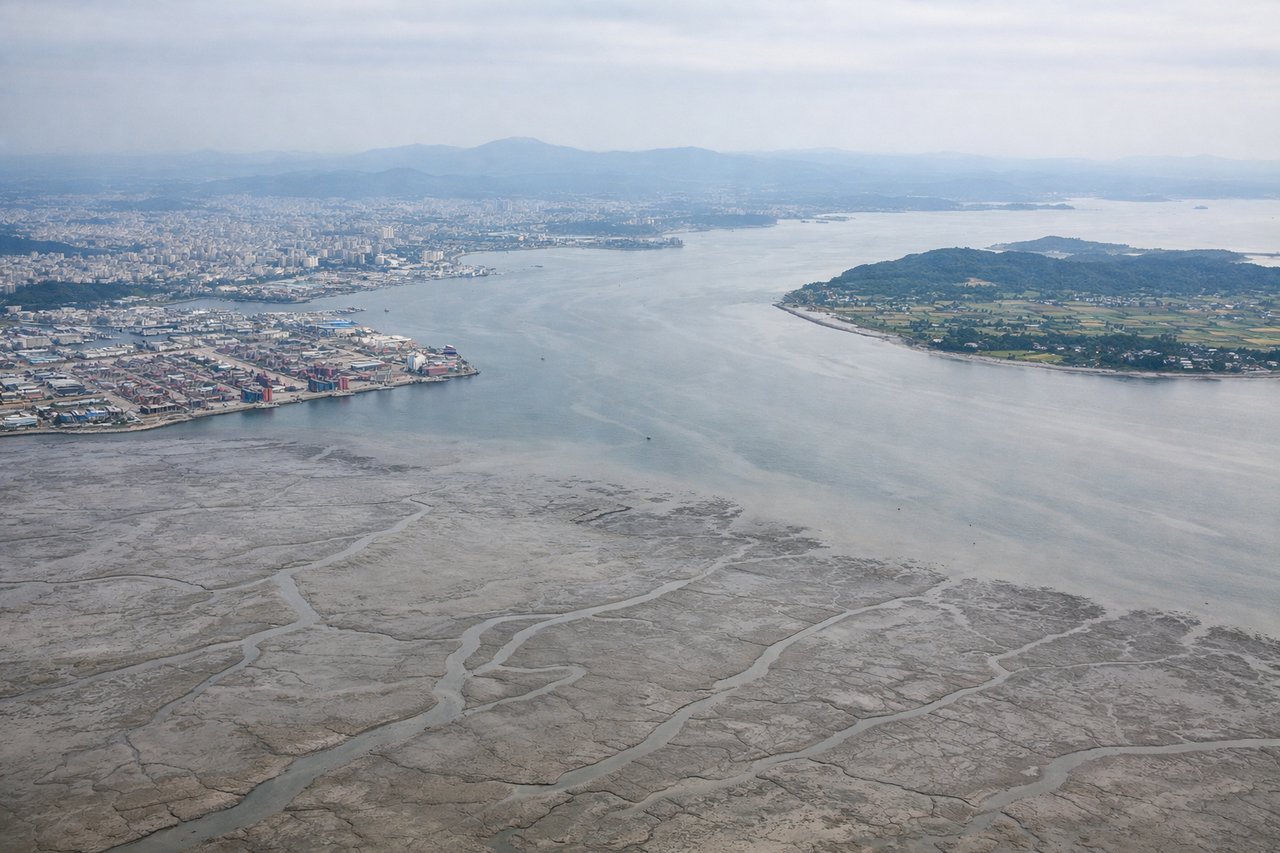
RIGHTIncheon's primary departure runways (15L/15R heading southeast) mean a right-side seat looks back over the Han River estuary and the western Seoul metropolitan area as the aircraft climbs out over the Yellow Sea. You get a clear view of the tidal flats and islands of the Gyeonggi Bay before the aircraft turns south.
Landing at MNL
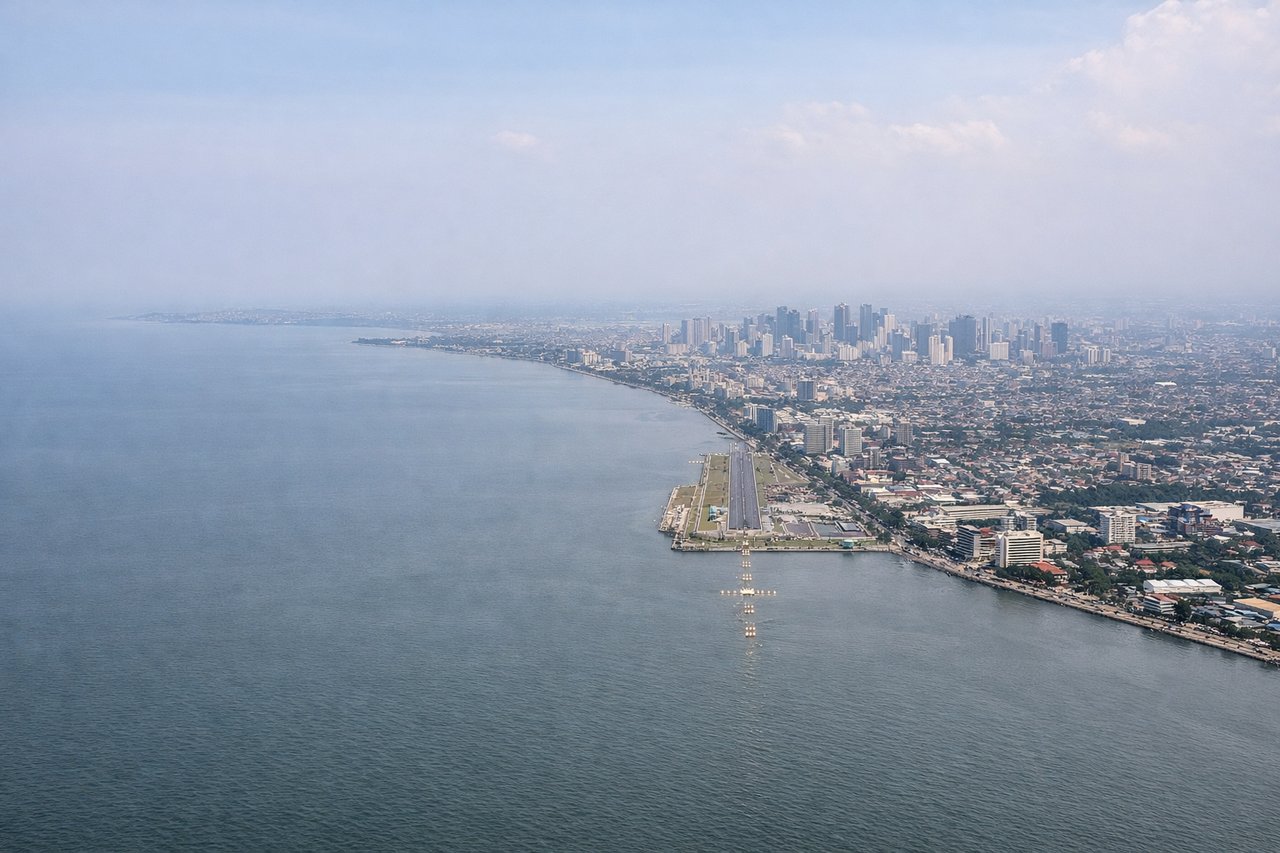
LEFTNAIA's primary arrival runway 06 means aircraft approach from the southwest over Manila Bay, and a left-side seat faces directly over the bay with the Manila city skyline, Intramuros, and the Pasig River mouth clearly visible on final approach. The right side faces inland toward suburban Paranaque with less dramatic scenery.
Will your flight be in sunlight?
Pick a date and time in the Sun Map to watch the sun move across your whole flight.
About This Route
Which side of the plane should I sit on flying from Incheon International (ICN) to Ninoy Aquino International (MNL)?
Sit on the Left side of the plane for the best views on flights from Seoul to Manila. While the right side wins at Incheon departure, the left side dominates the majority of the flight. Once airborne and tracking south-southwest, the left side faces east toward the Korean Peninsula coastline, then over the East China Sea with occasional views of Chinese coastal islands, and delivers the outstanding Manila Bay arrival sequence. The left side's landing view over Manila Bay is the single most dramatic moment of the entire flight.
What can I see during takeoff from Incheon International in Seoul?
During takeoff from Incheon International (ICN), sit on the Right side for the best views. Incheon's primary departure runways (15L/15R heading southeast) mean a right-side seat looks back over the Han River estuary and the western Seoul metropolitan area as the aircraft climbs out over the Yellow Sea. You get a clear view of the tidal flats and islands of the Gyeonggi Bay before the aircraft turns south. Notable sights include: Han River estuary and Gimpo tidal flats, Gyeonggi Bay island chains, Incheon city waterfront and port facilities, Songdo International Business District reclaimed land.
What can I see when landing at Ninoy Aquino International in Manila?
When landing at Ninoy Aquino International (MNL), sit on the Left side for the best views. NAIA's primary arrival runway 06 means aircraft approach from the southwest over Manila Bay, and a left-side seat faces directly over the bay with the Manila city skyline, Intramuros, and the Pasig River mouth clearly visible on final approach. The right side faces inland toward suburban Paranaque with less dramatic scenery. Notable sights include: Manila Bay and its broad open water, Manila city skyline and Intramuros district, Pasig River mouth at Manila waterfront, Cavite peninsula across the bay.
How long is the flight from Seoul to Manila?
The flight from Incheon International (ICN) to Ninoy Aquino International (MNL) takes about 3 hours 55 minutes. The shortest flight path between them is 1,621 miles (2,609 km); winds and air traffic control usually add a few percent.
What does the Seoul to Manila flight path pass over?
The flight tracks south-southwest from Incheon across the Yellow Sea, passing west of Jeju Island (visible to the left around 30-40 minutes after departure), then crossing the East China Sea. The midpoint falls roughly over open water between the Chinese coast and Taiwan. The flight passes well west of Taiwan, with the island potentially visible as a faint landmass to the left in clear conditions. The South China Sea is crossed in the final hour, with the Luzon Strait and northern Philippine islands appearing to the left before landfall on Luzon's northern coast, followed by the Central Luzon plain and Sierra Madre mountain range visible to the right on descent into Manila.