Right seats capture the most dramatic geography: the Korean peninsula's western coast and Yellow Sea on departure, then the crossing of the Korea Strait with island chains visible, and finally the approach to Nagasaki's mountainous terrain. Left has good landing views but misses the scenic departure sequence.
Flown ICN to NGS? Did we get it right?
Flight Path
Seoul to Nagasaki is 370 miles (596 km), a flight of about 1 hour 55 minutes.
Korea Strait crossing with Tsushima Island visible (Japanese territory, roughly midway between the two countries), transition from Yellow Sea to East China Sea waters, scattered smaller islands of the Goto Islands chain appearing as you approach Nagasaki Prefecture, gradual rise of Kyushu's northern mountain ridges becoming more prominent in the final 30 minutes
Great circle distance and headings ›Phase by phase
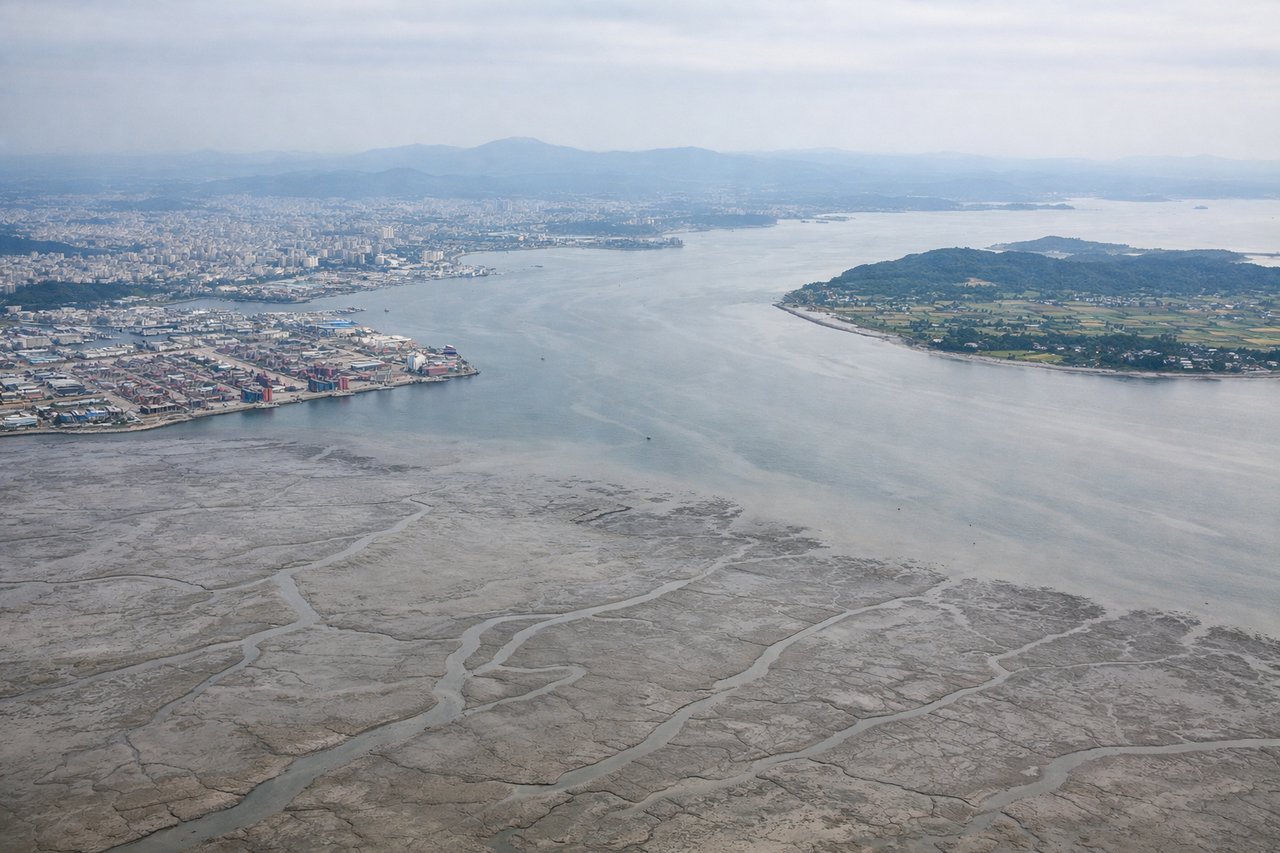
Takeoff from ICN
RIGHTIncheon typically departs eastbound (runways 16L/16R or 34L/34R depending on wind). Right-side seats face south and southeast initially, giving views of the Yellow Sea coastline, Incheon's harbor infrastructure, and the Korean peninsula's western edge as you climb out.
Landing at NGS
LEFTNagasaki approaches from the northwest over the East China Sea (runway 34 is standard). Left-side seats descend toward the city with views of Nagasaki Bay's distinctive inlet, the surrounding Kyushu mountains, and the city nestled between steep terrain.
Will your flight be in sunlight?
Pick a date and time in the Sun Map to watch the sun move across your whole flight.
About This Route
Which side of the plane should I sit on flying from Incheon International (ICN) to Nagasaki (NGS)?
Sit on the Right side of the plane for the best views on flights from Seoul to Nagasaki. Right seats capture the most dramatic geography: the Korean peninsula's western coast and Yellow Sea on departure, then the crossing of the Korea Strait with island chains visible, and finally the approach to Nagasaki's mountainous terrain. Left has good landing views but misses the scenic departure sequence.
What can I see during takeoff from Incheon International in Seoul?
During takeoff from Incheon International (ICN), sit on the Right side for the best views. Incheon typically departs eastbound (runways 16L/16R or 34L/34R depending on wind). Right-side seats face south and southeast initially, giving views of the Yellow Sea coastline, Incheon's harbor infrastructure, and the Korean peninsula's western edge as you climb out. Notable sights include: Incheon Harbor and container terminals, Yellow Sea (Hwanghae), Ganghwa Island to the south, Seoul metropolitan area haze layer to the east.
What can I see when landing at Nagasaki in Nagasaki?
When landing at Nagasaki (NGS), sit on the Left side for the best views. Nagasaki approaches from the northwest over the East China Sea (runway 34 is standard). Left-side seats descend toward the city with views of Nagasaki Bay's distinctive inlet, the surrounding Kyushu mountains, and the city nestled between steep terrain. Notable sights include: Nagasaki Bay (Omura Bay inlet), Kyushu mountain ridges to the east and south, Nagasaki city sprawl in the valley, East China Sea.
How long is the flight from Seoul to Nagasaki?
The flight from Incheon International (ICN) to Nagasaki (NGS) takes about 1 hour 55 minutes. The shortest flight path between them is 370 miles (596 km); winds and air traffic control usually add a few percent.
What does the Seoul to Nagasaki flight path pass over?
Korea Strait crossing with Tsushima Island visible (Japanese territory, roughly midway between the two countries), transition from Yellow Sea to East China Sea waters, scattered smaller islands of the Goto Islands chain appearing as you approach Nagasaki Prefecture, gradual rise of Kyushu's northern mountain ridges becoming more prominent in the final 30 minutes