The right side strings together a scenic South Korean departure, glimpses of Kamchatka's volcanic peaks and Alaska's coastal ranges during the great-circle crossing, and a spectacular mountain-and-harbor arrival into Vancouver, while the left side spends most of the flight over featureless stretches of the Sea of Japan, Sea of Okhotsk, and Bering Sea.
Flown ICN to YVR? Did we get it right?
Flight Path
Seoul to Vancouver is 5,095 miles (8,200 km), a flight of about 10 hours 30 minutes.
East Sea (Sea of Japan), Russian Far East coast near Vladivostok, Sikhote-Alin mountains, Sea of Okhotsk, Kamchatka Peninsula volcanoes, Bering Sea, Aleutian Islands, Gulf of Alaska, Alaska's coastal ranges, British Columbia's Coast Mountains
Great circle distance and headings ›

Phase by phase
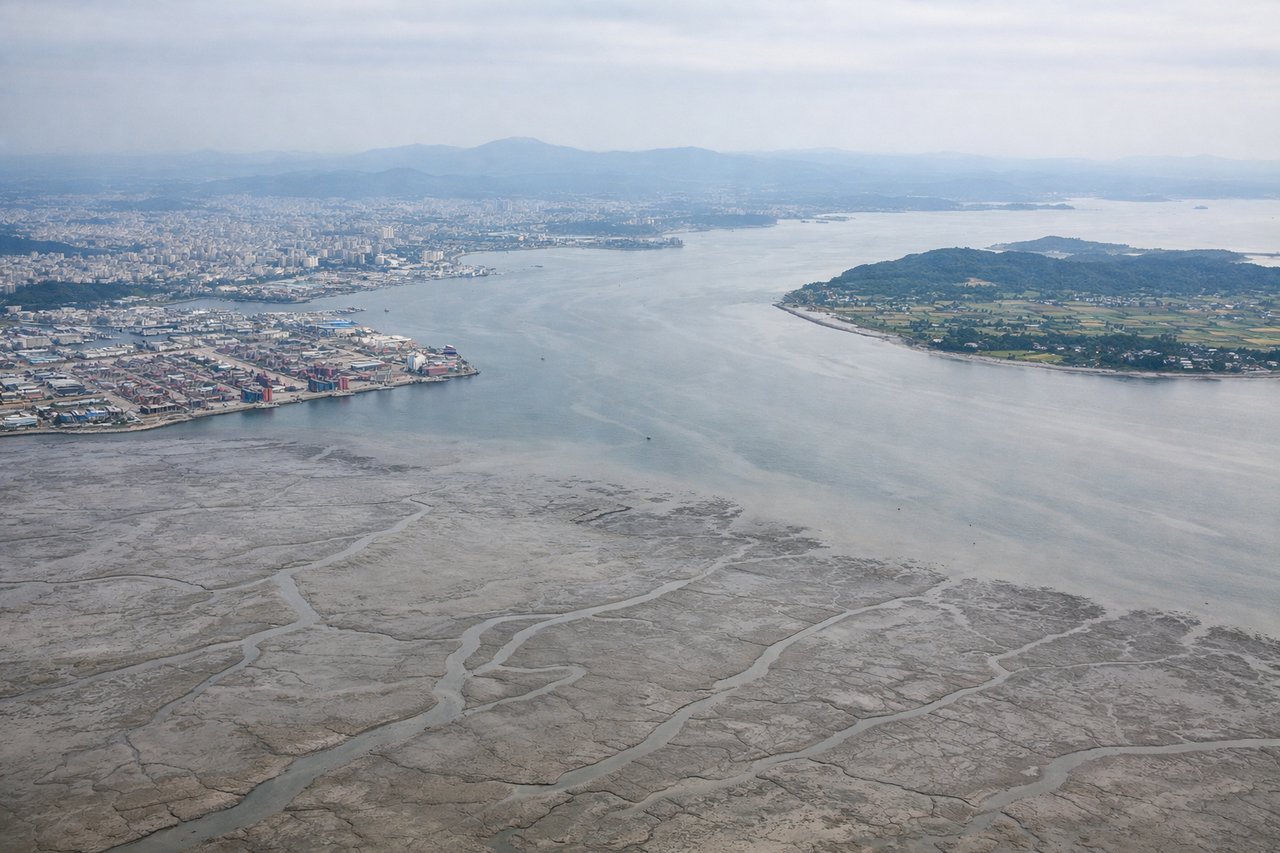
Takeoff from ICN
RIGHTDeparting ICN, flights heading toward the North Pacific corridor swing east across South Korea to avoid North Korean airspace, giving right-side passengers a good look at Seoul's skyline along the Han River and the forested Taebaek Mountains before crossing the East Sea coast near Gangneung. The left side mostly faces the featureless Yellow Sea and, later, the airspace-restricted North Korean interior.
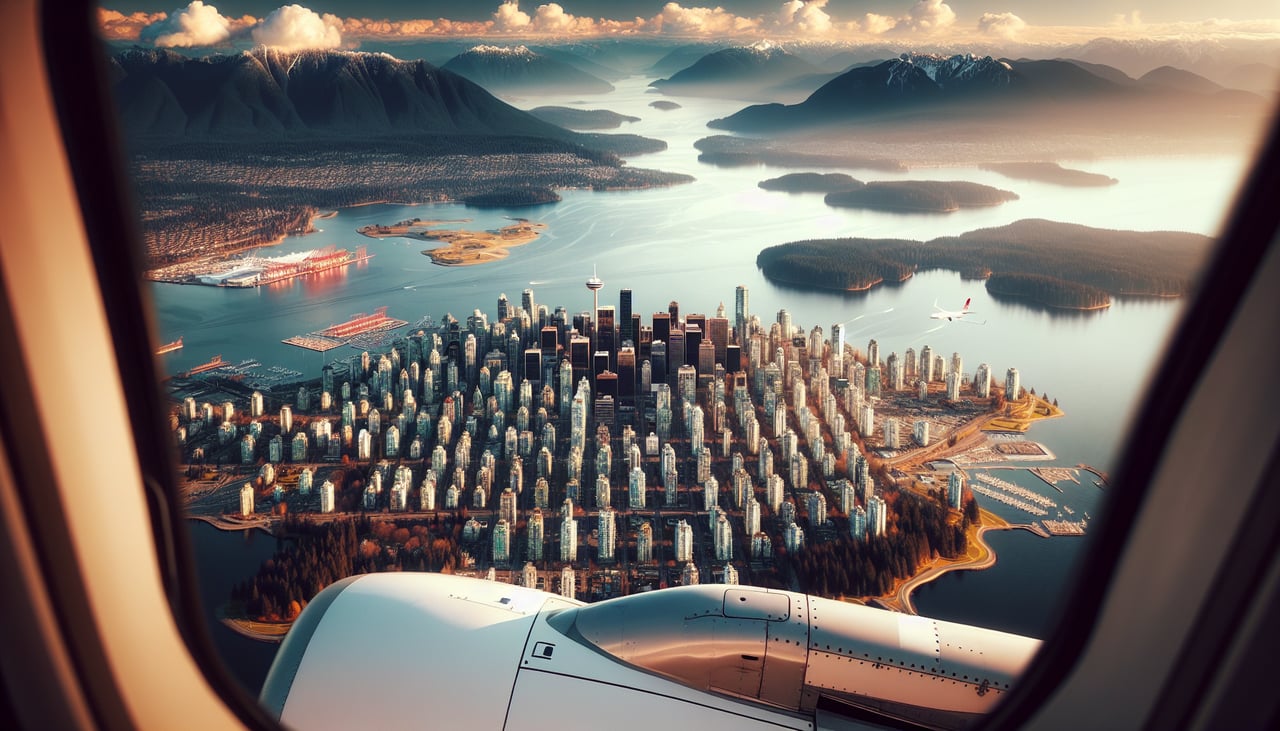
Landing at YVR
RIGHTOn the final approach into YVR's east-west runways, the aircraft passes south of downtown Vancouver with the North Shore Mountains and Burrard Inlet dramatically visible on the right, while the left side only shows the flat Fraser River delta and farmland. The mountain-and-harbor combination is one of the most scenic landings in North America.
Will your flight be in sunlight?
Pick a date and time in the Sun Map to watch the sun move across your whole flight.
About This Route
Which side of the plane should I sit on flying from Incheon International (ICN) to Vancouver International (YVR)?
Sit on the Right side of the plane for the best views on flights from Seoul to Vancouver. The right side strings together a scenic South Korean departure, glimpses of Kamchatka's volcanic peaks and Alaska's coastal ranges during the great-circle crossing, and a spectacular mountain-and-harbor arrival into Vancouver, while the left side spends most of the flight over featureless stretches of the Sea of Japan, Sea of Okhotsk, and Bering Sea.
What can I see during takeoff from Incheon International in Seoul?
During takeoff from Incheon International (ICN), sit on the Right side for the best views. Departing ICN, flights heading toward the North Pacific corridor swing east across South Korea to avoid North Korean airspace, giving right-side passengers a good look at Seoul's skyline along the Han River and the forested Taebaek Mountains before crossing the East Sea coast near Gangneung. The left side mostly faces the featureless Yellow Sea and, later, the airspace-restricted North Korean interior. Notable sights include: Seoul skyline and Han River, Taebaek Mountains, East Sea coastline near Gangneung/Sokcho, Ulleungdo island offshore.
What can I see when landing at Vancouver International in Vancouver?
When landing at Vancouver International (YVR), sit on the Right side for the best views. On the final approach into YVR's east-west runways, the aircraft passes south of downtown Vancouver with the North Shore Mountains and Burrard Inlet dramatically visible on the right, while the left side only shows the flat Fraser River delta and farmland. The mountain-and-harbor combination is one of the most scenic landings in North America. Notable sights include: North Shore Mountains (Grouse, Seymour, Cypress), Burrard Inlet, downtown Vancouver skyline, Strait of Georgia with Vancouver Island silhouette.
How long is the flight from Seoul to Vancouver?
The flight from Incheon International (ICN) to Vancouver International (YVR) takes about 10 hours 30 minutes. The shortest flight path between them is 5,095 miles (8,200 km); winds and air traffic control usually add a few percent.
What does the Seoul to Vancouver flight path pass over?
East Sea (Sea of Japan), Russian Far East coast near Vladivostok, Sikhote-Alin mountains, Sea of Okhotsk, Kamchatka Peninsula volcanoes, Bering Sea, Aleutian Islands, Gulf of Alaska, Alaska's coastal ranges, British Columbia's Coast Mountains