While takeoff favors the right for Osaka Bay views, the landing experience on the left is more dramatic and sustained, offering Moreton Bay, the Brisbane River system, and city skyline during the critical descent phase when views are most appreciated.
Flight Path
The flight path crosses the East China Sea, passes south of the Ryukyu Islands (visible on early departure if flying southbound), then crosses open Pacific Ocean. The Coral Sea dominates the approach to Australia. No major landmasses are visible during the mid-flight cruise phase over open water. The Great Barrier Reef lies north of the direct flight path and is not typically visible from this route.
Great circle distance and headings ›Phase by phase
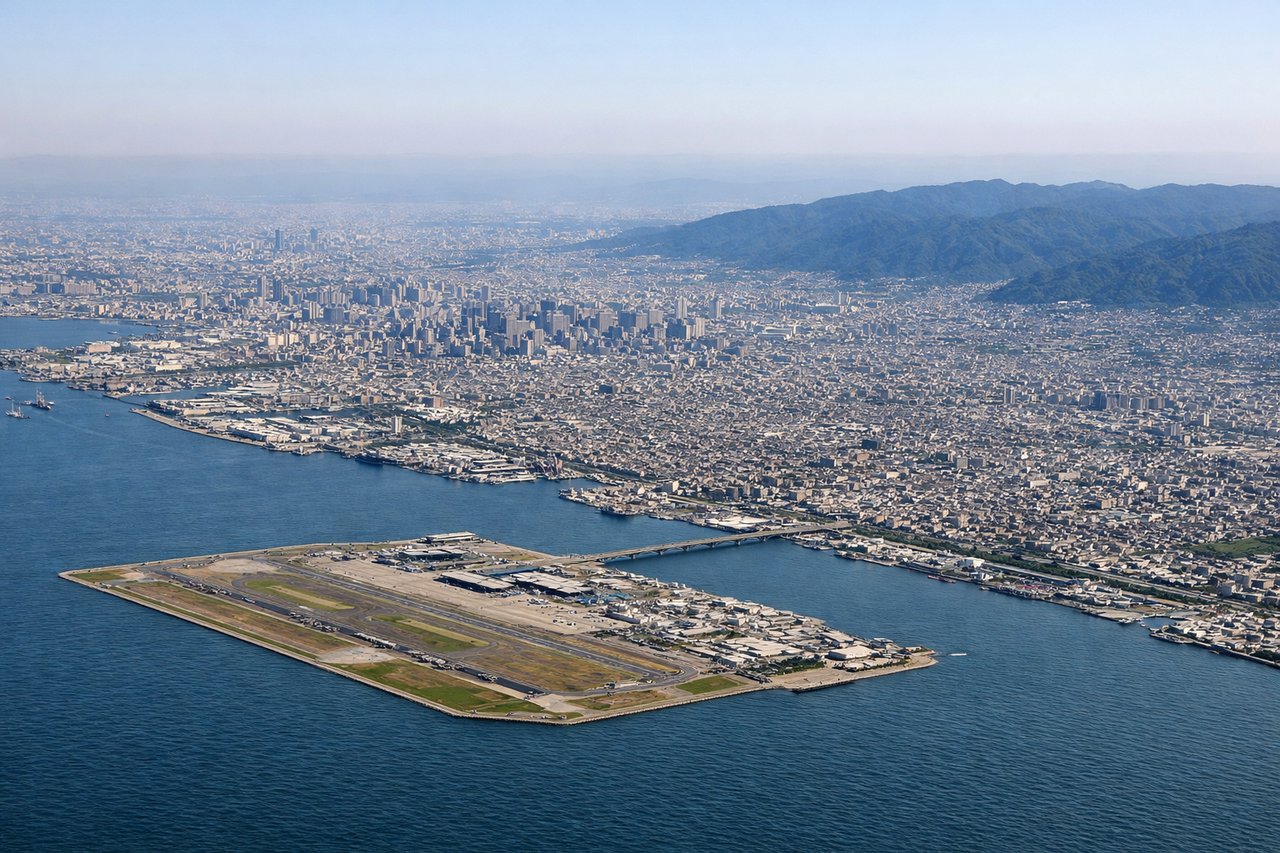
Takeoff from KIX
RIGHTKIX typically departs runway 06L or 06R (eastbound). Right-side seats offer views of Osaka Bay and the Kii Peninsula as the aircraft climbs. Left seats face inland toward the Ikoma Mountains, which are less visually distinctive at altitude.
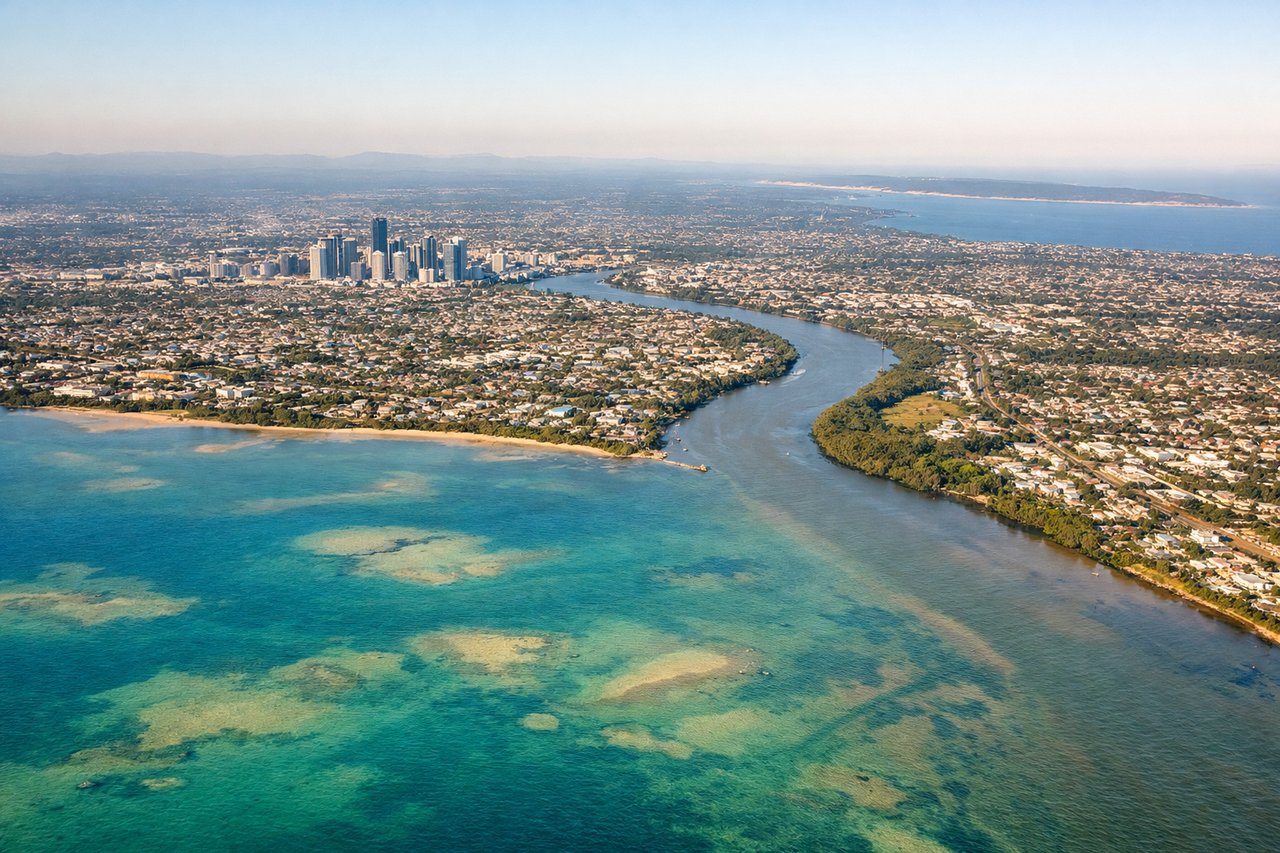
Landing at BNE
LEFTBNE uses runways 01L/01R (northbound) or 10L/10R (eastbound). For northbound arrivals (common), left seats provide excellent views of Moreton Bay, Brisbane's river system, and the city skyline during descent. Right seats face inland toward the D'Aguilar National Forest.
Landmarks on this routeAll landmarks →
Will your flight be in sunlight?
See exactly which side of the plane gets sun and shade at your departure time.
About This Route
Which side of the plane should I sit on flying from Kansai International (KIX) to Brisbane International (BNE)?
Sit on the Left side of the plane for the best views on flights from Osaka to Brisbane. While takeoff favors the right for Osaka Bay views, the landing experience on the left is more dramatic and sustained, offering Moreton Bay, the Brisbane River system, and city skyline during the critical descent phase when views are most appreciated.
What can I see during takeoff from Kansai International in Osaka?
During takeoff from Kansai International (KIX), sit on the Right side for the best views. KIX typically departs runway 06L or 06R (eastbound). Right-side seats offer views of Osaka Bay and the Kii Peninsula as the aircraft climbs. Left seats face inland toward the Ikoma Mountains, which are less visually distinctive at altitude. Notable sights include: Osaka Bay (immediate offshore water), Kii Peninsula (mountainous landmass to the southeast), Awaji Island (large island in the bay), Ikoma Mountains (inland ridge to the west).
What can I see when landing at Brisbane International in Brisbane?
When landing at Brisbane International (BNE), sit on the Left side for the best views. BNE uses runways 01L/01R (northbound) or 10L/10R (eastbound). For northbound arrivals (common), left seats provide excellent views of Moreton Bay, Brisbane's river system, and the city skyline during descent. Right seats face inland toward the D'Aguilar National Forest. Notable sights include: Moreton Bay (large shallow bay with islands), Brisbane River (winding through the city), Moreton Island (large island northeast of the city), Brisbane CBD skyline (high-rise cluster).
How long is the flight from Osaka to Brisbane?
The flight from Kansai International (KIX) to Brisbane International (BNE) takes Approximately 7.5 to 8.5 hours.
What does the Osaka to Brisbane flight path pass over?
The flight path crosses the East China Sea, passes south of the Ryukyu Islands (visible on early departure if flying southbound), then crosses open Pacific Ocean. The Coral Sea dominates the approach to Australia. No major landmasses are visible during the mid-flight cruise phase over open water. The Great Barrier Reef lies north of the direct flight path and is not typically visible from this route.