The right side keeps passengers facing the Big Island's volcanic slopes on departure and Maui's towering Haleakala on arrival, while the left side faces only open ocean for the entire short hop.
Flight Path
Kona to Kahului is 84 miles (135 km), a flight of about 35 minutes.
Alenuihaha Channel between the Big Island and Maui, with Haleakala's summit visible ahead on the horizon as the aircraft crosses open water.
Great circle distance and headings ›
.jpg?width=600)
Phase by phase
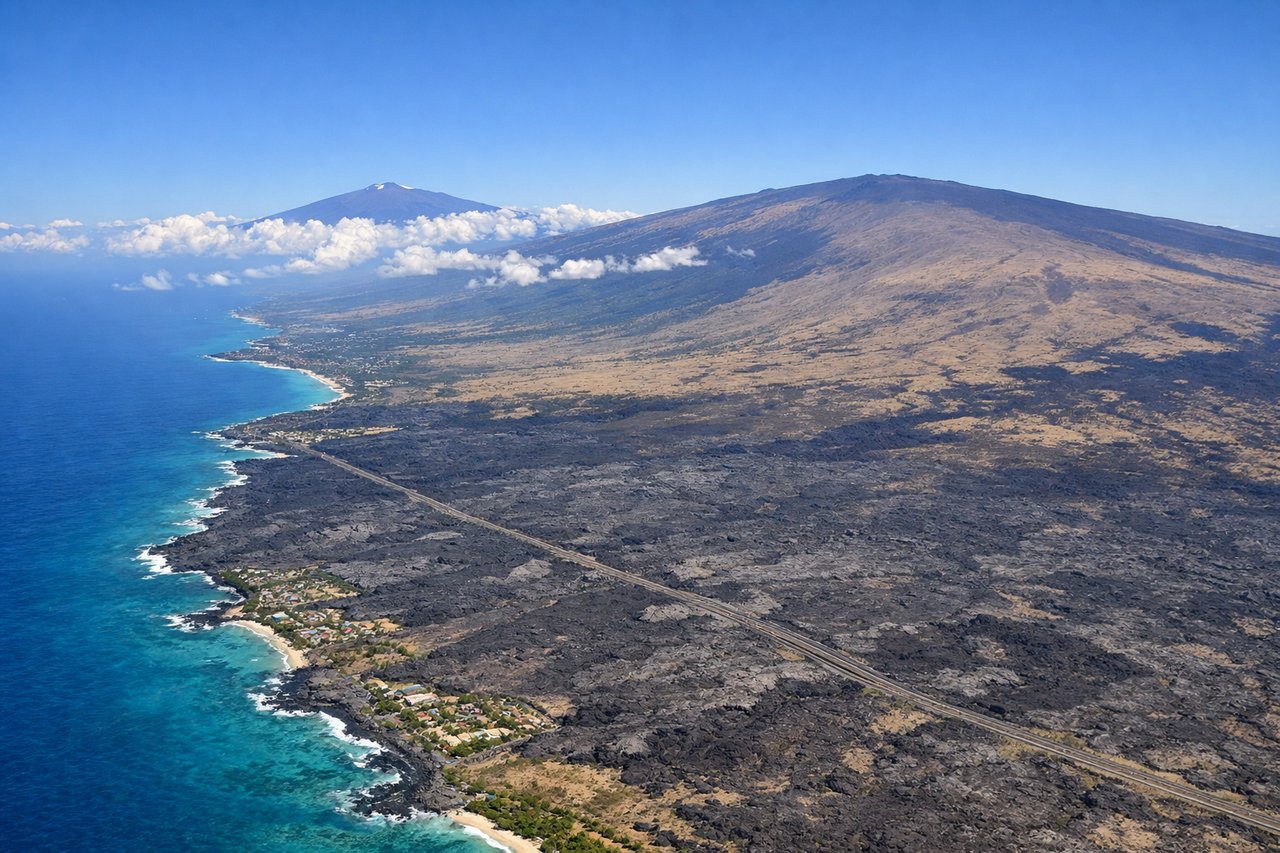
Takeoff from KOA
RIGHTDeparting KOA northbound along the Kona coast, the right side faces inland toward Hualalai volcano's dark lava slopes and the dry Kohala coastline, while the left side only shows open Pacific water.
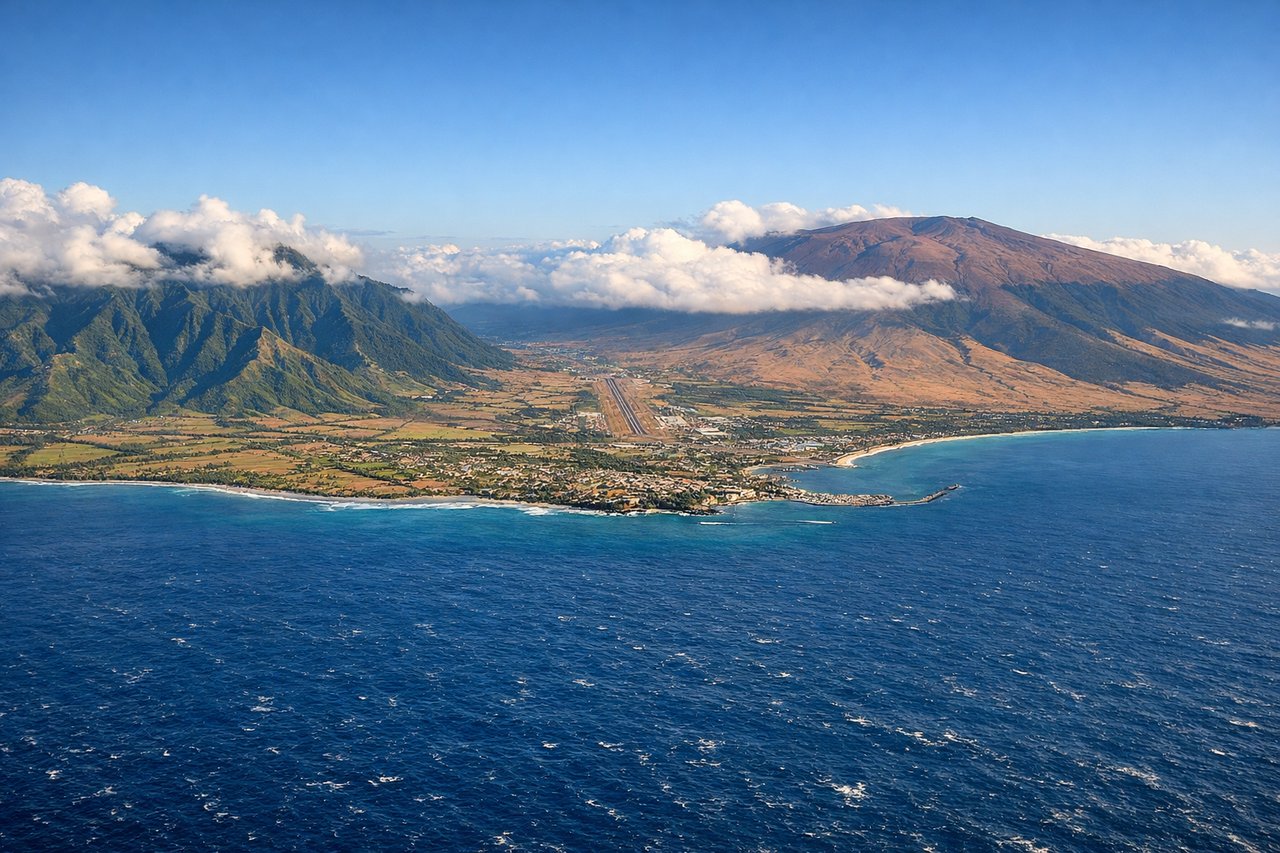
Landing at OGG
RIGHTOn approach into OGG across the Alenuihaha Channel, the right side offers a dramatic view of Haleakala's massive shield volcano dominating Maui, while the left side shows only the flatter West Maui mountains and open water.
Landmarks on this routeAll landmarks →
Will your flight be in sunlight?
Pick a date and time in the Sun Map to watch the sun move across your whole flight.
About This Route
Which side of the plane should I sit on flying from Kona International At Keahole (KOA) to Kahului (OGG)?
Sit on the Right side of the plane for the best views on flights from Kona to Kahului. The right side keeps passengers facing the Big Island's volcanic slopes on departure and Maui's towering Haleakala on arrival, while the left side faces only open ocean for the entire short hop.
What can I see during takeoff from Kona International At Keahole in Kona?
During takeoff from Kona International At Keahole (KOA), sit on the Right side for the best views. Departing KOA northbound along the Kona coast, the right side faces inland toward Hualalai volcano's dark lava slopes and the dry Kohala coastline, while the left side only shows open Pacific water. Notable sights include: Hualalai volcano, Kona lava fields, Kohala coastline, Pacific Ocean horizon.
What can I see when landing at Kahului in Kahului?
When landing at Kahului (OGG), sit on the Right side for the best views. On approach into OGG across the Alenuihaha Channel, the right side offers a dramatic view of Haleakala's massive shield volcano dominating Maui, while the left side shows only the flatter West Maui mountains and open water. Notable sights include: Haleakala volcano, Maui isthmus, Kahului Harbor, West Maui mountains.
How long is the flight from Kona to Kahului?
The flight from Kona International At Keahole (KOA) to Kahului (OGG) takes about 35 minutes. The shortest flight path between them is 84 miles (135 km); winds and air traffic control usually add a few percent.
What does the Kona to Kahului flight path pass over?
Alenuihaha Channel between the Big Island and Maui, with Haleakala's summit visible ahead on the horizon as the aircraft crosses open water.