The right side delivers the more dramatic takeoff view with the Las Vegas Strip and Red Rock Canyon, and during the cruise the right side tracks slightly south of the flight path, offering views of the Guadalupe Mountains and West Texas terrain. The landing view on the left is good but the takeoff spectacle on the right edges it overall.
Flight Path
The flight crosses the Mojave Desert, then the Colorado River near Laughlin/Bullhead City, then the vast flat expanse of the Sonoran and Chihuahuan desert transition zone across Arizona and New Mexico. The Guadalupe Mountains near the Texas-New Mexico border are visible as a low ridge. West Texas is dominated by flat Permian Basin oil country with pump jacks and tank farms visible from altitude, transitioning to the rolling Cross Timbers and Fort Worth-Dallas metroplex sprawl on approach.
Great circle distance and headings ›


.jpeg?width=600)

.jpg?width=600)
Phase by phase
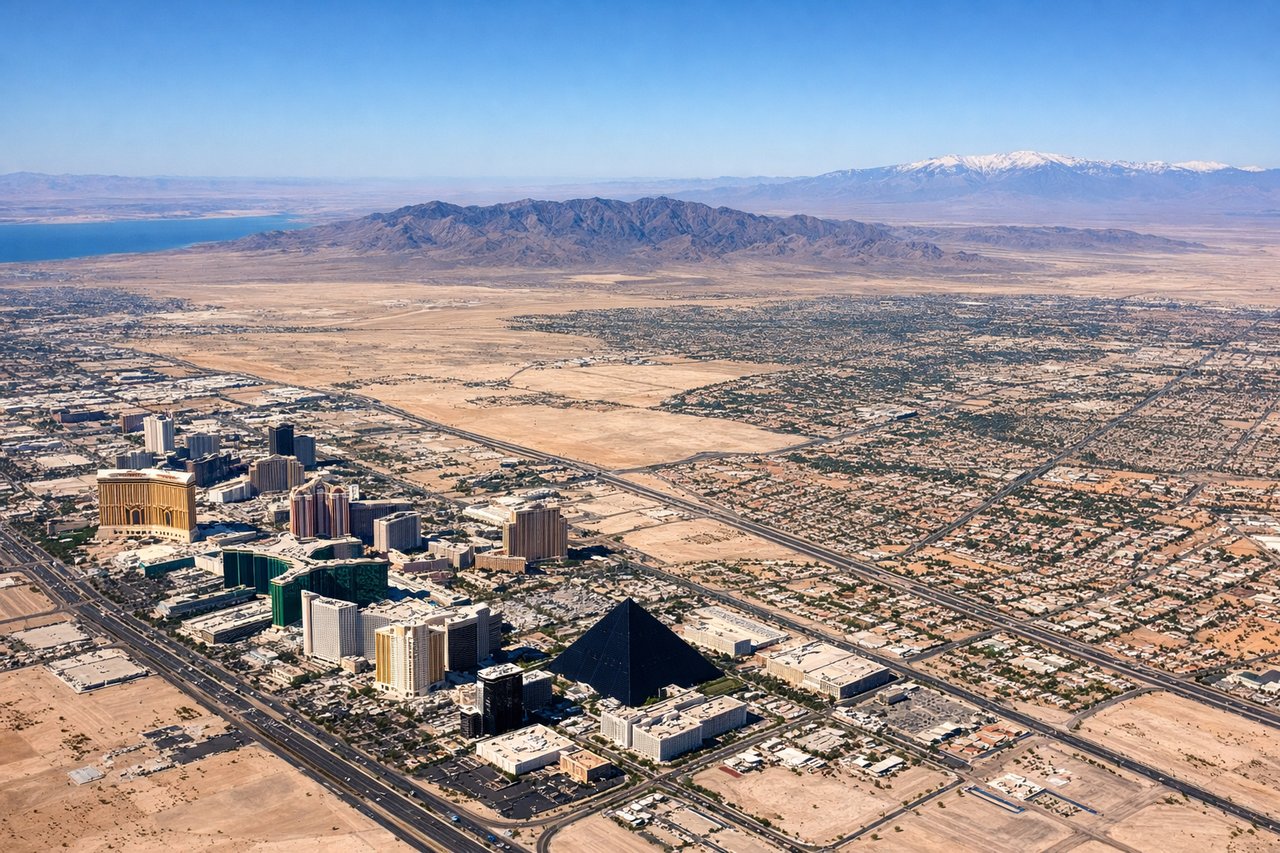
Takeoff from LAS
RIGHTLas Vegas typically departs south or southeast on runways 26L/26R or 19L/19R. A southeast departure on the right side gives you a clear view of the Las Vegas Strip stretching north-south, then the Spring Mountains and Red Rock Canyon escarpment to the west receding behind you. Left side faces open desert with less visual interest.
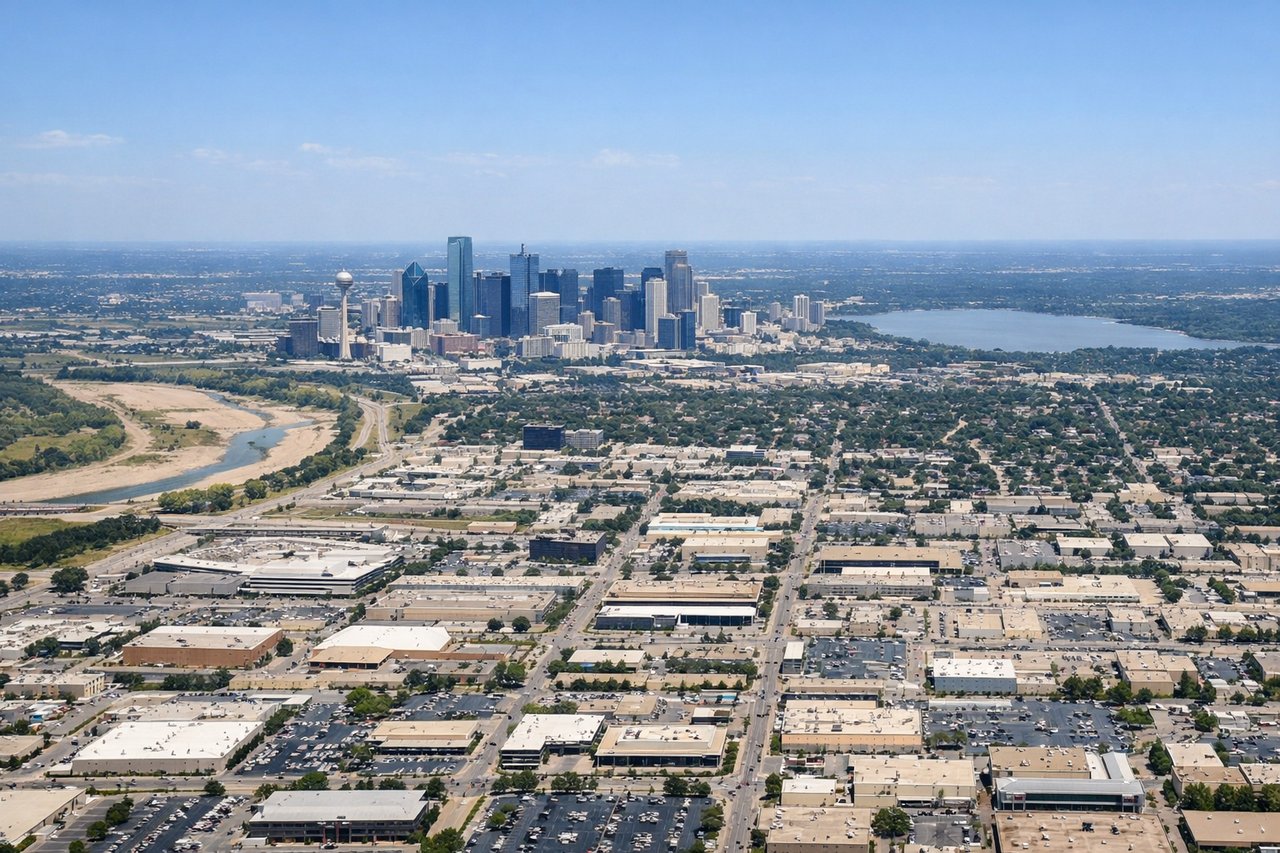
Landing at DAL
LEFTDallas Love Field typically lands from the south or southeast on runway 13R/13L or from the north on 31L/31R. On a northeast approach from Las Vegas, aircraft commonly land heading southeast, putting downtown Dallas and the skyline on the left side. The left seat gets the clearest view of the Dallas urban core during final approach.
Landmarks on this routeAll landmarks →
Will your flight be in sunlight?
See exactly which side of the plane gets sun and shade at your departure time.
About This Route
Which side of the plane should I sit on flying from Mc Carran International (LAS) to Dallas Love Fld (DAL)?
Sit on the Right side of the plane for the best views on flights from Las Vegas to Dallas. The right side delivers the more dramatic takeoff view with the Las Vegas Strip and Red Rock Canyon, and during the cruise the right side tracks slightly south of the flight path, offering views of the Guadalupe Mountains and West Texas terrain. The landing view on the left is good but the takeoff spectacle on the right edges it overall.
What can I see during takeoff from Mc Carran International in Las Vegas?
During takeoff from Mc Carran International (LAS), sit on the Right side for the best views. Las Vegas typically departs south or southeast on runways 26L/26R or 19L/19R. A southeast departure on the right side gives you a clear view of the Las Vegas Strip stretching north-south, then the Spring Mountains and Red Rock Canyon escarpment to the west receding behind you. Left side faces open desert with less visual interest. Notable sights include: Las Vegas Strip (resort corridor), Red Rock Canyon escarpment, Frenchman Mountain, Lake Mead visible to the northeast.
What can I see when landing at Dallas Love Fld in Dallas?
When landing at Dallas Love Fld (DAL), sit on the Left side for the best views. Dallas Love Field typically lands from the south or southeast on runway 13R/13L or from the north on 31L/31R. On a northeast approach from Las Vegas, aircraft commonly land heading southeast, putting downtown Dallas and the skyline on the left side. The left seat gets the clearest view of the Dallas urban core during final approach. Notable sights include: Downtown Dallas skyline, White Rock Lake, Trinity River corridor, Texas Stadium area (Arlington visible to the west).
How long is the flight from Las Vegas to Dallas?
The flight from Mc Carran International (LAS) to Dallas Love Fld (DAL) takes Approximately 2 hours 15 minutes.
What does the Las Vegas to Dallas flight path pass over?
The flight crosses the Mojave Desert, then the Colorado River near Laughlin/Bullhead City, then the vast flat expanse of the Sonoran and Chihuahuan desert transition zone across Arizona and New Mexico. The Guadalupe Mountains near the Texas-New Mexico border are visible as a low ridge. West Texas is dominated by flat Permian Basin oil country with pump jacks and tank farms visible from altitude, transitioning to the rolling Cross Timbers and Fort Worth-Dallas metroplex sprawl on approach.