The right side wins overall because the Las Vegas Strip and Red Rock Canyon at departure are more visually dramatic than the San Antonio approach views. During the cruise, the right side also faces south toward the Rio Grande corridor and the Davis Mountains of west Texas, offering more varied terrain than the flat plains visible on the left.
Flight Path
The flight crosses the Mojave Desert, then the lower Colorado River valley near Kingman AZ, then transitions over the Sonoran Desert into New Mexico airspace. The Rio Grande valley near El Paso is a notable feature — the river and the Franklin Mountains are visible. East of El Paso, the terrain flattens into the Chihuahuan Desert scrubland and eventually the Edwards Plateau of west Texas before descending into San Antonio.
Great circle distance and headings ›


.jpeg?width=600)


.jpg?width=600)
Phase by phase
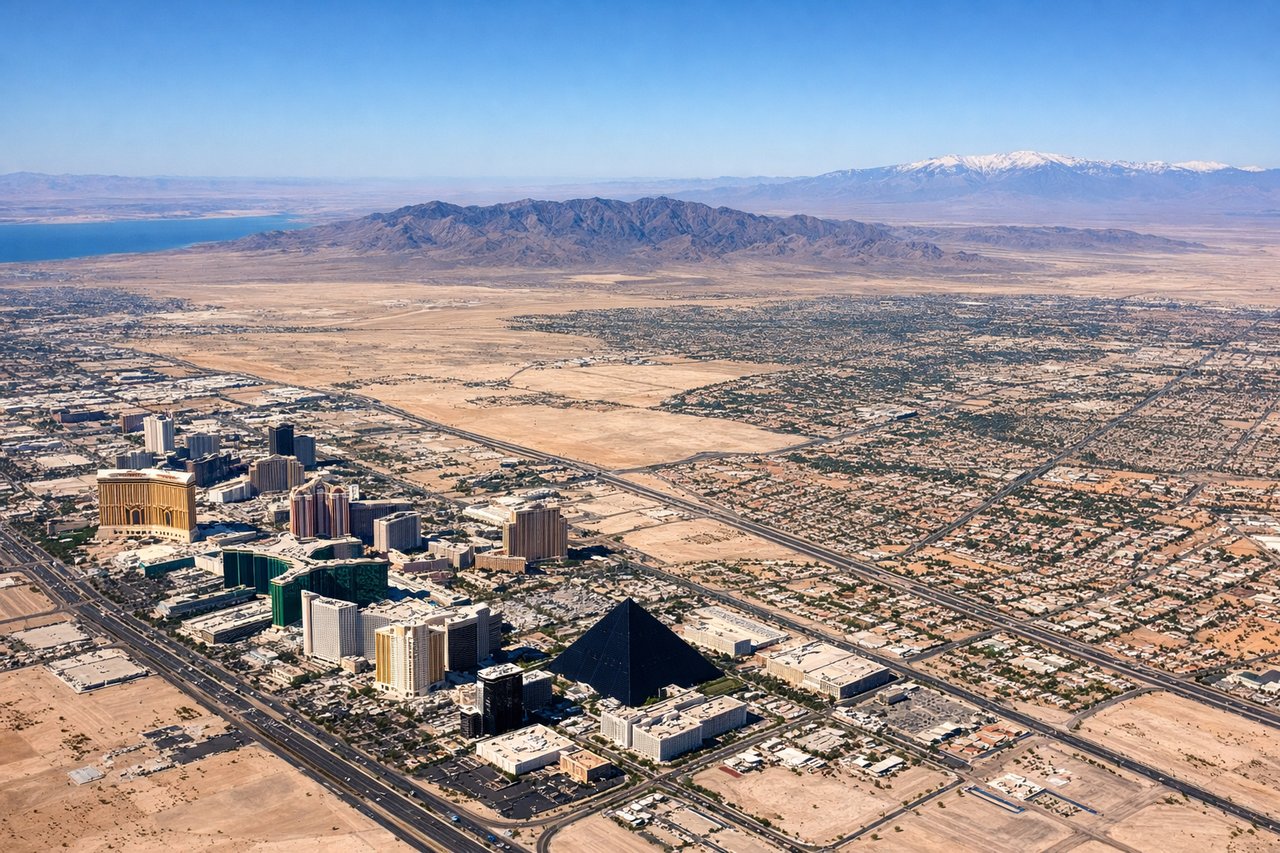
Takeoff from LAS
RIGHTMcCarran's primary departure to the east (runway 26L/R departures head southeast) puts the Las Vegas Strip and downtown Las Vegas on the right side as you climb out. The Spring Mountains and Red Rock Canyon escarpment are also visible to the right/southwest during the turn toward the southeast.
Landing at SAT
LEFTSan Antonio International typically uses runways 12L/R or 30L/R. On approach from the west on runway 12, the left side gives a clear view over downtown San Antonio, the Tower of the Americas, and the dense urban core. The right side faces open suburban sprawl to the north.
Landmarks on this routeAll landmarks →
Will your flight be in sunlight?
See exactly which side of the plane gets sun and shade at your departure time.
About This Route
Which side of the plane should I sit on flying from Mc Carran International (LAS) to San Antonio International (SAT)?
Sit on the Right side of the plane for the best views on flights from Las Vegas to San Antonio. The right side wins overall because the Las Vegas Strip and Red Rock Canyon at departure are more visually dramatic than the San Antonio approach views. During the cruise, the right side also faces south toward the Rio Grande corridor and the Davis Mountains of west Texas, offering more varied terrain than the flat plains visible on the left.
What can I see during takeoff from Mc Carran International in Las Vegas?
During takeoff from Mc Carran International (LAS), sit on the Right side for the best views. McCarran's primary departure to the east (runway 26L/R departures head southeast) puts the Las Vegas Strip and downtown Las Vegas on the right side as you climb out. The Spring Mountains and Red Rock Canyon escarpment are also visible to the right/southwest during the turn toward the southeast. Notable sights include: Las Vegas Strip hotels and casinos, Red Rock Canyon escarpment, Frenchman Mountain, Lake Mead (distant to the northeast).
What can I see when landing at San Antonio International in San Antonio?
When landing at San Antonio International (SAT), sit on the Left side for the best views. San Antonio International typically uses runways 12L/R or 30L/R. On approach from the west on runway 12, the left side gives a clear view over downtown San Antonio, the Tower of the Americas, and the dense urban core. The right side faces open suburban sprawl to the north. Notable sights include: Downtown San Antonio skyline, Tower of the Americas, San Antonio River corridor, Loop 410 highway ring.
How long is the flight from Las Vegas to San Antonio?
The flight from Mc Carran International (LAS) to San Antonio International (SAT) takes Approximately 2 hours 15 minutes.
What does the Las Vegas to San Antonio flight path pass over?
The flight crosses the Mojave Desert, then the lower Colorado River valley near Kingman AZ, then transitions over the Sonoran Desert into New Mexico airspace. The Rio Grande valley near El Paso is a notable feature — the river and the Franklin Mountains are visible. East of El Paso, the terrain flattens into the Chihuahuan Desert scrubland and eventually the Edwards Plateau of west Texas before descending into San Antonio.