Right side scores higher (3.5 vs 2.5) due to the dramatic volcanic and coastal scenery of the Big Island during approach to Hilo, including Mauna Kea and Hilo Bay. The takeoff from Kauai on the left side is scenic but brief; the landing approach on the right dominates the flight experience with sustained views of Hawaii's most visually distinctive volcanic terrain.
Flight Path
Open Kaiwi Channel between Kauai and Hawaii (Big Island); no significant landmarks visible during the 20-minute ocean crossing at cruise altitude; the channel is approximately 85 nautical miles wide with deep blue water and occasional whitecaps
Great circle distance and headings ›

.jpg?width=600)


Phase by phase

Takeoff from LIH
RIGHTRight side captures Kauai's dramatic windward cliffs and the Na Pali Coast during departure from Lihue. Left side faces the open Pacific with minimal terrain interest during climb-out.
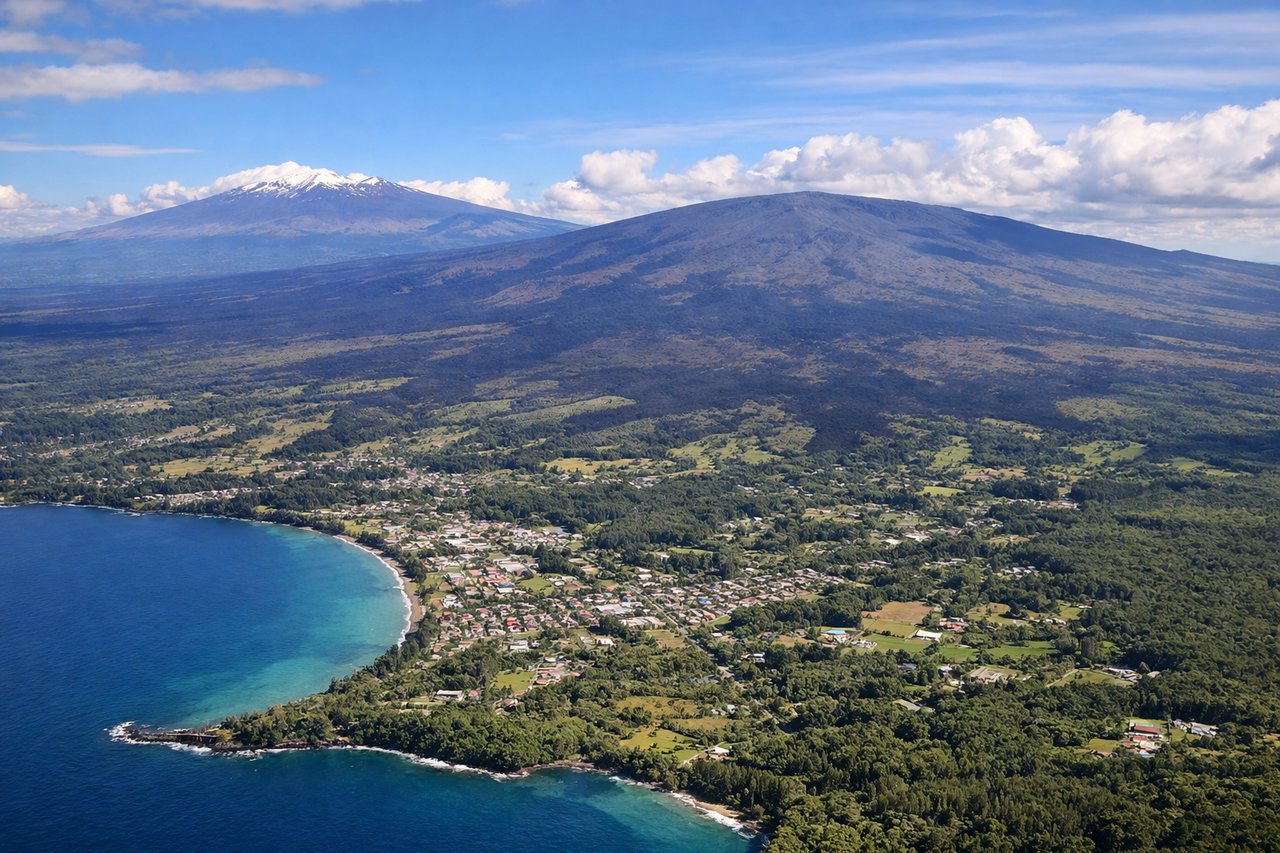
Landing at ITO
LEFTLeft side provides the superior approach to Hilo, with views of Hawaii's Big Island volcanic landscape, Mauna Kea, and Hilo Bay during descent. Right side faces open ocean with no significant landmarks during the final approach.
Landmarks on this routeAll landmarks →
Will your flight be in sunlight?
See exactly which side of the plane gets sun and shade at your departure time.
About This Route
Which side of the plane should I sit on flying from Lihue (LIH) to Hilo International (ITO)?
Sit on the Right side of the plane for the best views on flights from Lihue to Hilo. Right side scores higher (3.5 vs 2.5) due to the dramatic volcanic and coastal scenery of the Big Island during approach to Hilo, including Mauna Kea and Hilo Bay. The takeoff from Kauai on the left side is scenic but brief; the landing approach on the right dominates the flight experience with sustained views of Hawaii's most visually distinctive volcanic terrain.
What can I see during takeoff from Lihue in Lihue?
During takeoff from Lihue (LIH), sit on the Right side for the best views. Right side captures Kauai's dramatic windward cliffs and the Na Pali Coast during departure from Lihue. Left side faces the open Pacific with minimal terrain interest during climb-out. Notable sights include: Na Pali Coast sea cliffs, Kalalau Valley, Hanalei Bay, Kauai's central ridge.
What can I see when landing at Hilo International in Hilo?
When landing at Hilo International (ITO), sit on the Left side for the best views. Left side provides the superior approach to Hilo, with views of Hawaii's Big Island volcanic landscape, Mauna Kea, and Hilo Bay during descent. Right side faces open ocean with no significant landmarks during the final approach. Notable sights include: Mauna Kea (dormant volcano), Hilo Bay, Saddle Road corridor, Kohala Mountain range.
How long is the flight from Lihue to Hilo?
The flight from Lihue (LIH) to Hilo International (ITO) takes 0h 35m.
What does the Lihue to Hilo flight path pass over?
Open Kaiwi Channel between Kauai and Hawaii (Big Island); no significant landmarks visible during the 20-minute ocean crossing at cruise altitude; the channel is approximately 85 nautical miles wide with deep blue water and occasional whitecaps