Right side captures the most dramatic geography: the full Male Atoll system during departure and the approach across open ocean with the atoll's reef structure becoming increasingly visible during descent. The contrast between deep ocean and the atoll's unique turquoise lagoon is most striking from the right.
Flown MLE to BOM? Did we get it right?
Flight Path
Male to Bombay is 1,030 miles (1,658 km), a flight of about 2 hours 40 minutes.
The flight path crosses the Arabian Sea in a northwest direction. At cruise altitude (around 25,000-30,000 feet), the ocean below is featureless open water with occasional scattered clouds. No significant landmasses are visible at midpoint—the flight is entirely over water between the Maldives and the Indian coast. The Laccadive Islands (part of India's Lakshadweep territory) lie to the north of the direct flight path and are not typically visible. As you approach the Indian coast near Bombay, the Western Ghats mountain range becomes visible on the horizon as a distant dark line, and the coastal plains gradually emerge.
Great circle distance and headings ›Phase by phase
Takeoff from MLE
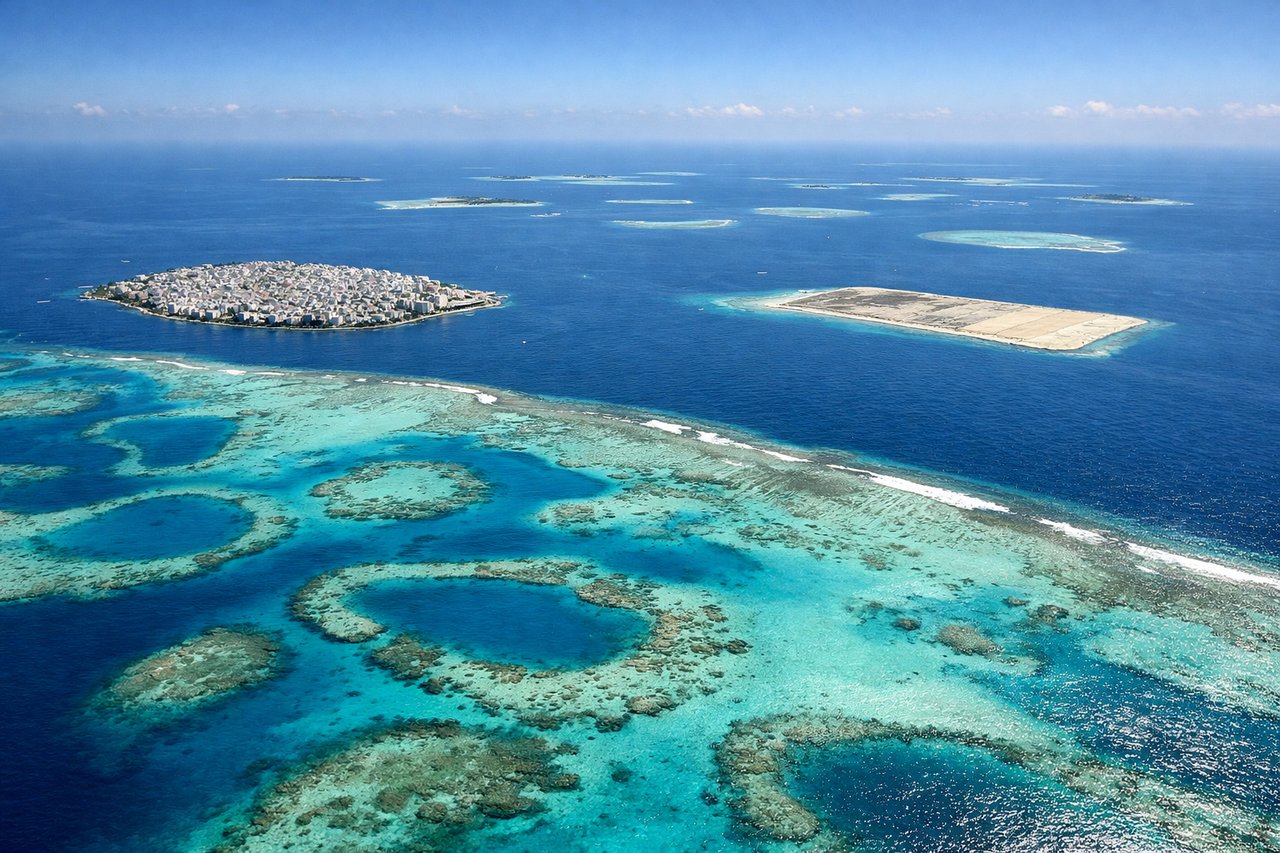
RIGHTMale International typically departs to the northeast (runway 09/27 operations favor eastbound departures). Right-side seats capture the atoll's lagoon system and the scattered islands of the Male Atoll as you climb, with the Indian Ocean stretching endlessly beyond.
Landing at BOM
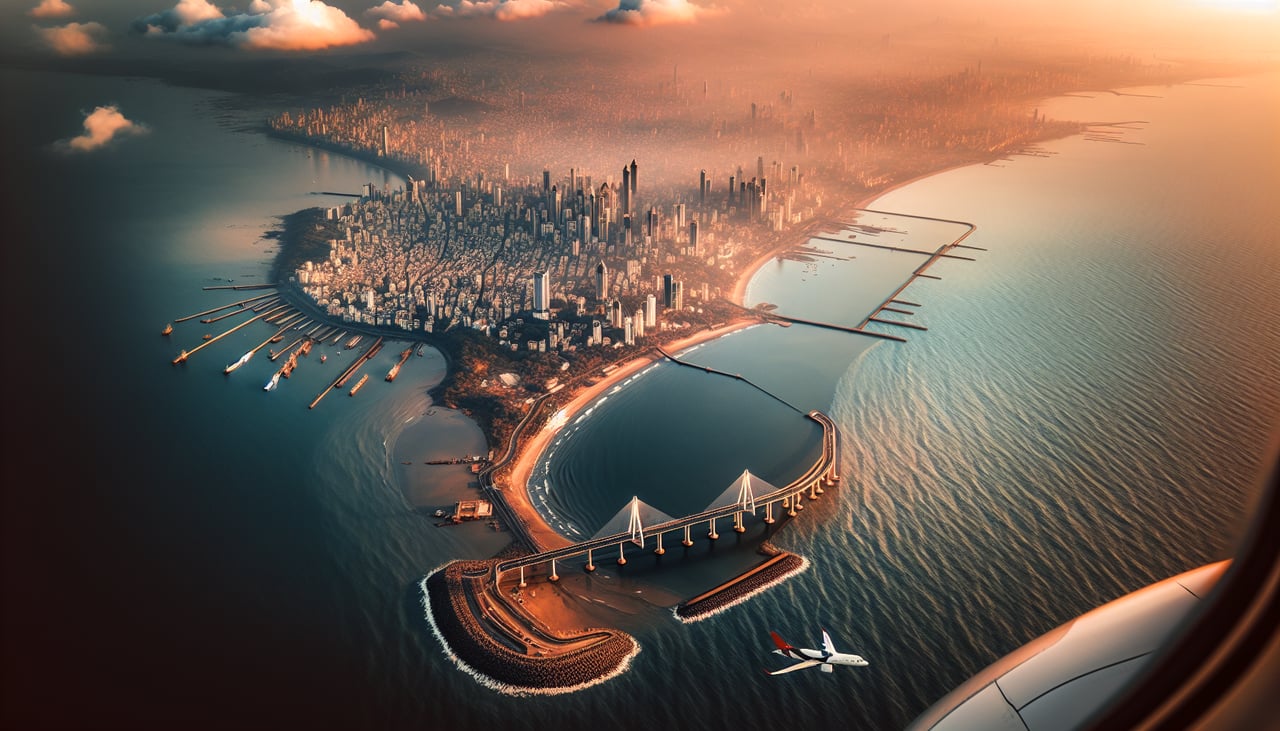
LEFTApproaching Male from the northwest (standard arrival routing), left-side seats offer views of the Indian Ocean approach, the atoll's outer islands, and the lagoon system as you descend. You'll see the characteristic turquoise water and reef structure that defines Male's geography.
Will your flight be in sunlight?
Pick a date and time in the Sun Map to watch the sun move across your whole flight.
About This Route
Which side of the plane should I sit on flying from Male International (MLE) to Chhatrapati Shivaji International (BOM)?
Sit on the Right side of the plane for the best views on flights from Male to Bombay. Right side captures the most dramatic geography: the full Male Atoll system during departure and the approach across open ocean with the atoll's reef structure becoming increasingly visible during descent. The contrast between deep ocean and the atoll's unique turquoise lagoon is most striking from the right.
What can I see during takeoff from Male International in Male?
During takeoff from Male International (MLE), sit on the Right side for the best views. Male International typically departs to the northeast (runway 09/27 operations favor eastbound departures). Right-side seats capture the atoll's lagoon system and the scattered islands of the Male Atoll as you climb, with the Indian Ocean stretching endlessly beyond. Notable sights include: Male Atoll lagoon (bright turquoise water visible immediately below), scattered resort islands dotting the atoll rim, the main island of Male with its developed harbor area, the darker deep ocean beyond the atoll's outer reef.
What can I see when landing at Chhatrapati Shivaji International in Bombay?
When landing at Chhatrapati Shivaji International (BOM), sit on the Left side for the best views. Approaching Male from the northwest (standard arrival routing), left-side seats offer views of the Indian Ocean approach, the atoll's outer islands, and the lagoon system as you descend. You'll see the characteristic turquoise water and reef structure that defines Male's geography. Notable sights include: Male Atoll's outer reef line (sharp turquoise-to-blue demarcation), the northern resort islands of the atoll, the main island of Male with its harbor, the lagoon's internal island clusters.
How long is the flight from Male to Bombay?
The flight from Male International (MLE) to Chhatrapati Shivaji International (BOM) takes about 2 hours 40 minutes. The shortest flight path between them is 1,030 miles (1,658 km); winds and air traffic control usually add a few percent.
What does the Male to Bombay flight path pass over?
The flight path crosses the Arabian Sea in a northwest direction. At cruise altitude (around 25,000-30,000 feet), the ocean below is featureless open water with occasional scattered clouds. No significant landmasses are visible at midpoint—the flight is entirely over water between the Maldives and the Indian coast. The Laccadive Islands (part of India's Lakshadweep territory) lie to the north of the direct flight path and are not typically visible. As you approach the Indian coast near Bombay, the Western Ghats mountain range becomes visible on the horizon as a distant dark line, and the coastal plains gradually emerge.