Tokyo to Bologna is 6,039 miles (9,720 km), a flight of about 13 hours 30 minutes.
Left side wins both ends of the flight. At takeoff you get Tokyo Bay and a distant Mount Fuji; at landing you get Bologna and the Apennines. During the cruise, the left side also faces generally south, giving better views of the Korean Peninsula, Yellow Sea, and later the Central Asian steppe and Caspian Sea region as the route arcs over Siberia and Central Asia.
Flight Path
The great circle route from NRT to BLQ tracks northwest over the Sea of Japan, across the Korean Peninsula, then over northeastern China and into Siberia. The route passes over the vast Siberian taiga and the Ob River basin, then descends into Central Asia over Kazakhstan's steppe. Crossing the Caspian Sea is a notable visual landmark. The route then passes over the Caucasus region, the Black Sea or northern Turkey depending on exact routing, before crossing the Balkans and descending into northern Italy over the Po Valley.
Great circle distance and headings ›


Phase by phase
Takeoff from NRT
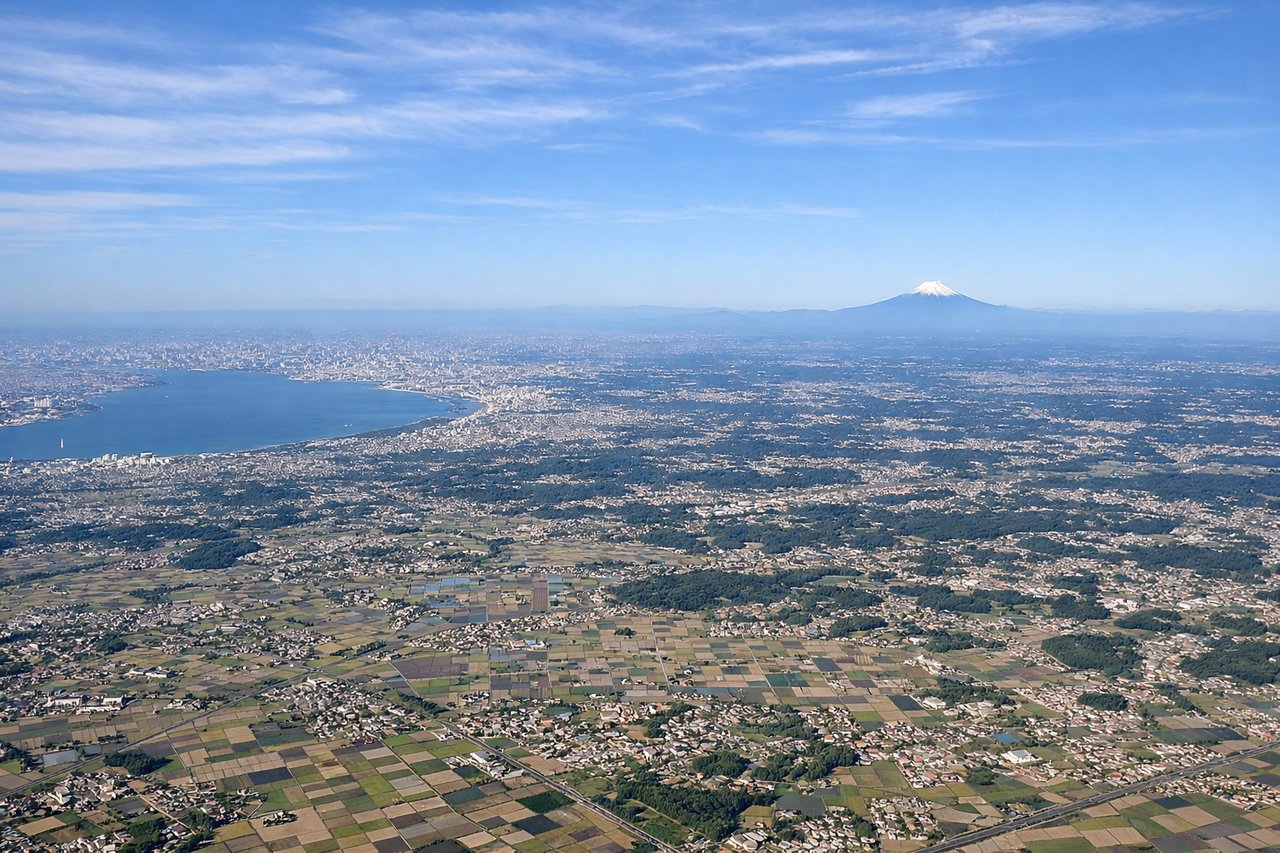
LEFTNarita typically departs on runways 16R/16L heading south, or 34L/34R heading north. On a westbound departure routing, aircraft often turn northwest over the Kanto Plain. The left side gives you Tokyo Bay, the Tokyo metropolitan sprawl, and Mount Fuji as the aircraft climbs and turns west-northwest.
Landing at BLQ
LEFTBologna's airport (BLQ) sits just north of the city. Aircraft typically approach from the north or northeast on runway 12, meaning the left side looks south toward Bologna itself and the Apennine Mountains rising immediately behind the city. The right side faces the flat Po Valley farmland to the north, which is far less dramatic.
Landmarks on this routeAll landmarks →
Will your flight be in sunlight?
Pick a date and time in the Sun Map to watch the sun move across your whole flight.
About This Route
Which side of the plane should I sit on flying from New Tokyo International (NRT) to Bologna (BLQ)?
Sit on the Left side of the plane for the best views on flights from Tokyo to Bologna. Left side wins both ends of the flight. At takeoff you get Tokyo Bay and a distant Mount Fuji; at landing you get Bologna and the Apennines. During the cruise, the left side also faces generally south, giving better views of the Korean Peninsula, Yellow Sea, and later the Central Asian steppe and Caspian Sea region as the route arcs over Siberia and Central Asia.
What can I see during takeoff from New Tokyo International in Tokyo?
During takeoff from New Tokyo International (NRT), sit on the Left side for the best views. Narita typically departs on runways 16R/16L heading south, or 34L/34R heading north. On a westbound departure routing, aircraft often turn northwest over the Kanto Plain. The left side gives you Tokyo Bay, the Tokyo metropolitan sprawl, and Mount Fuji as the aircraft climbs and turns west-northwest. Notable sights include: Tokyo Bay, Mount Fuji (visible to the southwest at altitude), Kanto Plain urban grid, Boso Peninsula coastline.
What can I see when landing at Bologna in Bologna?
When landing at Bologna (BLQ), sit on the Left side for the best views. Bologna's airport (BLQ) sits just north of the city. Aircraft typically approach from the north or northeast on runway 12, meaning the left side looks south toward Bologna itself and the Apennine Mountains rising immediately behind the city. The right side faces the flat Po Valley farmland to the north, which is far less dramatic. Notable sights include: Bologna city center and its terracotta roofscape, Apennine Mountains rising south of the city, Po Valley agricultural plain, Reno River valley.
How long is the flight from Tokyo to Bologna?
The flight from New Tokyo International (NRT) to Bologna (BLQ) takes about 13 hours 30 minutes. The shortest flight path between them is 6,039 miles (9,720 km); winds and air traffic control usually add a few percent.
What does the Tokyo to Bologna flight path pass over?
The great circle route from NRT to BLQ tracks northwest over the Sea of Japan, across the Korean Peninsula, then over northeastern China and into Siberia. The route passes over the vast Siberian taiga and the Ob River basin, then descends into Central Asia over Kazakhstan's steppe. Crossing the Caspian Sea is a notable visual landmark. The route then passes over the Caucasus region, the Black Sea or northern Turkey depending on exact routing, before crossing the Balkans and descending into northern Italy over the Po Valley.