Left side scores higher due to the dramatic Tokyo Bay departure with Mount Fuji visibility and dense Kanto urban scenery, which outweighs the Galveston Bay landing views on the right. The takeoff experience from Narita is more visually distinctive than the approach to Hobby, and the flight's midpoint over the Pacific offers no advantage to either side (open ocean dominates 8+ hours of cruise).
Flown NRT to HOU? Did we get it right?
Flight Path
Tokyo to Houston is 6,649 miles (10,701 km), a flight of about 11 hours 15 minutes.
Pacific Ocean dominates the entire cruise phase (8+ hours). The flight path crosses the International Date Line and passes north of Hawaii. No significant land features are visible during the mid-Pacific crossing. The Aleutian Islands may be visible on the northern horizon during the approach to North American airspace, but they are typically too distant and small to be distinctive. The California coast (Big Sur, Point Conception) becomes visible during the final 2-3 hours of descent toward the continental US, but this is brief and occurs on the left side during the approach phase.
Great circle distance and headings ›


Phase by phase
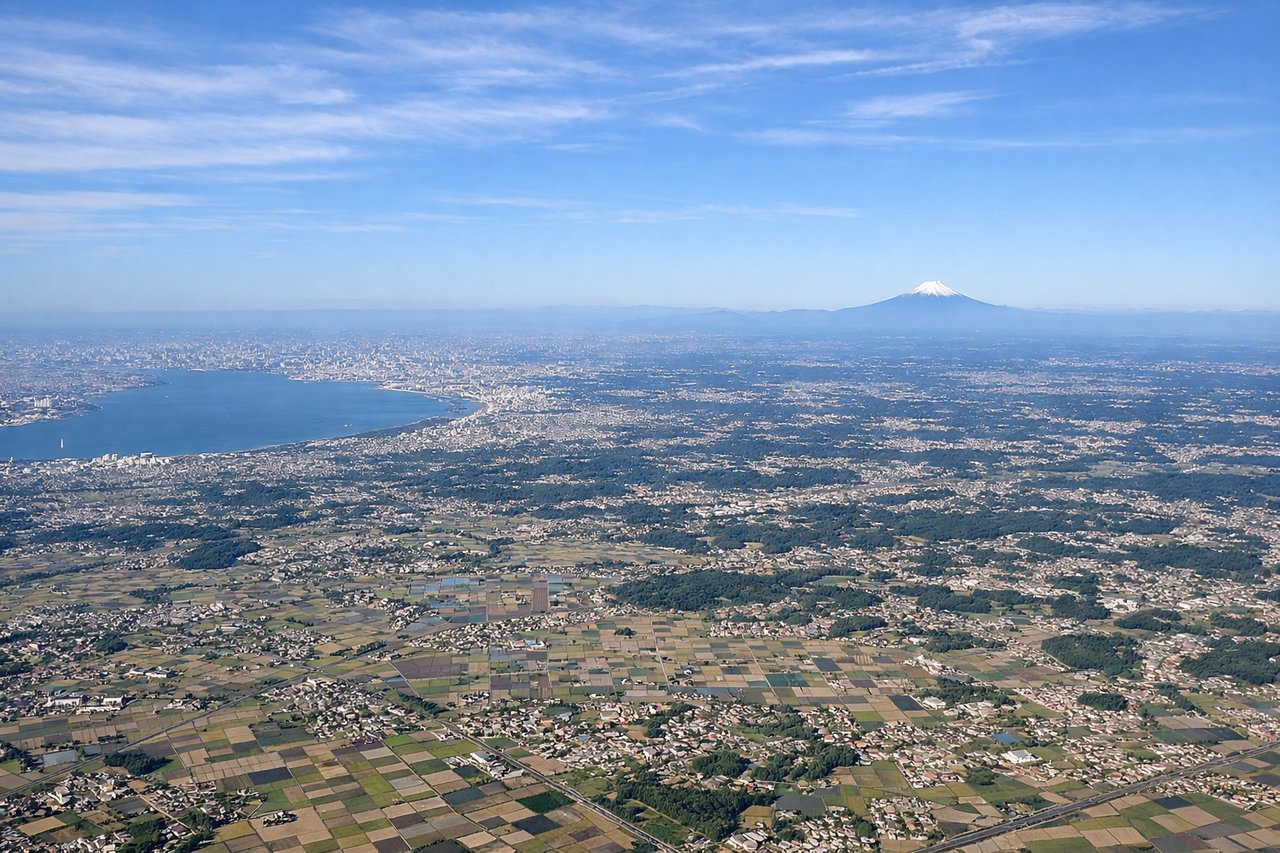
Takeoff from NRT
LEFTLeft side captures Tokyo Bay, the Kanto Plain urban sprawl, and Mount Fuji on clear days during northwestward departure from Narita. Right side faces inland terrain with less dramatic features during initial climb.
Landing at HOU
RIGHTRight side (north) offers views of the Texas Gulf Coast, Galveston Bay, and the Houston Ship Channel during approach to Hobby Airport. Left side faces inland prairie with minimal visual interest during descent.
Will your flight be in sunlight?
Pick a date and time in the Sun Map to watch the sun move across your whole flight.
About This Route
Which side of the plane should I sit on flying from New Tokyo International (NRT) to William P Hobby (HOU)?
Sit on the Left side of the plane for the best views on flights from Tokyo to Houston. Left side scores higher due to the dramatic Tokyo Bay departure with Mount Fuji visibility and dense Kanto urban scenery, which outweighs the Galveston Bay landing views on the right. The takeoff experience from Narita is more visually distinctive than the approach to Hobby, and the flight's midpoint over the Pacific offers no advantage to either side (open ocean dominates 8+ hours of cruise).
What can I see during takeoff from New Tokyo International in Tokyo?
During takeoff from New Tokyo International (NRT), sit on the Left side for the best views. Left side captures Tokyo Bay, the Kanto Plain urban sprawl, and Mount Fuji on clear days during northwestward departure from Narita. Right side faces inland terrain with less dramatic features during initial climb. Notable sights include: Tokyo Bay with harbor infrastructure, Mount Fuji (visible on clear days ~100 km southwest), Kanto Plain urban grid extending toward Yokohama.
What can I see when landing at William P Hobby in Houston?
When landing at William P Hobby (HOU), sit on the Right side for the best views. Right side (north) offers views of the Texas Gulf Coast, Galveston Bay, and the Houston Ship Channel during approach to Hobby Airport. Left side faces inland prairie with minimal visual interest during descent. Notable sights include: Galveston Bay with barrier islands, Houston Ship Channel industrial corridor, Buffalo Bayou, Hobby Airport runway environment.
How long is the flight from Tokyo to Houston?
The flight from New Tokyo International (NRT) to William P Hobby (HOU) takes about 11 hours 15 minutes. The shortest flight path between them is 6,649 miles (10,701 km); winds and air traffic control usually add a few percent.
What does the Tokyo to Houston flight path pass over?
Pacific Ocean dominates the entire cruise phase (8+ hours). The flight path crosses the International Date Line and passes north of Hawaii. No significant land features are visible during the mid-Pacific crossing. The Aleutian Islands may be visible on the northern horizon during the approach to North American airspace, but they are typically too distant and small to be distinctive. The California coast (Big Sur, Point Conception) becomes visible during the final 2-3 hours of descent toward the continental US, but this is brief and occurs on the left side during the approach phase.