The Great Salt Lake and Wasatch Front on approach into SLC from the right side is one of the most dramatic arrival views in North America. While the left side at Narita offers a good Tokyo Bay and Fuji view on departure, the SLC arrival on the right is consistently spectacular and tips the balance.
Flight Path
The great circle route crosses the North Pacific, passing south of the Aleutian Island chain (visible as a string of volcanic islands on clear days), then over the Gulf of Alaska and the Alaska Range, before crossing into the Canadian Rockies over British Columbia and Alberta, then descending across the high desert of the Great Basin toward Utah.
Great circle distance and headings ›


Phase by phase
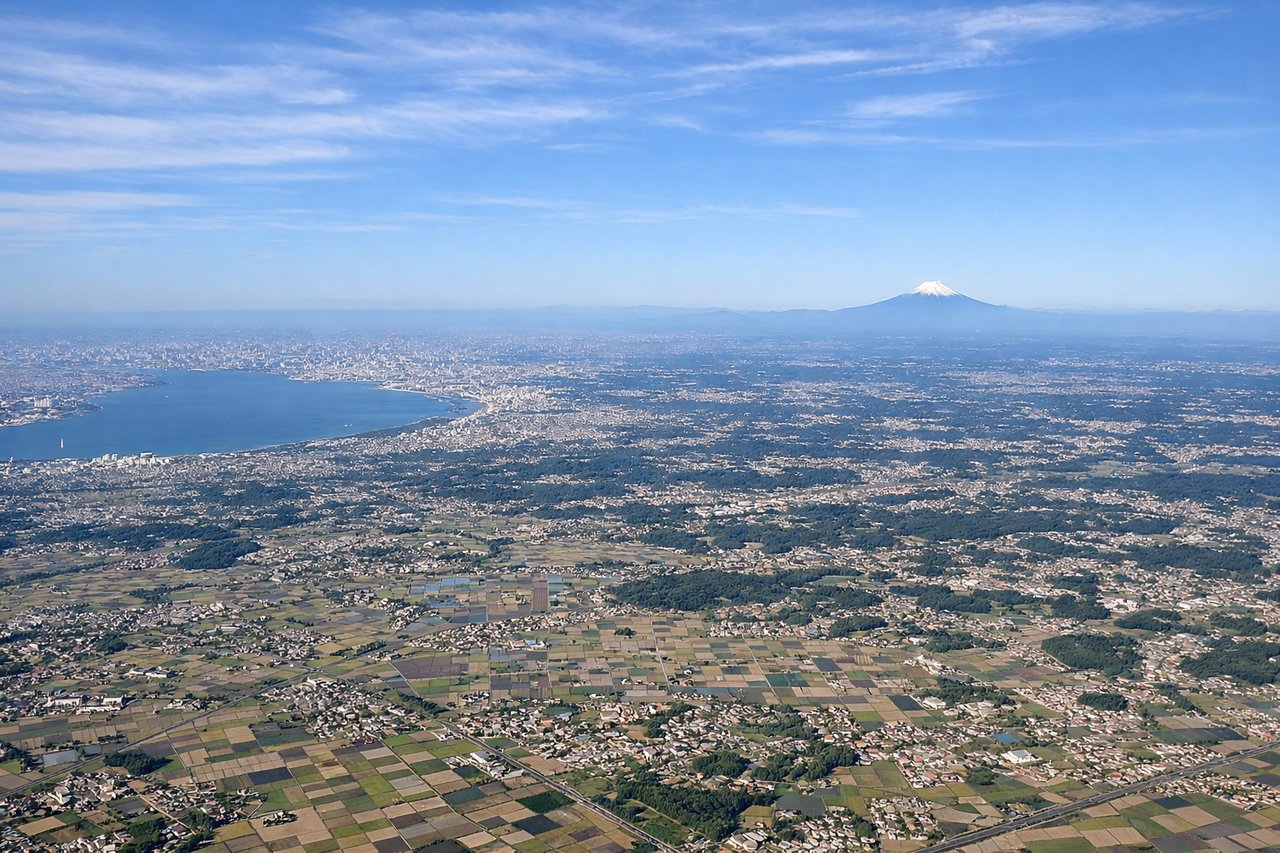
Takeoff from NRT
LEFTNRT typically departs on runways 16R/34L or 16L/34R. Northbound departures toward the Pacific climb out over the Chiba coastline and Tokyo Bay. Left side gives you a clear look back at Tokyo Bay, the urban sprawl of greater Tokyo, and on clear days Mount Fuji to the southwest.
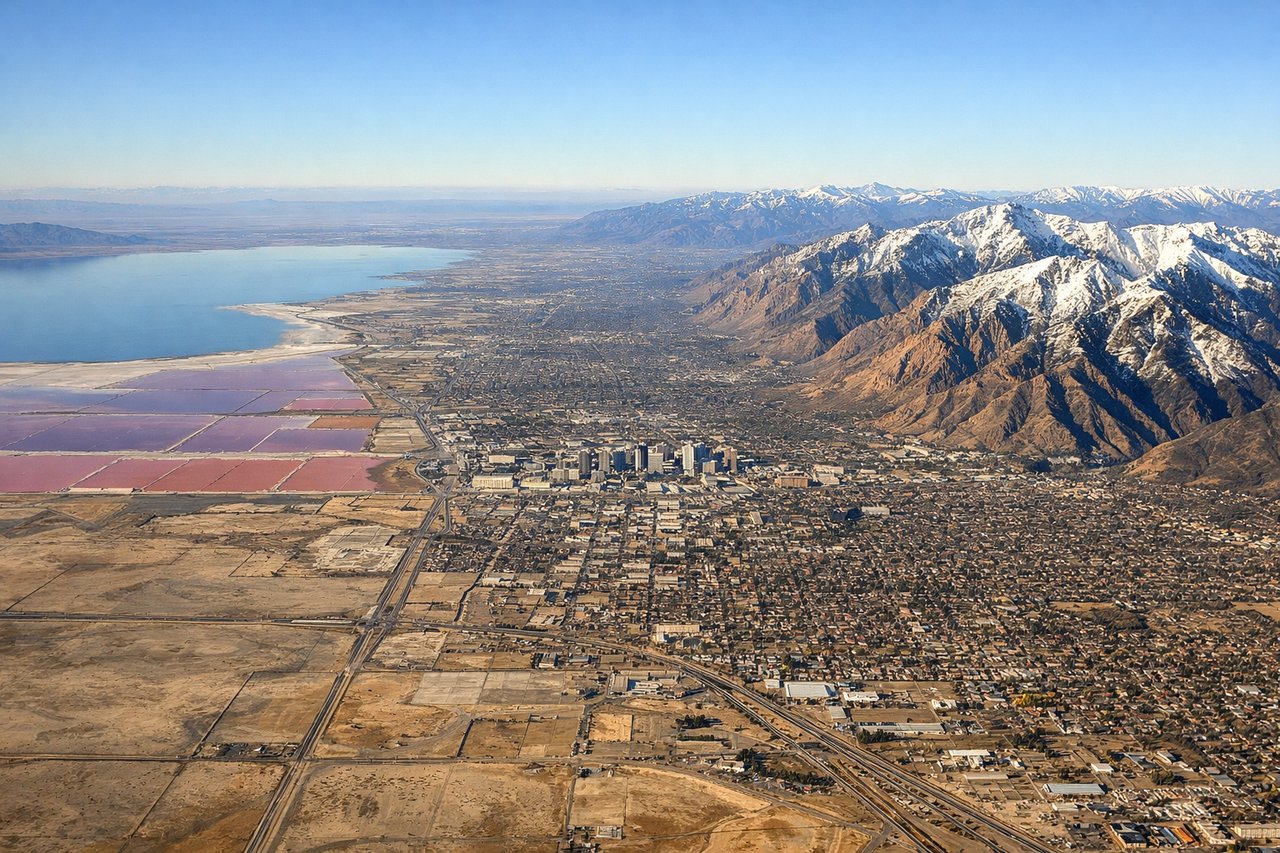
Landing at SLC
RIGHTSLC typically lands on runways 16L/16R from the north, or 34L/34R from the south. On the common northbound final approach from the south, the right side faces west toward the Great Salt Lake and the Oquirrh Mountains. On southbound approaches, right side still captures the Wasatch Front dramatically. Either way, right side consistently delivers the Great Salt Lake and surrounding basin views.
Landmarks on this routeAll landmarks →
Will your flight be in sunlight?
See exactly which side of the plane gets sun and shade at your departure time.
About This Route
Which side of the plane should I sit on flying from New Tokyo International (NRT) to Salt Lake City International (SLC)?
Sit on the Right side of the plane for the best views on flights from Tokyo to Salt Lake City. The Great Salt Lake and Wasatch Front on approach into SLC from the right side is one of the most dramatic arrival views in North America. While the left side at Narita offers a good Tokyo Bay and Fuji view on departure, the SLC arrival on the right is consistently spectacular and tips the balance.
What can I see during takeoff from New Tokyo International in Tokyo?
During takeoff from New Tokyo International (NRT), sit on the Left side for the best views. NRT typically departs on runways 16R/34L or 16L/34R. Northbound departures toward the Pacific climb out over the Chiba coastline and Tokyo Bay. Left side gives you a clear look back at Tokyo Bay, the urban sprawl of greater Tokyo, and on clear days Mount Fuji to the southwest. Notable sights include: Tokyo Bay, Mount Fuji (southwest, ~80km), Chiba urban grid, Boso Peninsula coastline.
What can I see when landing at Salt Lake City International in Salt Lake City?
When landing at Salt Lake City International (SLC), sit on the Right side for the best views. SLC typically lands on runways 16L/16R from the north, or 34L/34R from the south. On the common northbound final approach from the south, the right side faces west toward the Great Salt Lake and the Oquirrh Mountains. On southbound approaches, right side still captures the Wasatch Front dramatically. Either way, right side consistently delivers the Great Salt Lake and surrounding basin views. Notable sights include: Great Salt Lake, Wasatch Front (peaks up to 11,000 ft), Oquirrh Mountains, Salt Lake City urban grid in the valley.
How long is the flight from Tokyo to Salt Lake City?
The flight from New Tokyo International (NRT) to Salt Lake City International (SLC) takes Approximately 10 to 11 hours.
What does the Tokyo to Salt Lake City flight path pass over?
The great circle route crosses the North Pacific, passing south of the Aleutian Island chain (visible as a string of volcanic islands on clear days), then over the Gulf of Alaska and the Alaska Range, before crossing into the Canadian Rockies over British Columbia and Alberta, then descending across the high desert of the Great Basin toward Utah.