The right side captures more of the flight's most distinctive features: the Ryukyu island chain passing below during cruise and the Hakata Bay/Fukuoka city approach at the end, giving it more variety and landmark density than the left side's mostly open-ocean view.
Flight Path
Amami Oshima and the northern Ryukyu Islands passing to the east of track, with the East China Sea to the west, before the coastline of southern Kyushu comes into view near Kagoshima and Sakurajima.
Great circle distance and headings ›Phase by phase
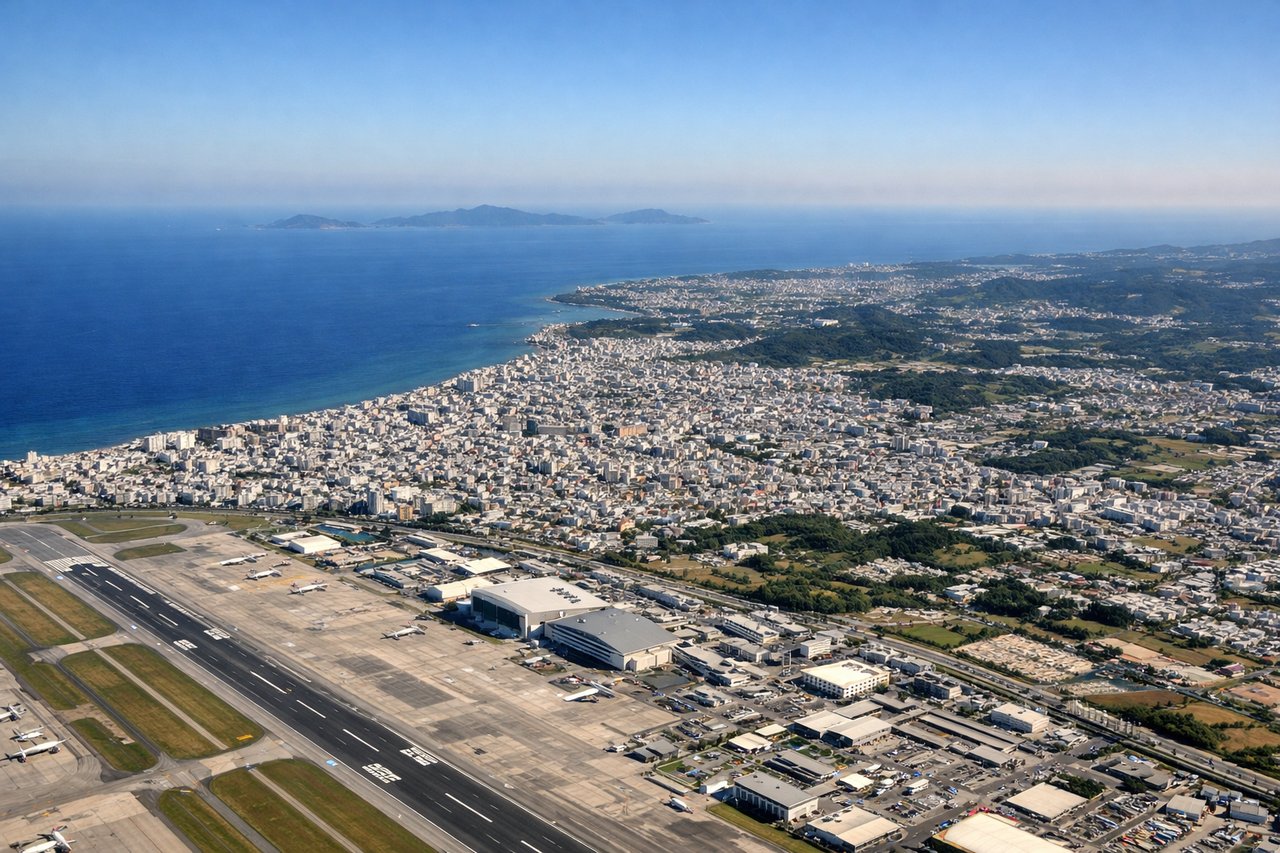
Takeoff from OKA
LEFTDeparting Naha, the initial climb offers a view west over the East China Sea toward the Kerama Islands, a scattered chain of coral-fringed islets with visibly turquoise shallows. The right side at this point mostly shows open Pacific water with no islands close to shore.
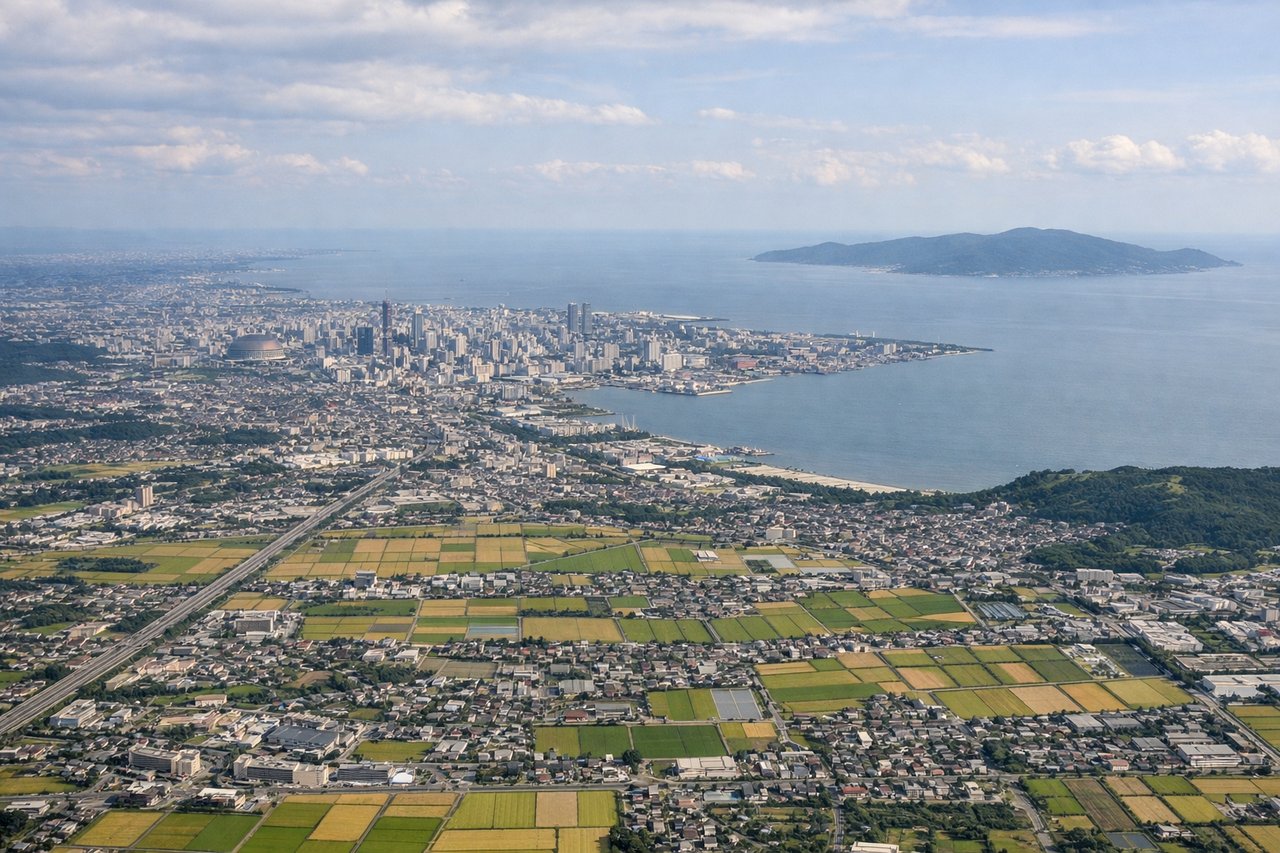
Landing at FUK
RIGHTOn approach into Fukuoka from the south, the right side reveals the indented coastline of southern Kyushu and Hakata Bay opening up as the aircraft turns onto final, with the city skyline and harbor becoming visible just before touchdown. The left side during this turn mostly shows inland Kyushu terrain with less distinctive scenery.
Will your flight be in sunlight?
See exactly which side of the plane gets sun and shade at your departure time.
About This Route
Which side of the plane should I sit on flying from Naha (OKA) to Fukuoka (FUK)?
Sit on the Right side of the plane for the best views on flights from Naha to Fukuoka. The right side captures more of the flight's most distinctive features: the Ryukyu island chain passing below during cruise and the Hakata Bay/Fukuoka city approach at the end, giving it more variety and landmark density than the left side's mostly open-ocean view.
What can I see during takeoff from Naha in Naha?
During takeoff from Naha (OKA), sit on the Left side for the best views. Departing Naha, the initial climb offers a view west over the East China Sea toward the Kerama Islands, a scattered chain of coral-fringed islets with visibly turquoise shallows. The right side at this point mostly shows open Pacific water with no islands close to shore. Notable sights include: Kerama Islands, Naha coastline and reef flats, East China Sea shallows.
What can I see when landing at Fukuoka in Fukuoka?
When landing at Fukuoka (FUK), sit on the Right side for the best views. On approach into Fukuoka from the south, the right side reveals the indented coastline of southern Kyushu and Hakata Bay opening up as the aircraft turns onto final, with the city skyline and harbor becoming visible just before touchdown. The left side during this turn mostly shows inland Kyushu terrain with less distinctive scenery. Notable sights include: Hakata Bay, Fukuoka city skyline, Genkai Sea coastline, Shika Peninsula.
How long is the flight from Naha to Fukuoka?
The flight from Naha (OKA) to Fukuoka (FUK) takes 1h35m.
What does the Naha to Fukuoka flight path pass over?
Amami Oshima and the northern Ryukyu Islands passing to the east of track, with the East China Sea to the west, before the coastline of southern Kyushu comes into view near Kagoshima and Sakurajima.