While left wins for takeoff scenery, right seats capture the more dramatic and memorable landing approach into Juneau with glaciers and mountains. The flight path northbound along the Pacific coast favors right-side views of the Inside Passage geography for most of the journey.
Flown SFO to JNU? Did we get it right?
Flight Path
San Francisco to Juneau is 1,534 miles (2,469 km), a flight of about 3 hours 30 minutes.
The flight path follows the California and Oregon coasts northward, then transitions over the Pacific before reaching the Inside Passage. Notable features include the Cascade Range visible to the east (right side) during the Oregon segment, the Klamath Mountains near the California-Oregon border, and the rugged coastline of northern California and southern Oregon. As the aircraft reaches the Inside Passage over British Columbia and Southeast Alaska, right-side passengers see the Alexander Archipelago's islands, fjords, and coastal mountain ranges. The Inside Passage waterway itself becomes visible with its characteristic narrow channels between forested islands. Left-side views show primarily open Pacific Ocean for the majority of the flight.
Great circle distance and headings ›


Phase by phase
Takeoff from SFO
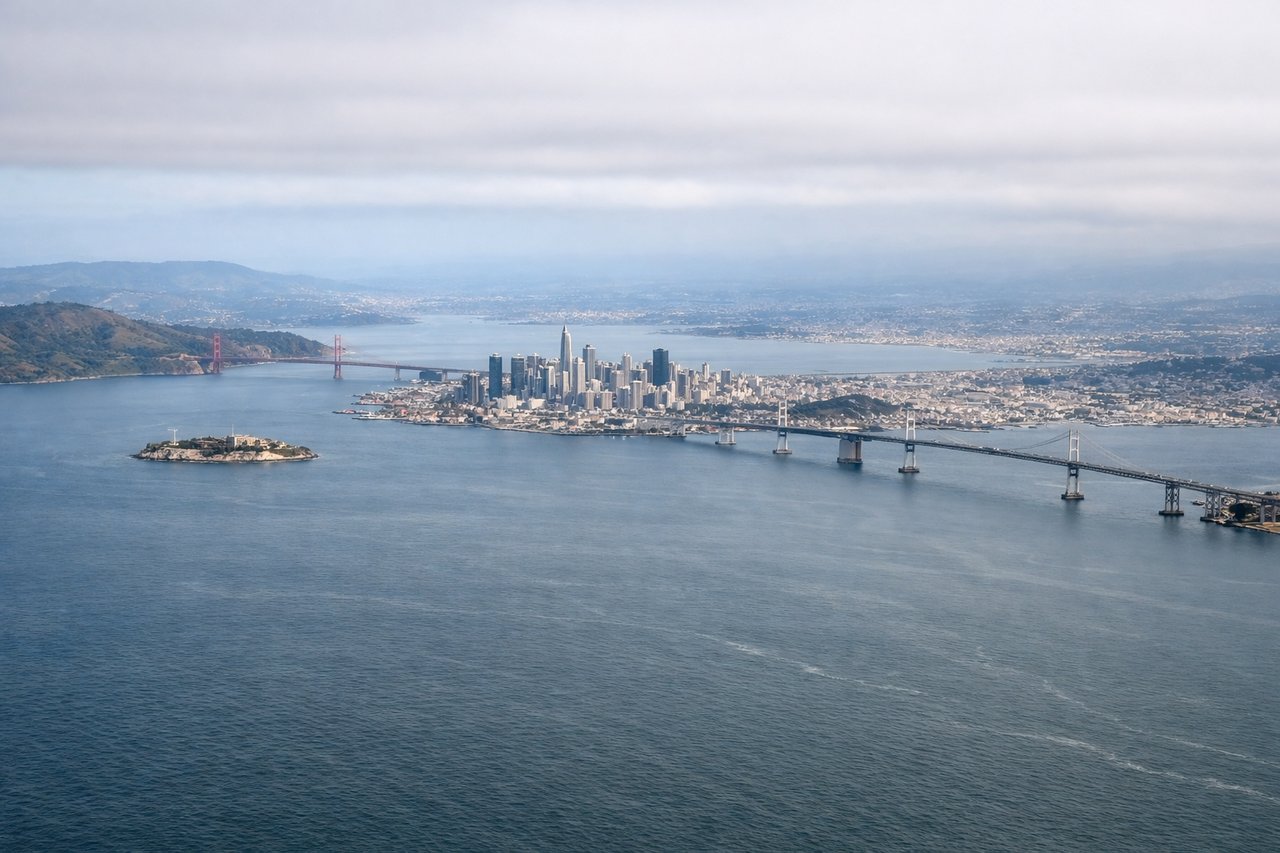
LEFTLeft seats offer immediate views of the San Francisco Bay, Golden Gate Bridge, and the Marin Headlands as the aircraft climbs northwestward out of SFO. Right seats face inland toward the East Bay hills with less dramatic scenery during initial climb.
Landing at JNU
RIGHTRight seats provide superior views during the descent into Juneau, particularly of the Chilkat Mountains, Gastineau Channel, and the approach over Mendenhall Glacier and surrounding peaks. The standard approach from the southeast aligns right-side windows with these dramatic features.
Will your flight be in sunlight?
Pick a date and time in the Sun Map to watch the sun move across your whole flight.
About This Route
Which side of the plane should I sit on flying from San Francisco International (SFO) to Juneau International (JNU)?
Sit on the Right side of the plane for the best views on flights from San Francisco to Juneau. While left wins for takeoff scenery, right seats capture the more dramatic and memorable landing approach into Juneau with glaciers and mountains. The flight path northbound along the Pacific coast favors right-side views of the Inside Passage geography for most of the journey.
What can I see during takeoff from San Francisco International in San Francisco?
During takeoff from San Francisco International (SFO), sit on the Left side for the best views. Left seats offer immediate views of the San Francisco Bay, Golden Gate Bridge, and the Marin Headlands as the aircraft climbs northwestward out of SFO. Right seats face inland toward the East Bay hills with less dramatic scenery during initial climb. Notable sights include: Golden Gate Bridge, San Francisco Bay, Marin Headlands, Pacific Ocean coastline.
What can I see when landing at Juneau International in Juneau?
When landing at Juneau International (JNU), sit on the Right side for the best views. Right seats provide superior views during the descent into Juneau, particularly of the Chilkat Mountains, Gastineau Channel, and the approach over Mendenhall Glacier and surrounding peaks. The standard approach from the southeast aligns right-side windows with these dramatic features. Notable sights include: Mendenhall Glacier, Chilkat Mountains, Gastineau Channel, Juneau's waterfront and downtown.
How long is the flight from San Francisco to Juneau?
The flight from San Francisco International (SFO) to Juneau International (JNU) takes about 3 hours 30 minutes. The shortest flight path between them is 1,534 miles (2,469 km); winds and air traffic control usually add a few percent.
What does the San Francisco to Juneau flight path pass over?
The flight path follows the California and Oregon coasts northward, then transitions over the Pacific before reaching the Inside Passage. Notable features include the Cascade Range visible to the east (right side) during the Oregon segment, the Klamath Mountains near the California-Oregon border, and the rugged coastline of northern California and southern Oregon. As the aircraft reaches the Inside Passage over British Columbia and Southeast Alaska, right-side passengers see the Alexander Archipelago's islands, fjords, and coastal mountain ranges. The Inside Passage waterway itself becomes visible with its characteristic narrow channels between forested islands. Left-side views show primarily open Pacific Ocean for the majority of the flight.