The left side combines a strong departure view of the San Francisco skyline and bay with a dramatic arrival view of the Wasatch Range and Salt Lake City valley, giving it the edge over the right side's more modest South Bay and Sierra Nevada glimpses during cruise.
Flight Path
Sierra Nevada crossing near Lake Tahoe and Donner Pass, the high desert basins of central Nevada, and the Great Salt Lake Desert as the flight approaches Utah.
Great circle distance and headings ›


Phase by phase
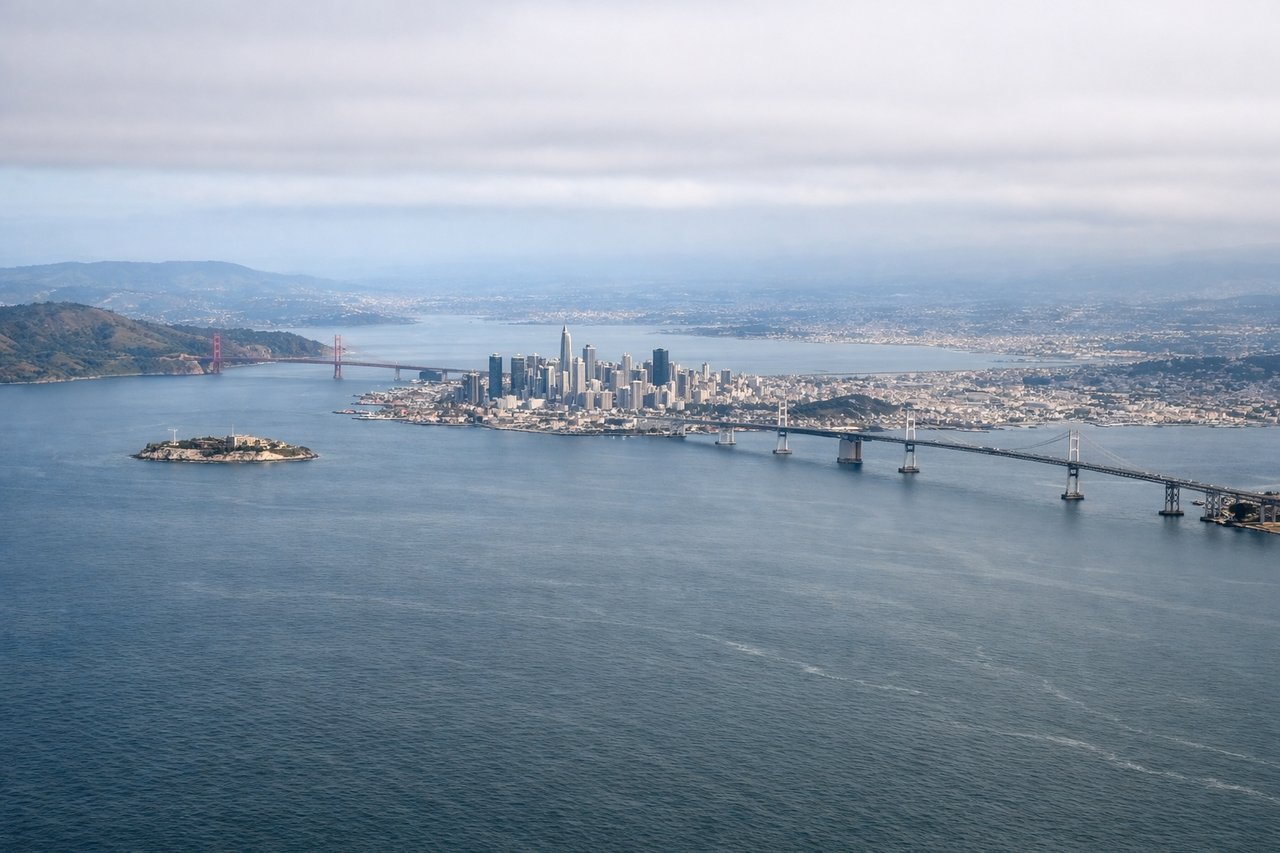
Takeoff from SFO
LEFTDeparting SFO's eastern runways, the aircraft climbs out across the bay, and the left side gives a sweeping look back at the San Francisco skyline, the Bay Bridge, and the Berkeley-Oakland hills as the city recedes. The right side mostly shows the flatter South Bay suburbs and San Jose, which is less visually striking.
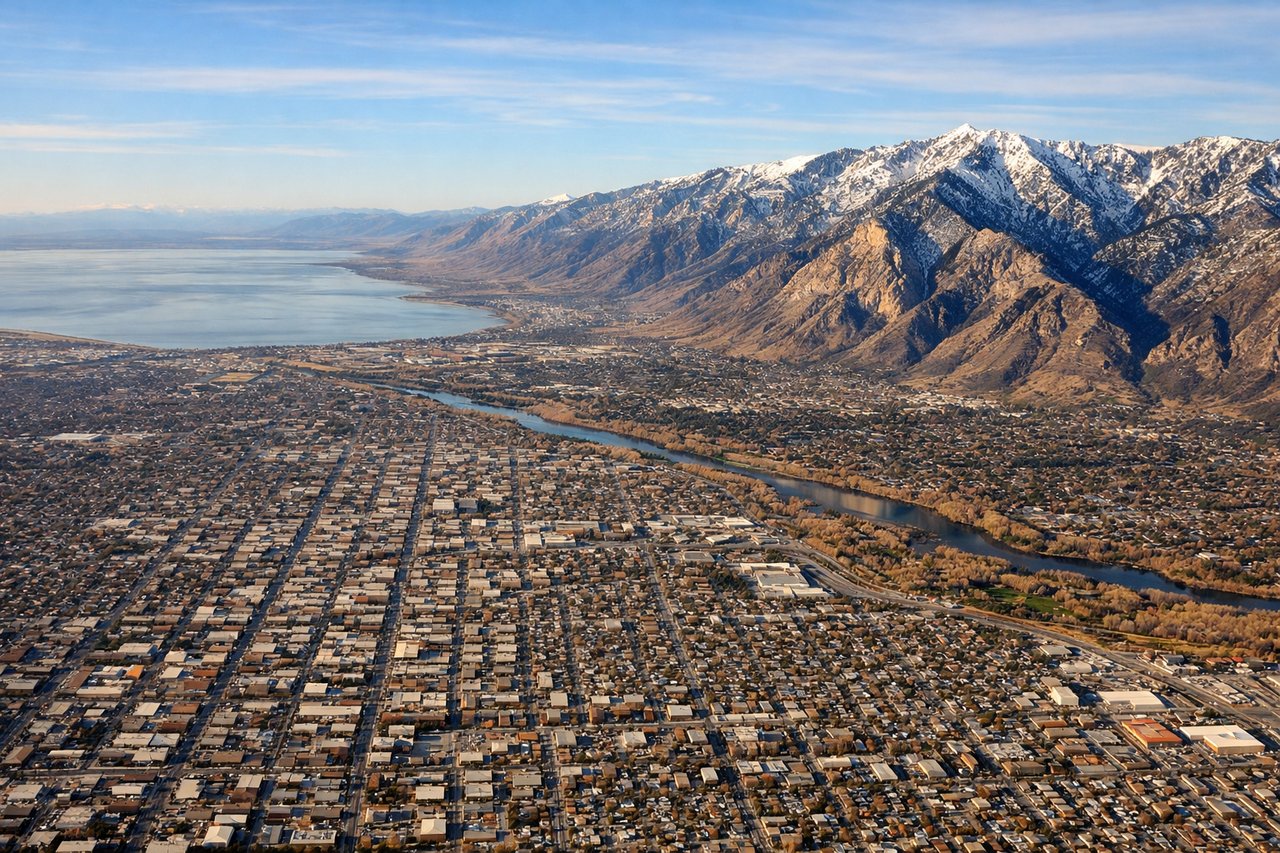
Landing at SLC
LEFTOn final descent into SLC, the aircraft typically lines up on the north-south runways with a southbound approach, putting the Wasatch Range directly on the left side, rising sharply above the valley floor. The right side instead faces the lower, less dramatic Oquirrh Mountains and open desert to the west.
Landmarks on this routeAll landmarks →
Will your flight be in sunlight?
See exactly which side of the plane gets sun and shade at your departure time.
About This Route
Which side of the plane should I sit on flying from San Francisco International (SFO) to Salt Lake City International (SLC)?
Sit on the Left side of the plane for the best views on flights from San Francisco to Salt Lake City. The left side combines a strong departure view of the San Francisco skyline and bay with a dramatic arrival view of the Wasatch Range and Salt Lake City valley, giving it the edge over the right side's more modest South Bay and Sierra Nevada glimpses during cruise.
What can I see during takeoff from San Francisco International in San Francisco?
During takeoff from San Francisco International (SFO), sit on the Left side for the best views. Departing SFO's eastern runways, the aircraft climbs out across the bay, and the left side gives a sweeping look back at the San Francisco skyline, the Bay Bridge, and the Berkeley-Oakland hills as the city recedes. The right side mostly shows the flatter South Bay suburbs and San Jose, which is less visually striking. Notable sights include: San Francisco skyline, Bay Bridge, Oakland/Berkeley Hills, San Francisco Bay.
What can I see when landing at Salt Lake City International in Salt Lake City?
When landing at Salt Lake City International (SLC), sit on the Left side for the best views. On final descent into SLC, the aircraft typically lines up on the north-south runways with a southbound approach, putting the Wasatch Range directly on the left side, rising sharply above the valley floor. The right side instead faces the lower, less dramatic Oquirrh Mountains and open desert to the west. Notable sights include: Wasatch Range, Salt Lake City valley grid, Great Salt Lake's southern shoreline, Wasatch foothill canyons.
How long is the flight from San Francisco to Salt Lake City?
The flight from San Francisco International (SFO) to Salt Lake City International (SLC) takes 1h 45m.
What does the San Francisco to Salt Lake City flight path pass over?
Sierra Nevada crossing near Lake Tahoe and Donner Pass, the high desert basins of central Nevada, and the Great Salt Lake Desert as the flight approaches Utah.